Training and learning spaces that are easier to teach in, learn in, and reset.

Training and learning spaces that are easier to

teach in, learn in, and reset.

A good learning space should not fight the way people need to learn.

Training and learning spaces often need to change throughout the day. A room may need to support a presentation in the morning, small group work after lunch, and a hands-on workshop later in the week. We help plan spaces that are easier to reconfigure, easier to manage, and better aligned with the way people learn, teach, and collaborate.

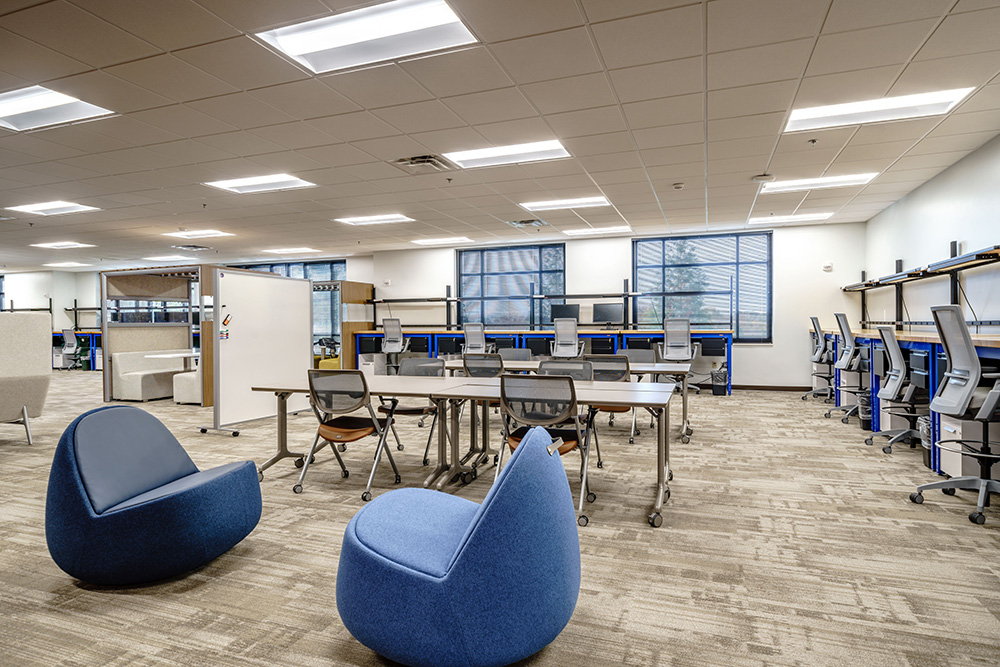
Healthcare training room with rows of tables, office chairs, presentation screens, and medical equipment

01 Your room needs to support multiple layouts

Training rooms and classrooms often need to shift between lecture, group work, testing, presentations, and collaborative sessions. Our team helps plan furniture that can move, nest, stack, store, and reset without making the room difficult to manage.

02 Your training space feels stiff or outdated

Older training rooms can feel too rigid, too crowded, or too focused on one-way instruction. Together, we create spaces that support participation, movement, and different teaching or facilitation styles.

03 Your teams need better onboarding or professional development spaces

A strong training room can support new hire onboarding, leadership development, product training, customer education, safety training, and internal workshops. We align the furniture plan with the type of learning experience the organization needs.

04 Your education spaces need more flexibility

Classrooms, libraries, student support spaces, and learning labs often need furniture that supports group work, independent focus, technology, and quick transitions. HON describes modern education spaces around collaboration, hands-on activities, and study sessions, which fits the direction this page should support.

05 Your room needs better power and technology support

Training and learning spaces often involve laptops, monitors, displays, charging needs, presentation tools, and hybrid participation. MBI helps coordinate furniture decisions with technology expectations so the room is easier to use.

06 Your organization needs consistent room standards

For companies, schools, healthcare systems, or public-sector organizations with multiple rooms or locations, learning space standards can simplify planning, budgeting, ordering, maintenance, and future updates.

Different learning moments need different room strategies.

A training room, classroom, learning lab, onboarding space, and multipurpose room may all use similar products, but they do not serve the same purpose. We help compare solutions based on how the room will be used, how often it needs to change, how people participate, and what the space needs to support over time.

01

Flexible Training Rooms

Create rooms that can shift as the session changes.

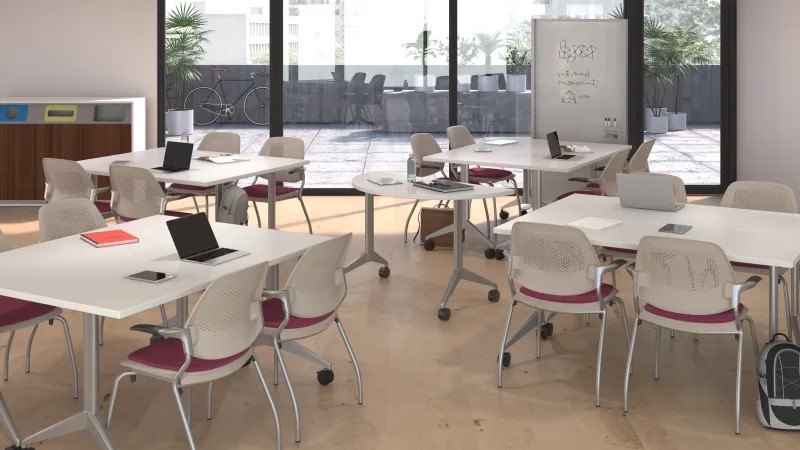
Flexible training rooms are built for movement. They may need to support presentations, breakout groups, workshops, testing, role-play, group discussion, and individual work in the same day. The furniture needs to reset quickly without creating extra work for the people managing the room.

Our team helps evaluate mobile tables, nesting tables, stacking or nesting chairs, markerboards, power access, storage, and room layouts that support different training formats without making the space feel temporary or disorganized.

02

Active Learning Classrooms

Support learning that moves between instruction, discussion, and hands-on work.

Active learning environments need to support more than rows of tables facing forward. Students and participants may need to listen, collaborate, present, build, test, write, and move between activities. Our approach is to plan furniture that supports these transitions while maintaining comfort, visibility, and classroom control.

This applies to K-12 classrooms, higher education spaces, libraries, student centers, training labs, and professional learning environments.

03

Corporate Training & Onboarding Spaces

Give teams a better place to learn, practice, and connect.

Corporate training spaces support more than presentations. They often serve onboarding, internal education, leadership development, product training, sales training, team workshops, and customer-facing education. These rooms need to feel professional, flexible, and easy to use.

We work with clients to plan training spaces that support instruction, discussion, hands-on activities, technology, and group work while still feeling aligned with the workplace brand.

04

Multipurpose Rooms

Make one room work harder without making it harder to use.

Multipurpose rooms often need to support training, meetings, events, community use, presentations, and group activities. The challenge is creating flexibility without creating chaos. Furniture needs to move easily, store cleanly, hold up to repeated use, and support different room layouts.

MBI helps clients plan multipurpose rooms with the right balance of mobility, durability, storage, seating comfort, table selection, power access, and reset strategy.

05

Technology-Ready Learning Spaces

Plan the furniture around the tools people actually use.

Technology is part of most training and learning environments. Laptops, displays, cameras, microphones, charging, presentation equipment, and collaboration tools all affect how the furniture should be planned. We help coordinate table selection, power access, seating layout, sightlines, storage, cable management, and room flow so technology supports the session instead of getting in the way.


06

Learning Space Standards

Make repeatable learning spaces easier to plan and maintain.

Organizations with multiple training rooms, classrooms, campuses, departments, or locations often need standards. A thoughtful standard can simplify decisions around table sizes, seating, mobility, power, storage, finishes, durability, and replacement planning. Our team helps create learning space standards that support consistency while still allowing rooms to vary based on size, age group, program type, or training format.

The right training space depends on flexibility, durability, technology, and how the room needs to reset.

MBI works with manufacturer partners that support a wide range of training and learning environments, from corporate training rooms to classrooms, labs, libraries, and multipurpose spaces. The goal is not to select a table or chair first. The goal is to understand how the room needs to function, then compare the right options for mobility, comfort, durability, storage, power, finishes, and long-term use.
Allsteel commercial office furniture logo in black
Gunlocke office furniture logo in black on a transparent background
HON commercial office furniture logo in bright green

training & learning space gallery

Ready to plan a training or learning space that can keep up with the way people learn?

You do not need to know the exact table, chair, layout, or technology setup before starting the conversation. Tell us how the room needs to function, who will use it, and what needs to change throughout the day. MBI can help compare options and create a plan that supports instruction, collaboration, comfort, and flexibility.

faqs

What makes a good training room layout?
A good training room layout supports the way the room will actually be used. That may include presentations, group work, testing, workshops, discussion, technology use, or hands-on activities. That means evaluating table shape, seating, circulation, power access, storage, visibility, and how often the room needs to reset.
Flexible spaces often need mobile or nesting tables, stacking or nesting chairs, accessible power, markerboards, storage, and layouts that can change quickly. The right mix depends on the number of users, room size, training format, and how often the room changes.
Yes, but it needs to be planned carefully. A room that supports both training and meetings may need flexible tables, comfortable seating, strong technology support, good sightlines, and storage for items used in different setups.
Classroom and active learning furniture should support collaboration, focused work, movement, durability, and different teaching styles. Depending on the environment, mobility, cleanability, size, height, and storage may also be important.
Power access is often very important, especially when participants use laptops, tablets, or other devices. Power should be considered early because it affects table selection, room layout, cable management, floor access, and the overall user experience.
Often, yes. If the room needs to change between presentation, classroom, group, or workshop layouts, mobile and nesting furniture can make resets easier. If the room has one primary use, fixed furniture may be appropriate.
Yes. MBI can help organizations create repeatable standards for training rooms, classrooms, multipurpose rooms, or professional development spaces. Standards can simplify planning, pricing, ordering, replacement, and future updates.
Yes. Height-adjustable tables or worksurfaces may be useful in training spaces, labs, maker spaces, standing-height collaboration areas, or rooms that need to support different activities and users.
As early as possible. Training and learning spaces often involve layout, technology, power, storage, seating, finishes, delivery, installation, and budget. Early involvement helps prevent avoidable changes later.
Start with how the room needs to be used. Tell MBI who will use the space, what activities will happen there, how often the room changes, and what technology is needed. From there, we can help identify the right training or learning space solution.