Make your space easier to hear, focus, meet, and work in.

Make your space easier to hear, focus,

meet, and work in.

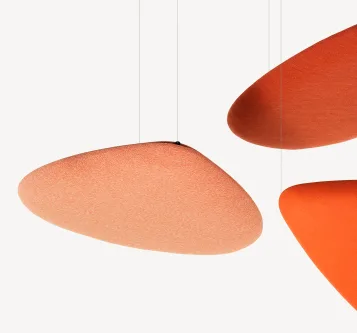
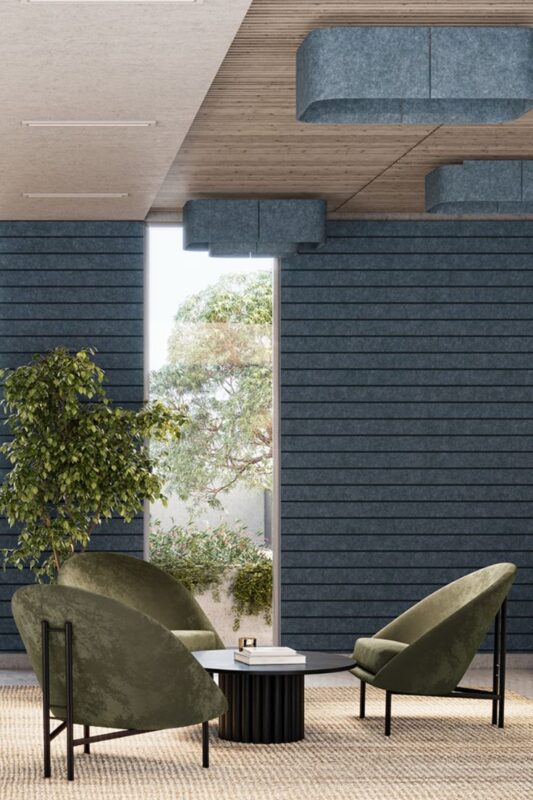
Modern office lounge with sofas, armchairs, planter boxes, a coffee table, and suspended decorative acoustic panels.

If the space looks good but does not feel good, sound may be part of the problem.

Acoustic issues often show up after a space is occupied. Conversations carry farther than expected. Meeting areas feel exposed. Open offices become distracting. Classrooms or training rooms are harder to focus in. Waiting areas feel louder than they should. MBI helps clients identify where sound is affecting the experience and what types of solutions may improve the space.

Open offices feel distracting

Reduce noise transfer and create better focus in shared work environments.

Meeting rooms lack privacy

Support more comfortable conversations in conference rooms, huddle rooms, and private spaces.

Training or learning spaces are hard to use

Improve speech comfort and reduce distraction in rooms where people need to listen, learn, and participate.

Lobbies, cafés, and shared spaces feel too loud

Use acoustic products to make high-activity areas more comfortable.

The design has too many hard surfaces

Address echo and reverberation created by glass, concrete, exposed ceilings, hard flooring, and open layouts.

People need places to focus or step away

Combine acoustic products with furniture, pods, screens, or space division to support better daily use.

Employee seated at a modern workstation beneath decorative fabric acoustic wall panels in green, blue, and gray.

01

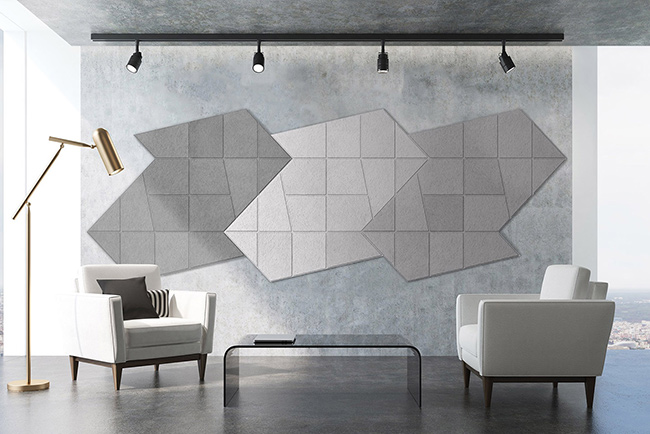
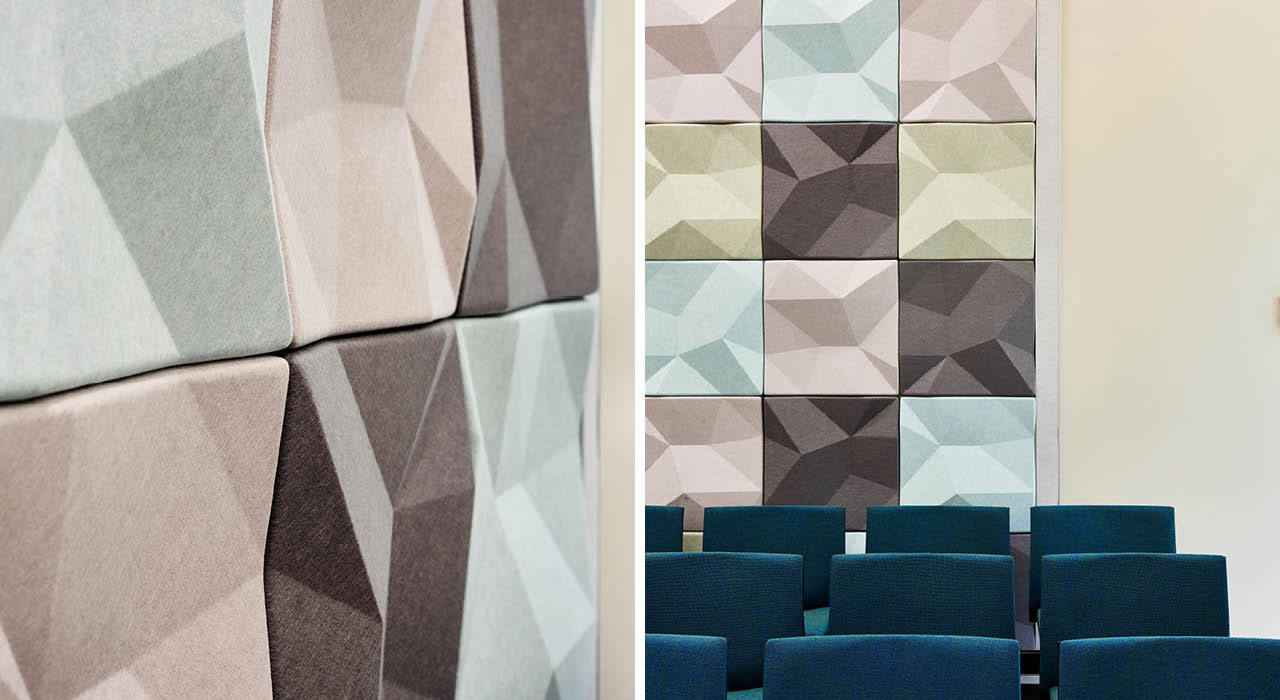
Wall-Mounted Acoustic Treatments

Turn unused wall surfaces into quieter, more useful design elements.

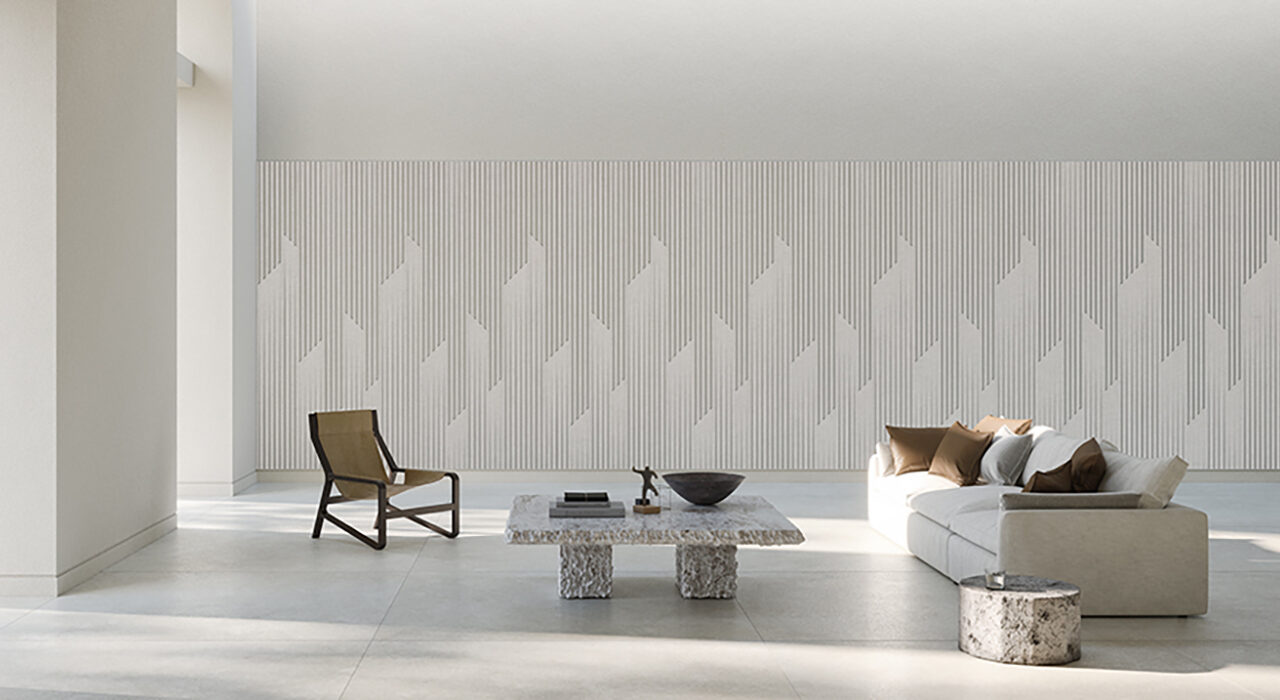
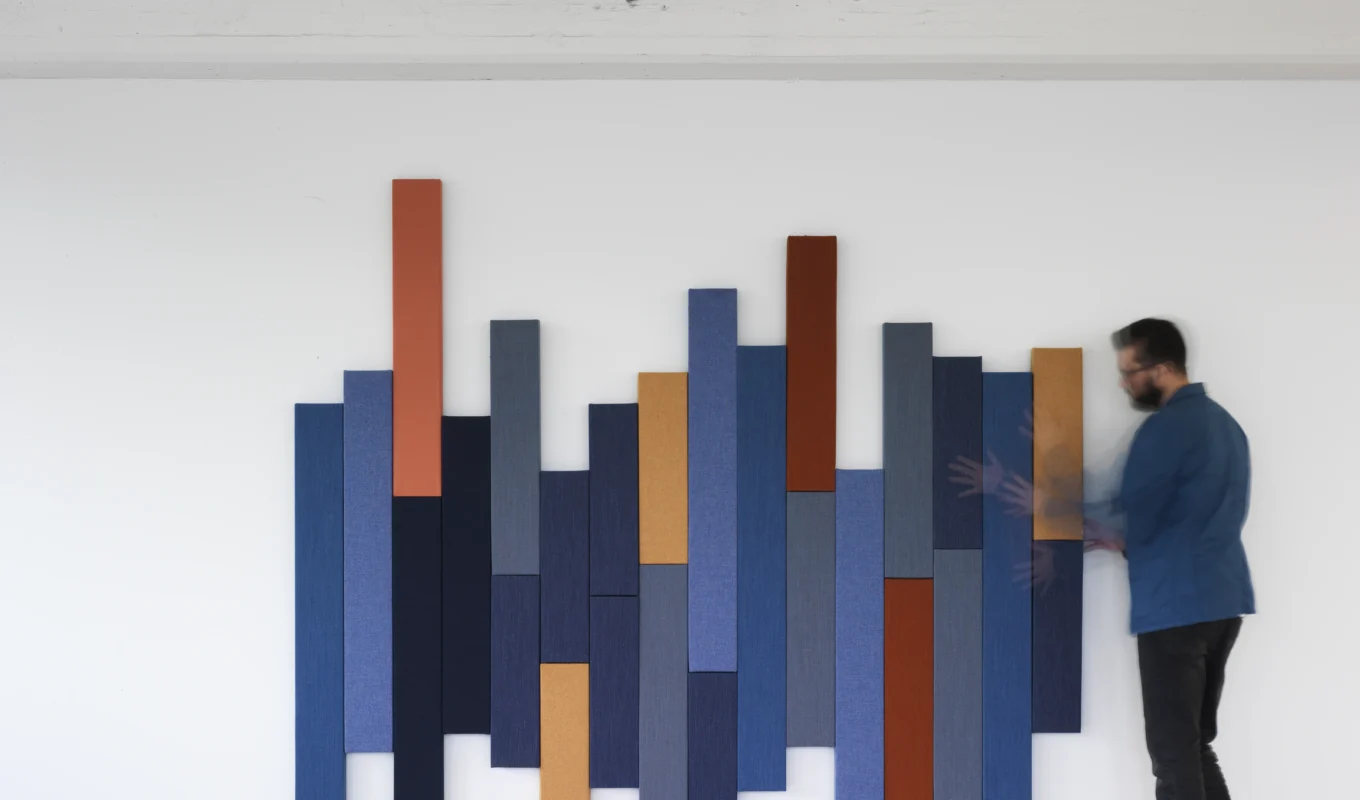
Wall-mounted acoustic products can help reduce echo and soften the sound experience in offices, meeting rooms, classrooms, corridors, cafés, lobbies, and shared spaces. They can also become part of the visual identity of the space through shape, color, texture, pattern, or printed graphics.

MBI helps clients think through where wall treatments will have the most impact, how they should coordinate with the design, and how they fit with furniture, technology, artwork, and circulation.

02

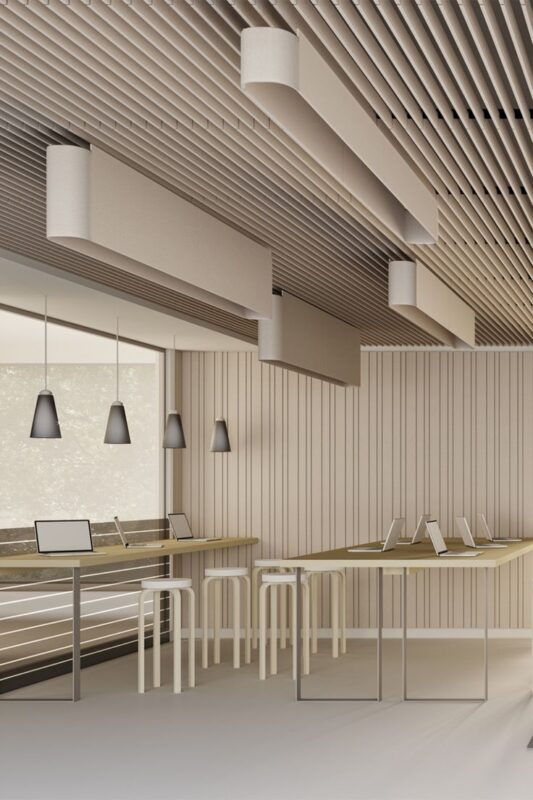
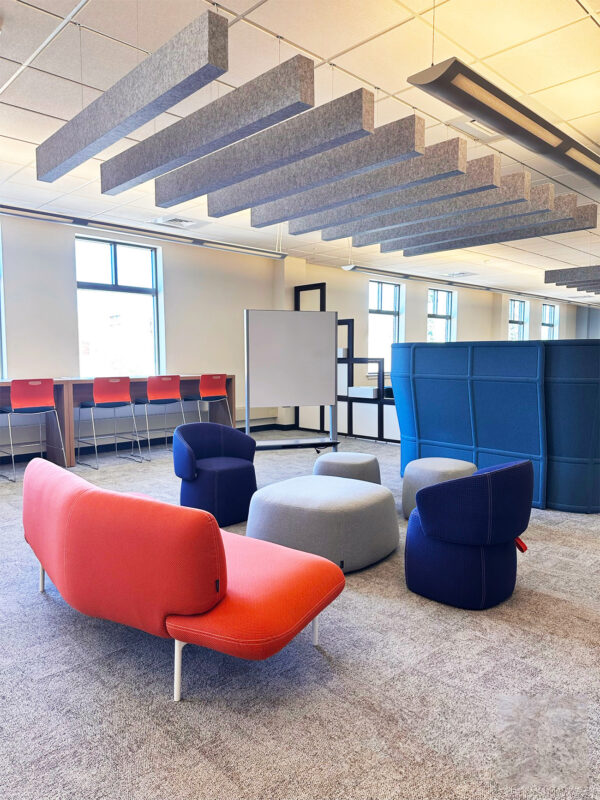
Ceiling-Mounted Acoustic Solutions

Manage sound from above without crowding the space.

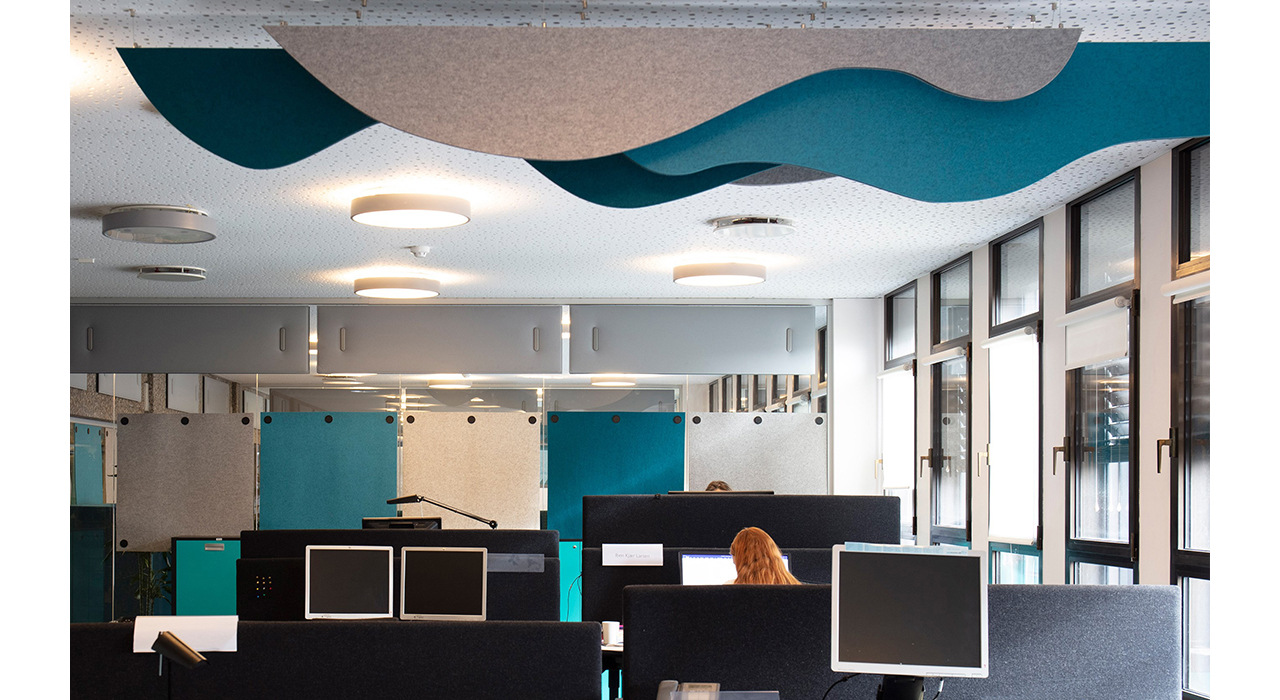
Ceiling-mounted absorbers can be useful when wall space is limited, ceilings are exposed, or the room needs acoustic support without adding more furniture or visual clutter at eye level. These solutions can help soften open areas, collaboration zones, libraries, cafés, lobbies, and spaces with hard surfaces. Ceiling-mounted acoustic options are a part of broader sound absorption solutions, including products designed to reduce echo and support quieter work zones.
Executive conference room with a round wood meeting table, upholstered swivel chairs, wall-mounted display, glass partitions, and suspended acoustic panels.
Professional participating in a video call on a tablet at a private workstation with an ergonomic chair and acoustic privacy screen.

03

Screens, Dividers & Desk-Level Acoustics

Add focus and separation where people actually work.

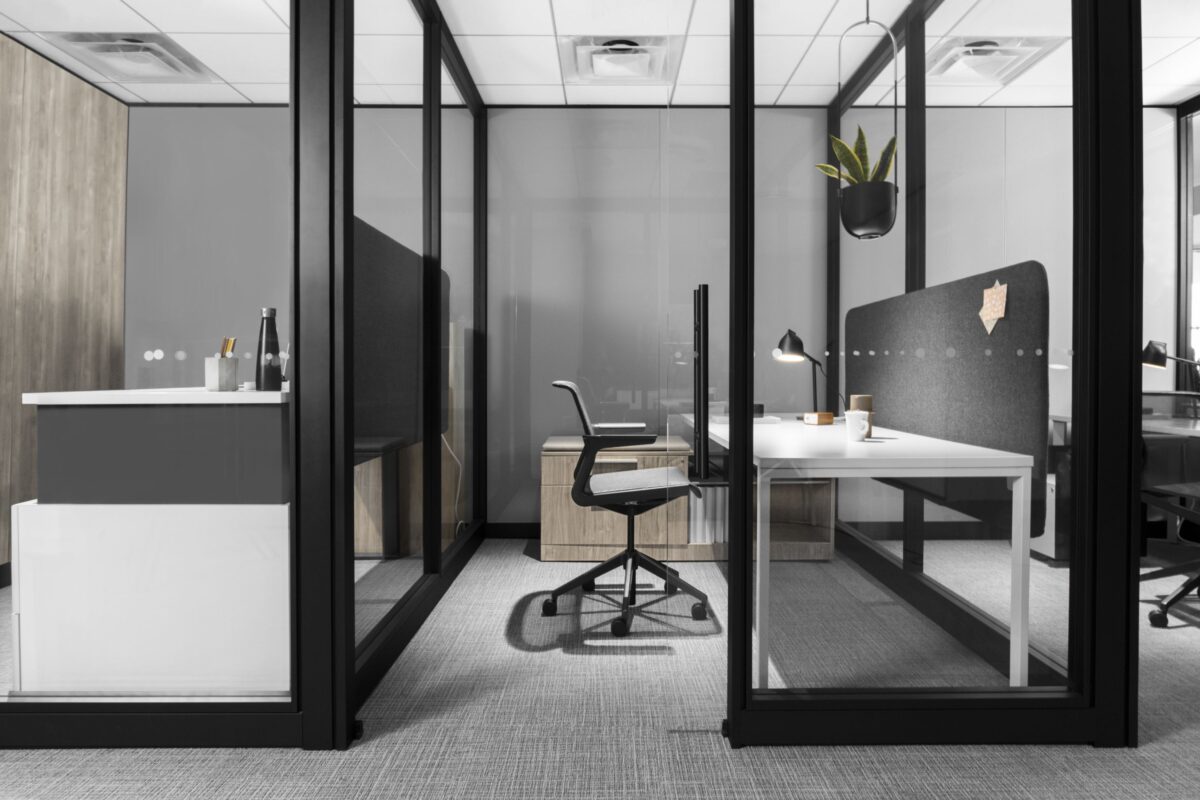
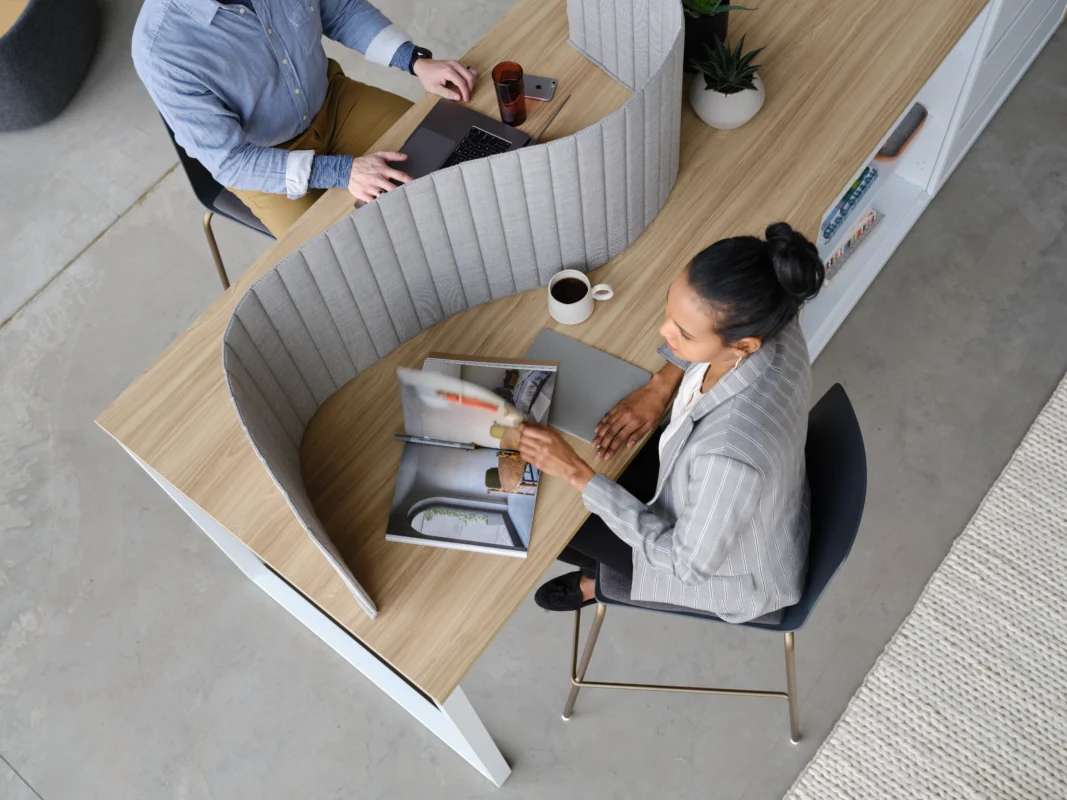
Not every acoustic issue requires a full room solution. Sometimes the right answer is closer to the user: table screens, desk dividers, floor screens, or mobile dividers that create more separation and reduce distraction in work areas.

04

Acoustic Furniture & Integrated Products

Use furniture to support quieter, more comfortable spaces.

Acoustics do not always need to be treated as a separate layer. Seating, storage, screens, pods, and room-in-room concepts can all help shape how sound moves through a space while also supporting the way people use it.
Overhead view of professionals seated on modular office lounge furniture with side tables, rugs, and a privacy chair.
Two professionals using private high-back office lounge chairs with built-in tables, task lighting, and acoustic privacy panels.

05

Pods, Focus Areas & Quiet Zones

Somewhere to step away without leaving the building.

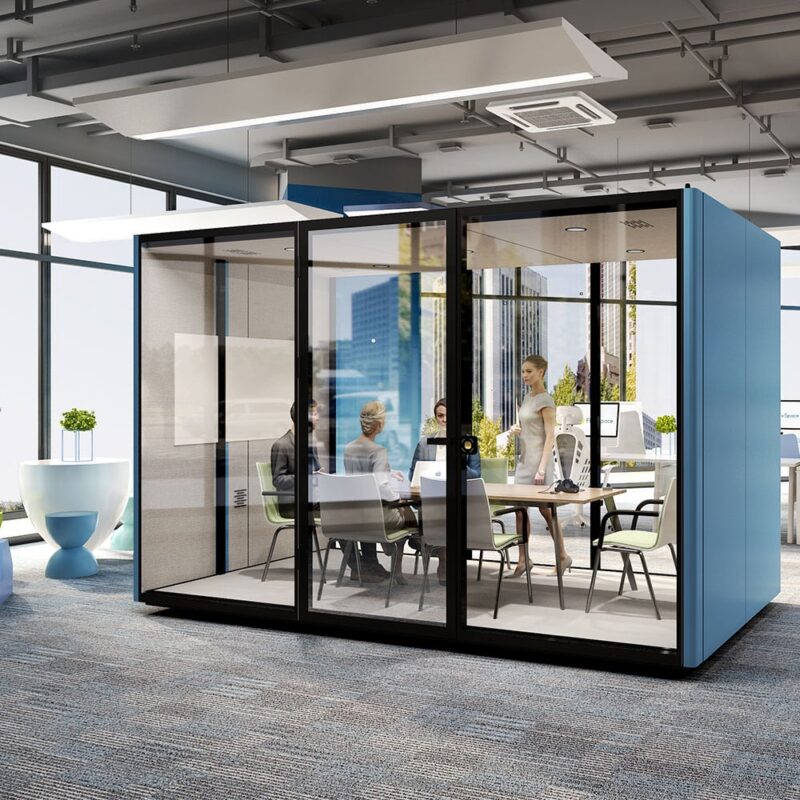
Open environments work better when people have access to spaces for calls, video meetings, focused work, or sensitive conversations. Pods and focused acoustic environments can help add privacy and control where people need it most.

Acoustics work best when they are planned, not patched in later.

Acoustic issues are often discovered after a space is occupied, but the best solutions start earlier. MBI helps clients understand where sound may become a problem, compare product options, coordinate acoustics with furniture and interior solutions, and create a plan that supports the way people actually use the space.

Understand the Sound Challenge

We start by identifying what is not working. Is the issue distraction, echo, speech privacy, loud shared spaces, lack of focus, or a room that simply feels uncomfortable?

Evaluate the Right Product Path

We help compare wall panels, ceiling absorbers, screens, desk dividers, acoustic furniture, pods, and other sound-focused options based on the space, budget, design intent, and level of performance needed.

Coordinate With the Larger Space Plan

Acoustic solutions should not feel like an afterthought. MBI helps coordinate products with furniture layouts, modular walls, finishes, lighting, technology, circulation, and the overall look of the space.

Use the Right Amount in the Right Places

We coordinate wall systems with furniture, finishes, technology, acoustics, installation planning, and long-term use.

Support Selection, Ordering, and Installation

Once the approach is defined, MBI helps support the product process from selection and specification through ordering, delivery, installation coordination, and follow-up.

The best acoustic solution starts with the right questions.

Before recommending products, MBI helps clients work through the practical details that shape the right solution.

Commercial construction professional wearing a hard hat while reviewing an office interior project

Acoustical solutions for the spaces where sound matters most.

Different environments have different sound challenges. MBI helps match acoustic products and planning strategies to the way each space is used, whether the goal is focus, comfort, privacy, collaboration, or a better experience for the people inside.

get inspired • get inspired • get inspired •

Corporate Workplace

Reduce distraction in open offices, improve meeting room comfort, and support focus areas, collaboration zones, and hybrid work settings.
Explore Corporate Workplace

Healthcare

Support administrative areas, waiting spaces, staff zones, consultation rooms, and environments where comfort and privacy matter.
Explore Healthcare

Education

Improve learning, study, library, classroom, and collaboration spaces where speech clarity and reduced distraction can make the environment easier to use.
Explore Education

Government & Public Sector

Help offices, meeting rooms, public-facing areas, and shared work environments feel more controlled, professional, and functional.
Explore Government & Public Sector

Senior Living

Create dining, lounge, activity, administration, and community spaces that feel calmer, warmer, and more comfortable.
Explore Senior Living

Commercial Real Estate

Improve amenity areas, shared conference spaces, spec suites, tenant lounges, and common areas where sound quality affects how the space is experienced.
Explore Commercial Real Estate

Preferred Manufacturers

Zilenzio workplace acoustic furniture and sound-management products logo
Unika Vaev acoustic materials and commercial interior products logo
MPS Acoustics commercial sound-management products logo
Lencore Acoustics workplace sound-masking and acoustic solutions logo

Acoustical Solutions Gallery

Is sound making your space harder to work in?

You do not need to know whether the answer is a wall panel, ceiling absorber, divider, pod, or furniture-based solution. Tell us what is not working in your space, and MBI can help you compare options and plan the right next step.

frequently asked questions

What are acoustical solutions?
Acoustical solutions are products and planning strategies that help manage sound within a space. They can include wall panels, ceiling absorbers, floor screens, table screens, dividers, acoustic furniture, pods, and related products that help reduce distraction, echo, or unwanted noise.
Usually, no. Sound absorption and soundproofing are not the same thing. Many acoustical products help absorb sound within a room and reduce echo or reverberation. Soundproofing typically involves controlling sound transfer between spaces and may require walls, doors, seals, construction details, or other building-related solutions.
The right solution depends on the room, the surfaces, the activity level, the number of people, the type of sound problem, and how the space is used. MBI can help evaluate whether the need is wall treatment, ceiling absorption, screens, dividers, furniture-based solutions, pods, or a combination.
Sometimes yes, sometimes no. Glass walls can provide visual openness while still supporting a level of speech privacy, but the right answer depends on the use of the room. A private office, HR conversation room, huddle room, and boardroom may all need different privacy decisions.
As early as possible. Acoustics affect furniture layout, wall systems, ceiling conditions, finishes, technology, and how people use a space. It is easier to solve these issues during planning than after people are already frustrated.
Yes. Many modern acoustic products are designed to be both functional and visually appealing. They can add shape, texture, color, pattern, and softness to a space while also helping manage sound. Allsteel’s Zilenzio acoustic offering includes wall, ceiling, divider, printed, and lighting-integrated options that support both design and sound absorption.
No. They can be useful in conference rooms, training rooms, classrooms, libraries, healthcare spaces, lobbies, cafés, senior living communities, public spaces, and any environment where sound affects comfort or usability.
Yes. That is one of the main reasons to involve MBI. Acoustic products often work best when coordinated with furniture layouts, wall systems, screens, pods, finishes, technology, and the way people will use the space.
Start with the sound problem, not the product. Tell MBI what feels too loud, distracting, exposed, echo-heavy, or uncomfortable. From there, we can help identify the right type of solution and next steps.