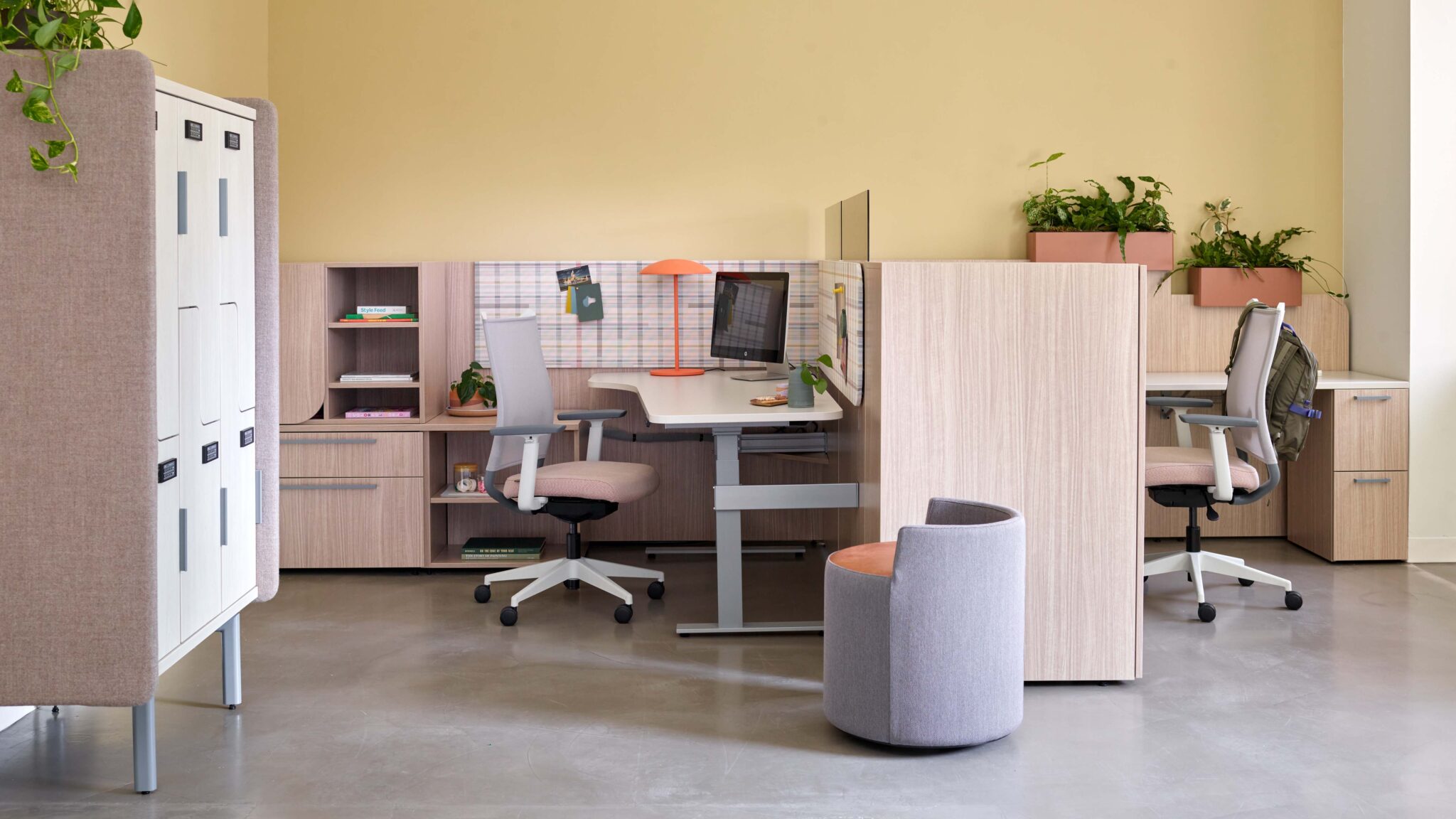
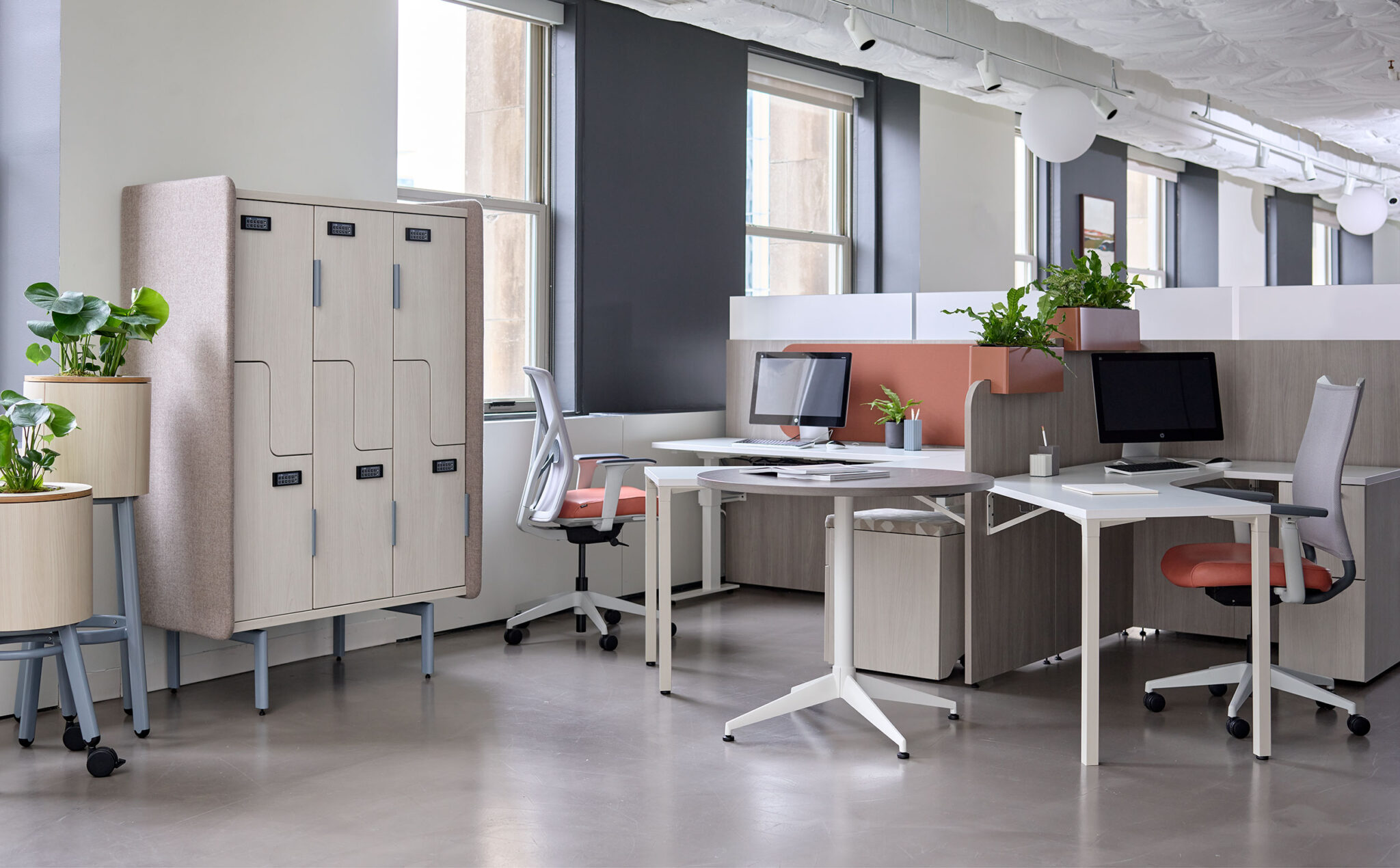
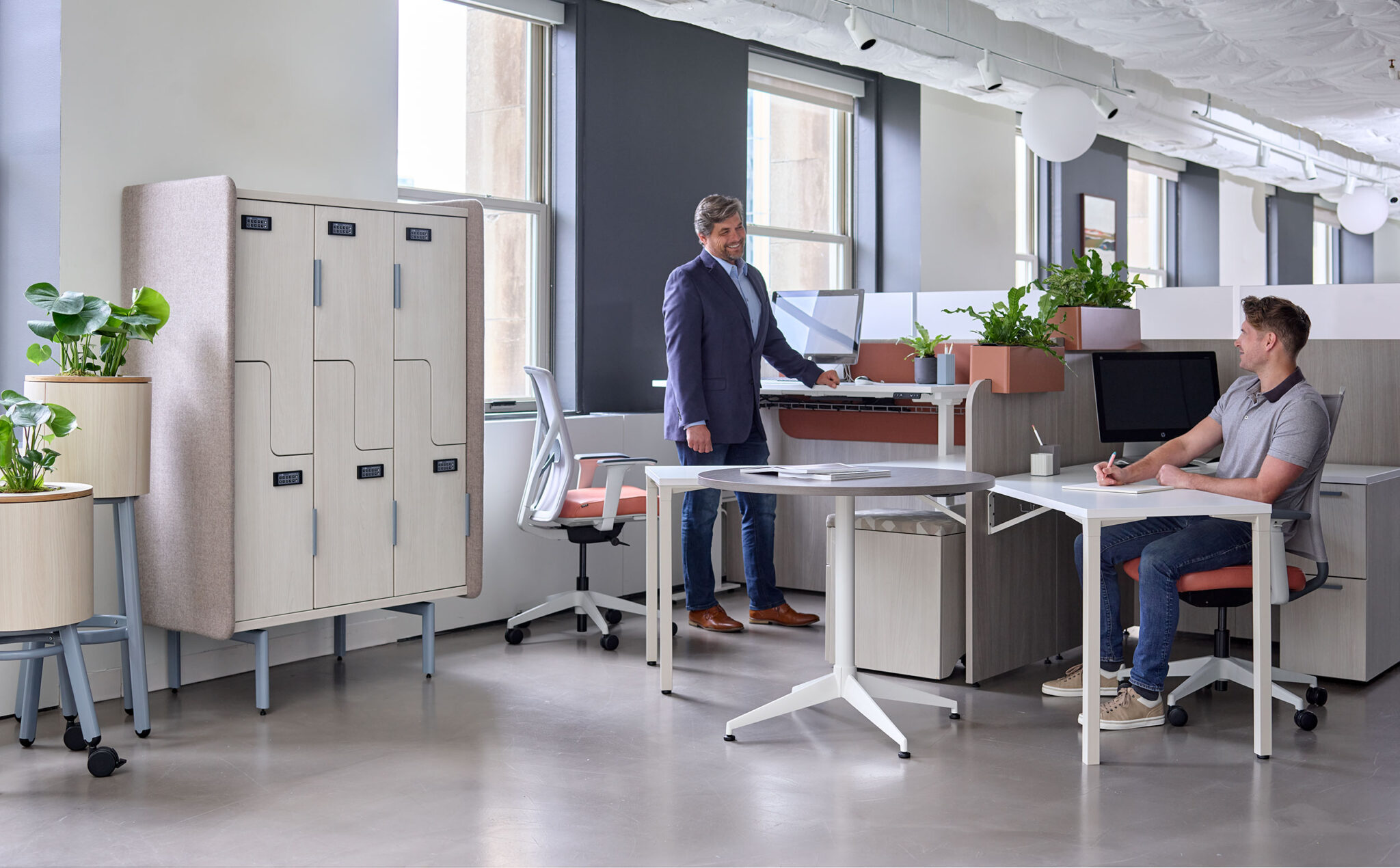
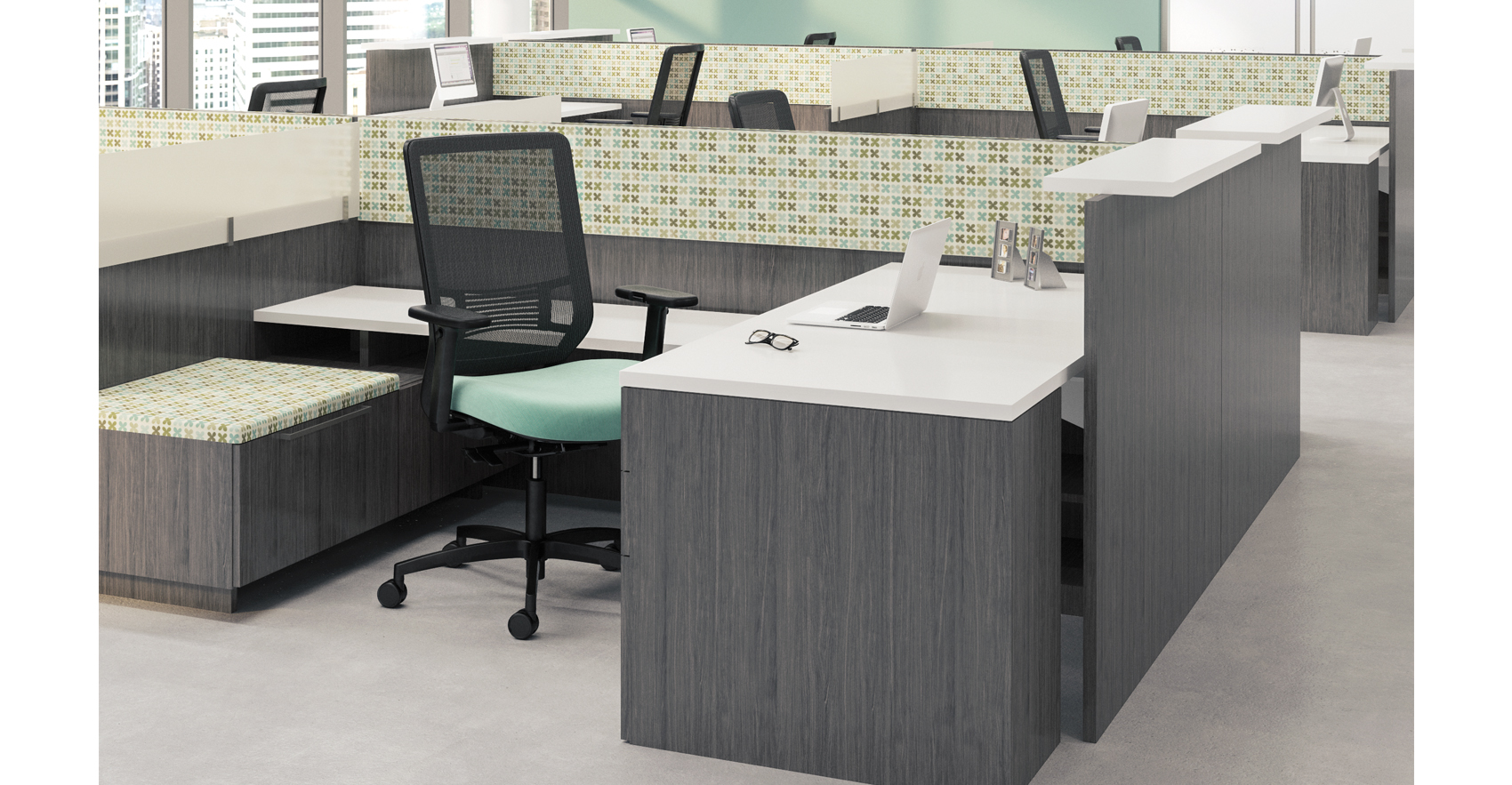
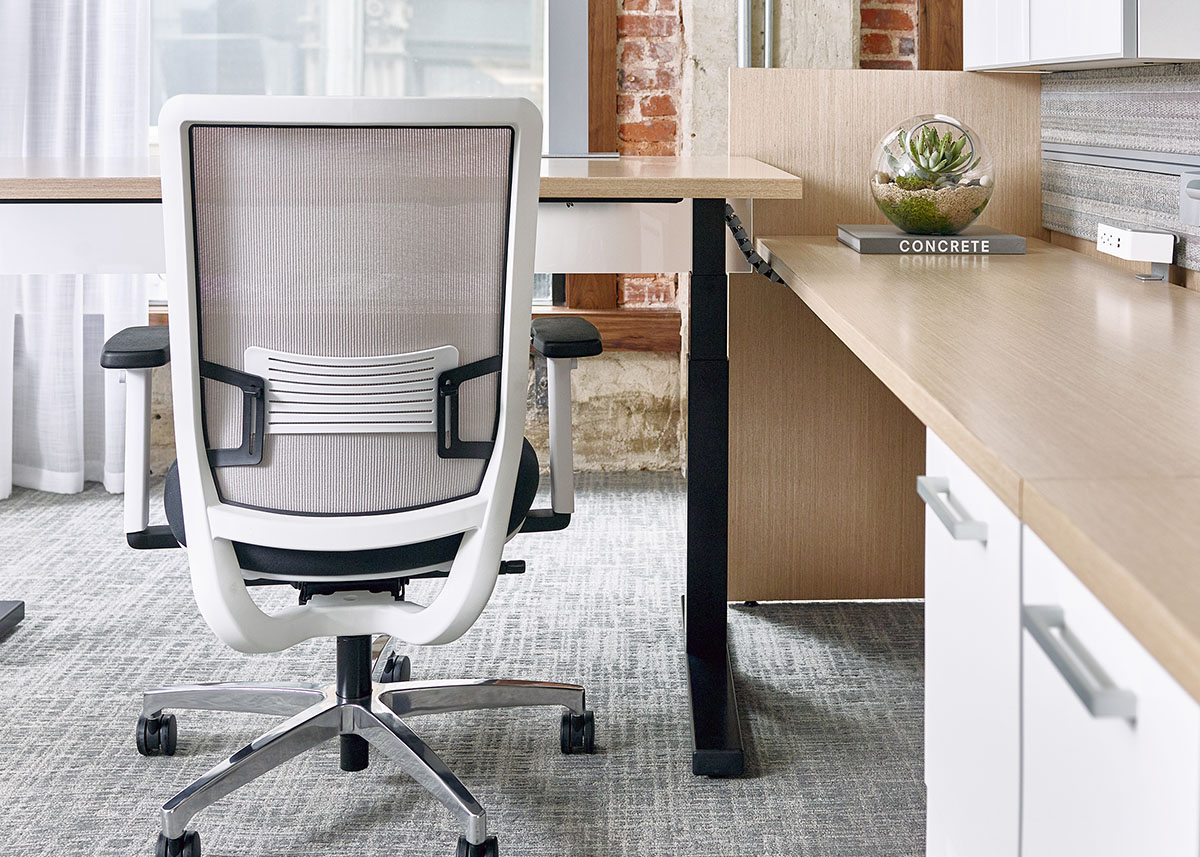
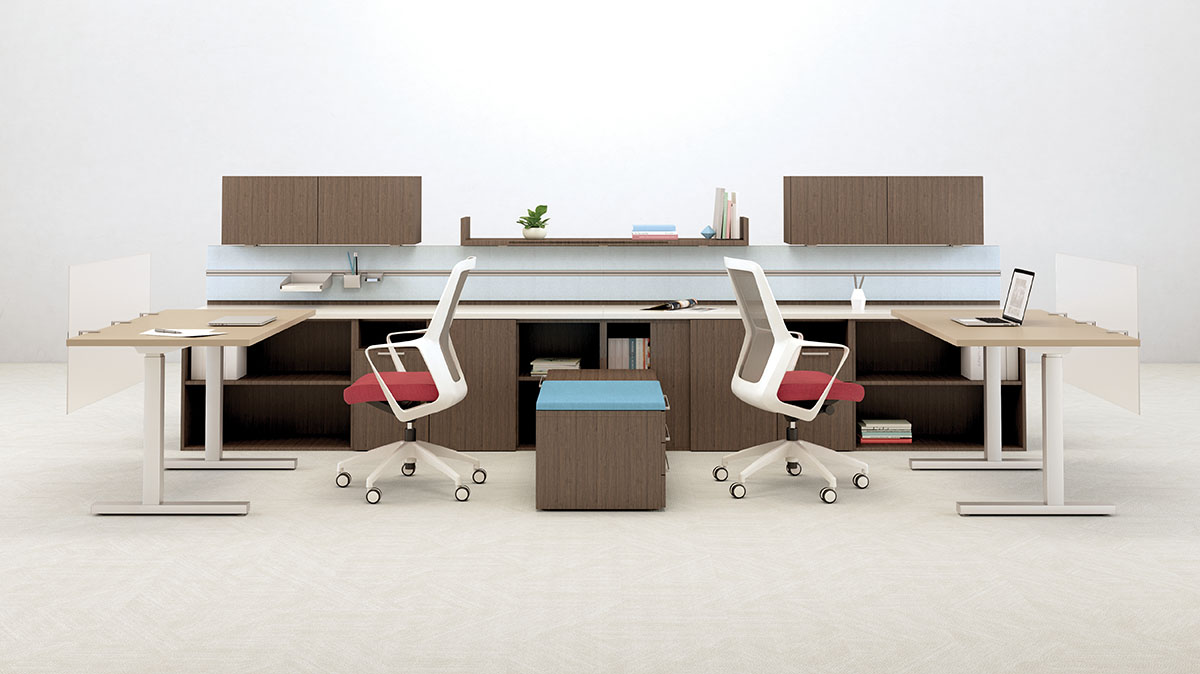
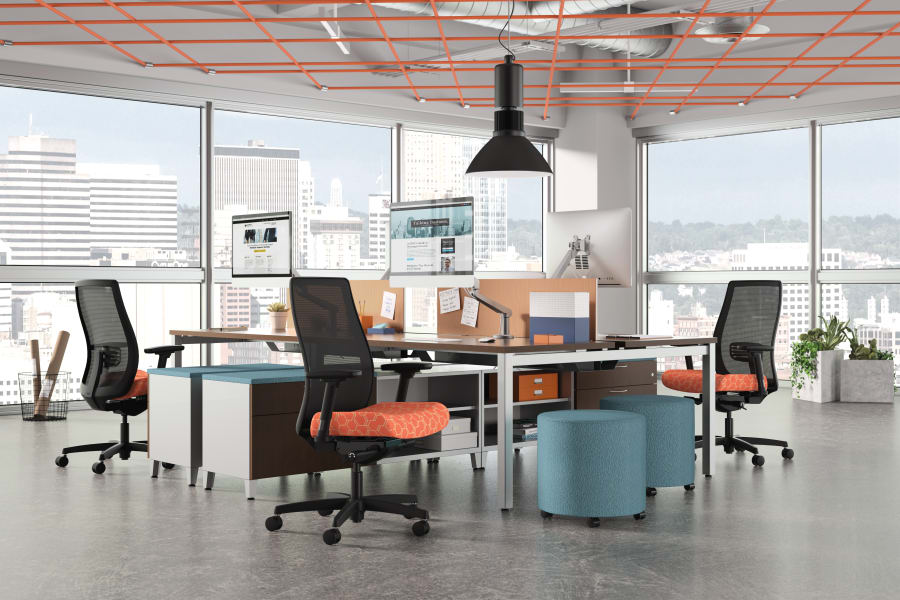
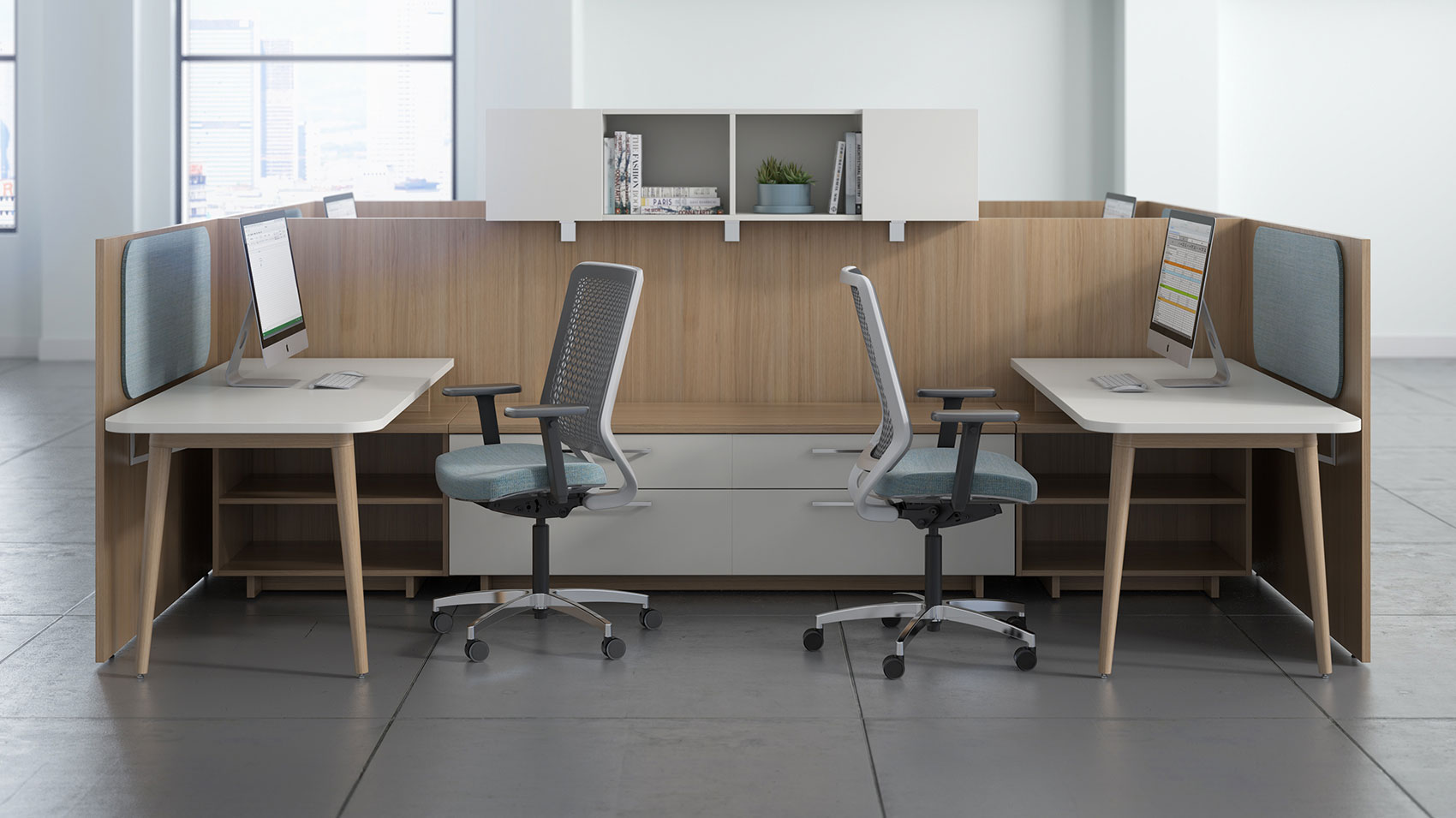
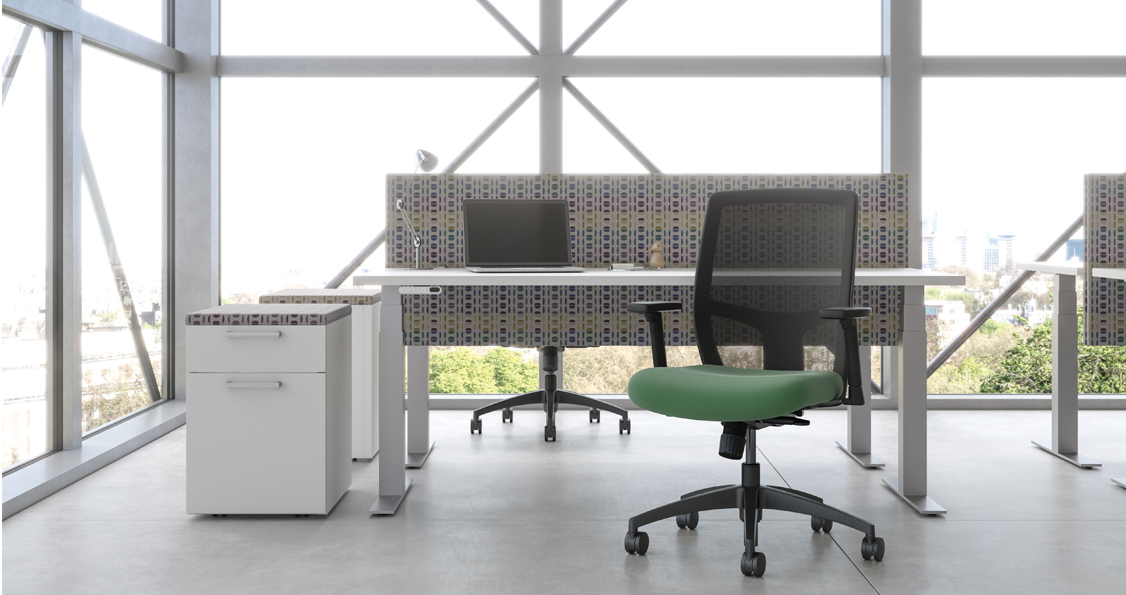
Hybrid work and shared work points change how storage should be planned. Lockers, mobile pedestals, shared storage, and neighborhood-based storage can help support employees who may not have the same desk every day.
Clutter usually means the storage plan does not match the work. We help determine what needs to be stored at the workstation, what can be shared, what should be centralized, and what may no longer need to be stored at all.
Healthcare, education, government, legal, finance, and administrative teams often still need filing, supply storage, secure storage, or quick access to physical materials. Our team helps plan storage that supports daily workflow without overcrowding the space.
Private offices often get overfilled with desks, credenzas, files, bookcases, and personal storage. The goal is to determine what storage is truly needed so the room stays functional and comfortable.
Some items need to lock. Others need to be shared. Some need to be visible and easy to access. We work with clients to evaluate storage based on security, access, user needs, and how the space is managed.
Storage standards can make future planning, pricing, ordering, replacement, and reconfiguration easier. MBI can help define what storage belongs at the individual, team, department, and organization-wide level.
As workplaces become more flexible, personal storage becomes more important. Employees, visitors, hybrid workers, and mobile team members still need a secure place for bags, coats, devices, supplies, and personal items. We help plan lockers, cubbies, towers, and other personal storage solutions that support the way people move through the workplace. These products can help reduce clutter, support shared workstations, and make hybrid spaces easier to use.
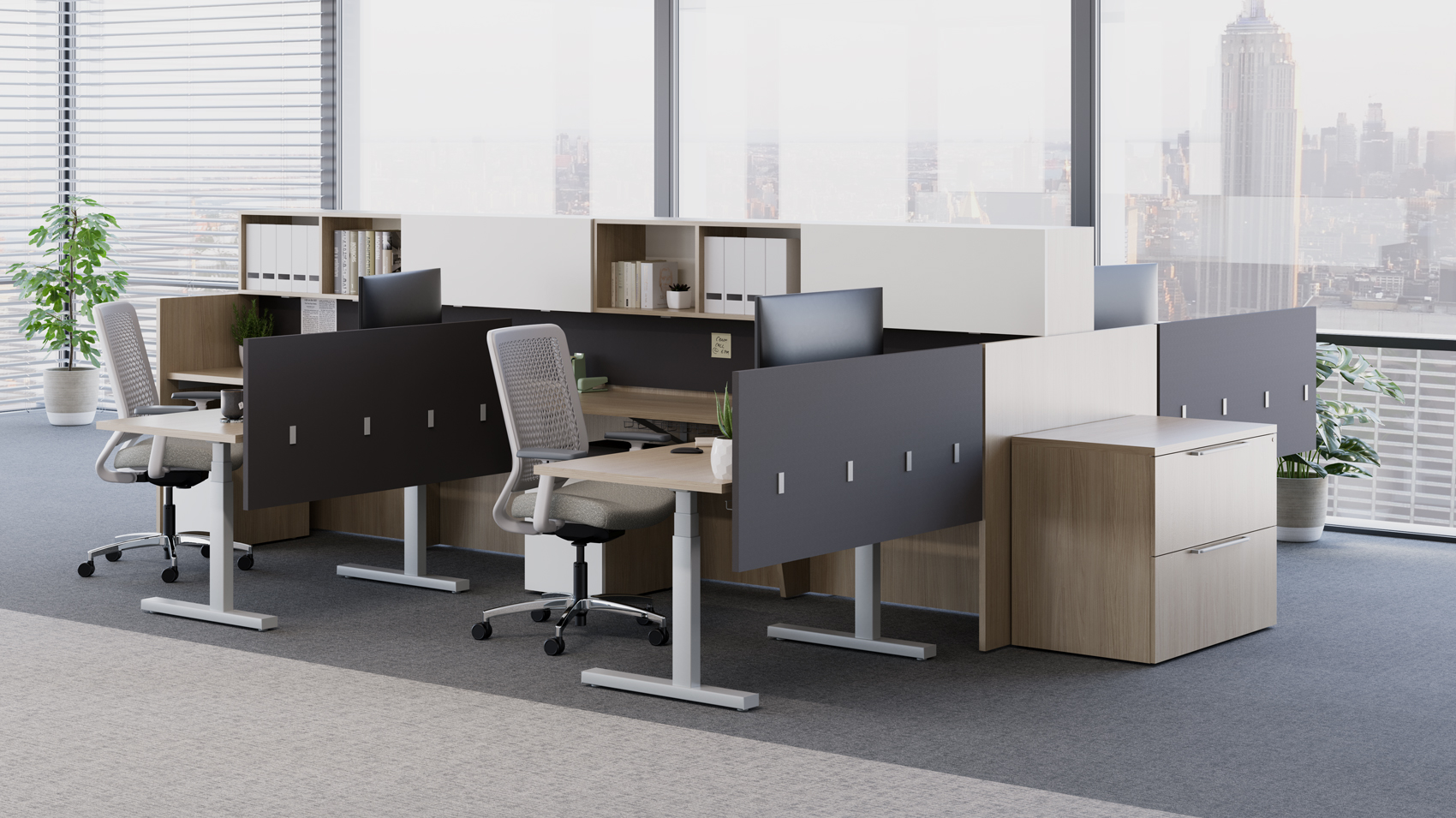
Many organizations have reduced paper, but filing still matters in settings where records, forms, contracts, client files, medical support documents, education materials, or administrative paperwork need to be stored and accessed. The key is planning the right amount of filing in the right location. Our team helps evaluate lateral files, vertical files, storage cabinets, file banks, locking storage, and department-level filing so records stay organized without taking over the floorplate.
Private offices often carry too many storage expectations. They may need to support files, supplies, books, samples, technology, personal items, meeting materials, and display needs. Without a plan, storage can crowd the room and make the office less usable.
We work with clients to evaluate credenzas, bookcases, pedestals, storage towers, wardrobes, wall storage, and filing so the private office supports the user without becoming a storage closet.
Many teams need storage that serves a group rather than one person. Supply areas, project storage, department cabinets, shared files, workroom storage, sample storage, and equipment storage all need to be easy to access and easy to manage.
MBI helps clients plan shared storage that supports workflow, reduces clutter, and keeps frequently used items where they make sense.
Some storage needs are temporary, mobile, or tied to a specific task. Mobile pedestals, carts, work carts, rolling storage, and movable supply units can support training rooms, healthcare support spaces, education settings, project teams, mail areas, and multipurpose environments.
We help evaluate where mobile storage makes sense and how it should support the people using the space.
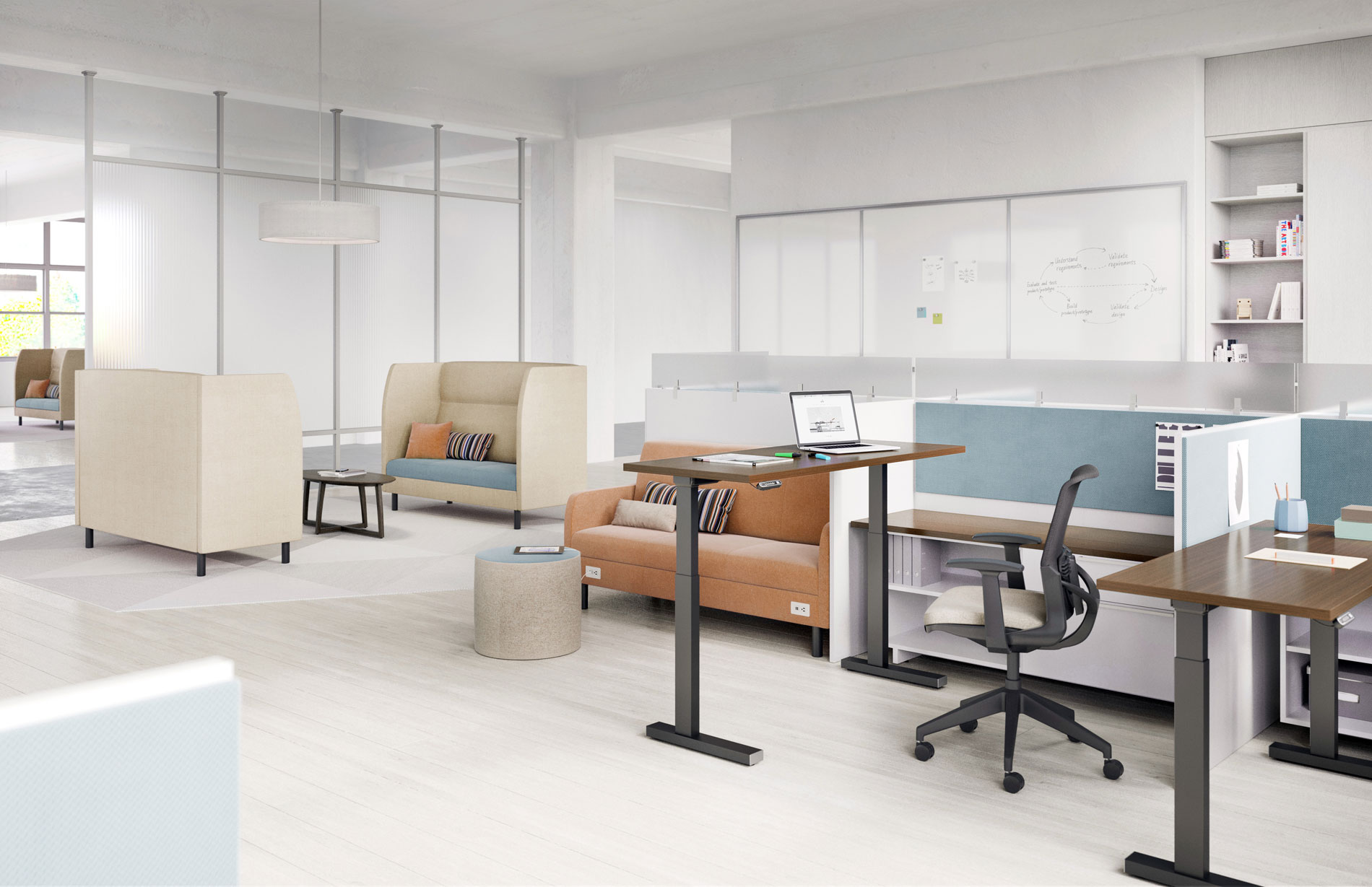
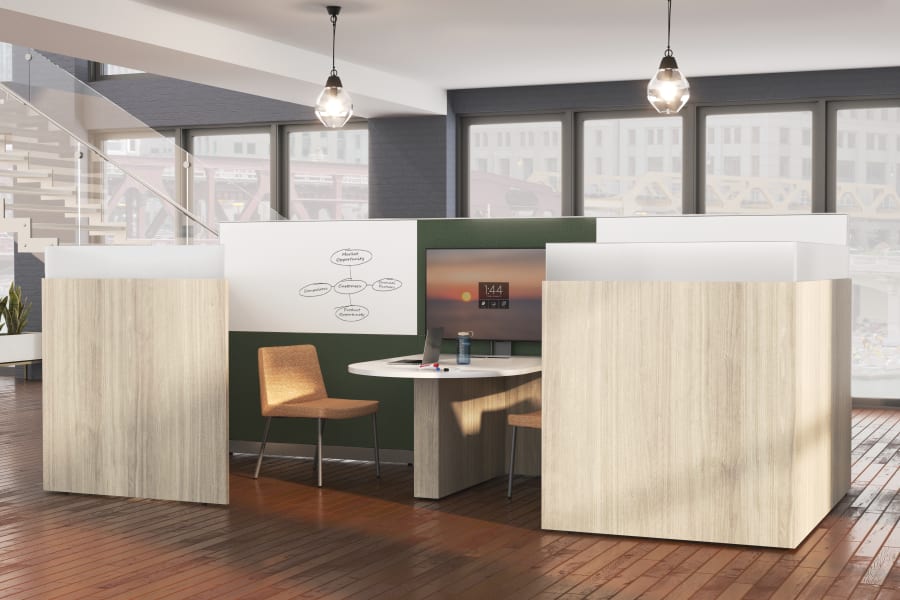
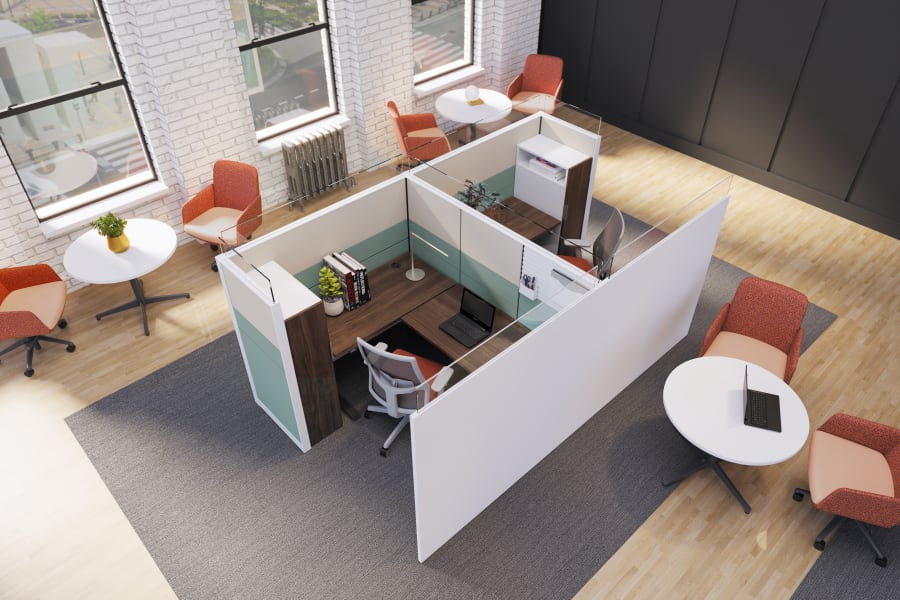
Storage can do more than hold things. In open environments, storage can help shape neighborhoods, provide boundaries, support privacy, create transitions, and make large spaces feel more organized.
Our team helps evaluate storage that supports both function and layout, including lockers, shelving, cabinets, towers, credenzas, mobile storage, and storage-integrated workstation elements.