
Glass fronts can create defined private offices while preserving light, visibility, and connection to the broader workplace. We help evaluate where transparency works and where additional privacy may be needed.
Conference and meeting rooms need to support conversation, presentation, privacy, and focus. Our team helps think through glass, doors, acoustic expectations, sightlines, furniture layout, and technology needs.
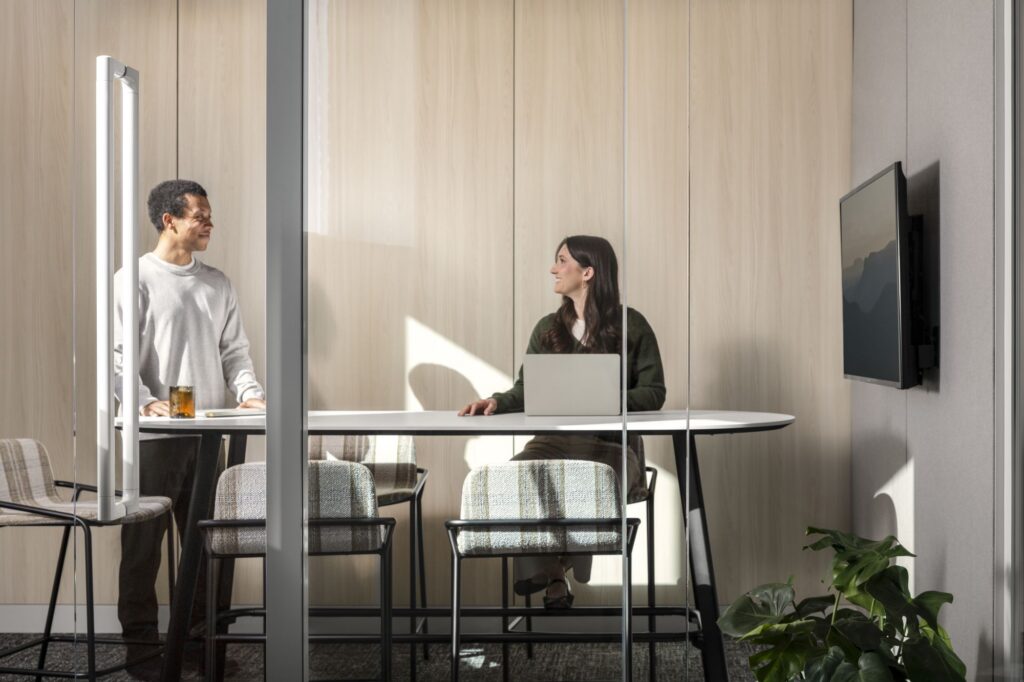
Focus rooms, phone rooms, and small enclosed spaces can give people a place for calls, video meetings, heads-down work, or sensitive conversations without requiring every space to become a traditional private office.
Glass fronts can help create a polished, modern environment for conference rooms, leadership spaces, reception-adjacent rooms, and client-facing work areas.
Solid walls can make interiors feel smaller and darker. Glass fronts can help maintain daylight and visual connection while still defining rooms.
Glass fronts often affect furniture placement, technology, ceiling conditions, doors, acoustics, finishes, installation sequencing, and coordination with architects, designers, contractors, and facility teams. Our team helps keep those details connected.
Private offices should provide focus and separation without isolating people from the rest of the environment. Glass fronts can help leadership offices, manager offices, and shared private offices feel open, professional, and integrated into the overall workplace. MBI helps clients think through the level of transparency, door style, privacy needs, furniture placement, storage, technology, and acoustic expectations so the office works as a complete room, not just a glass enclosure.
Conference rooms often need to balance openness with speech privacy. Glass fronts can make meeting areas feel more connected to the workplace while still giving teams a defined space for presentations, client conversations, hybrid meetings, and focused discussion. We help coordinate table size, seating, camera views, display placement, door location, acoustic expectations, and the overall room experience before selecting the office front solution.
Modern workplaces need small spaces for calls, video meetings, focused work, and sensitive conversations. Glass-front focus rooms can add that support while maintaining visibility and a sense of openness. Our team helps evaluate where focus rooms should be placed, how many may be needed, how much privacy they should provide, and how they should coordinate with workstations, lounge areas, acoustics, and circulation.
Glass office fronts can elevate the experience of client-facing spaces by making interiors feel more intentional, modern, and transparent. They work well near reception areas, boardrooms, leadership suites, consultation rooms, and spaces where visibility and professionalism both matter.
Our role is to align the glass front solution with the brand impression, finish direction, furniture selections, and daily use of the room.
The biggest concern with glass is often privacy. A room may look good, but if speech carries too easily, the space will not work well. We work with clients to evaluate when acoustic performance matters and how product choices can support the intended use of the room.
Allsteel’s Dimension glass office-front system is specifically positioned around balancing acoustic privacy with visual connection, with scalable single- and double-glazing options to calibrate sound control by need.
Not every glass front project happens in new construction. Existing workplaces may need to add offices, create focus rooms, improve meeting spaces, or redefine areas without starting over completely.
MBI helps clients evaluate existing ceiling conditions, flooring, furniture layout, power, technology, schedule, and installation considerations so the solution fits the real conditions of the space.