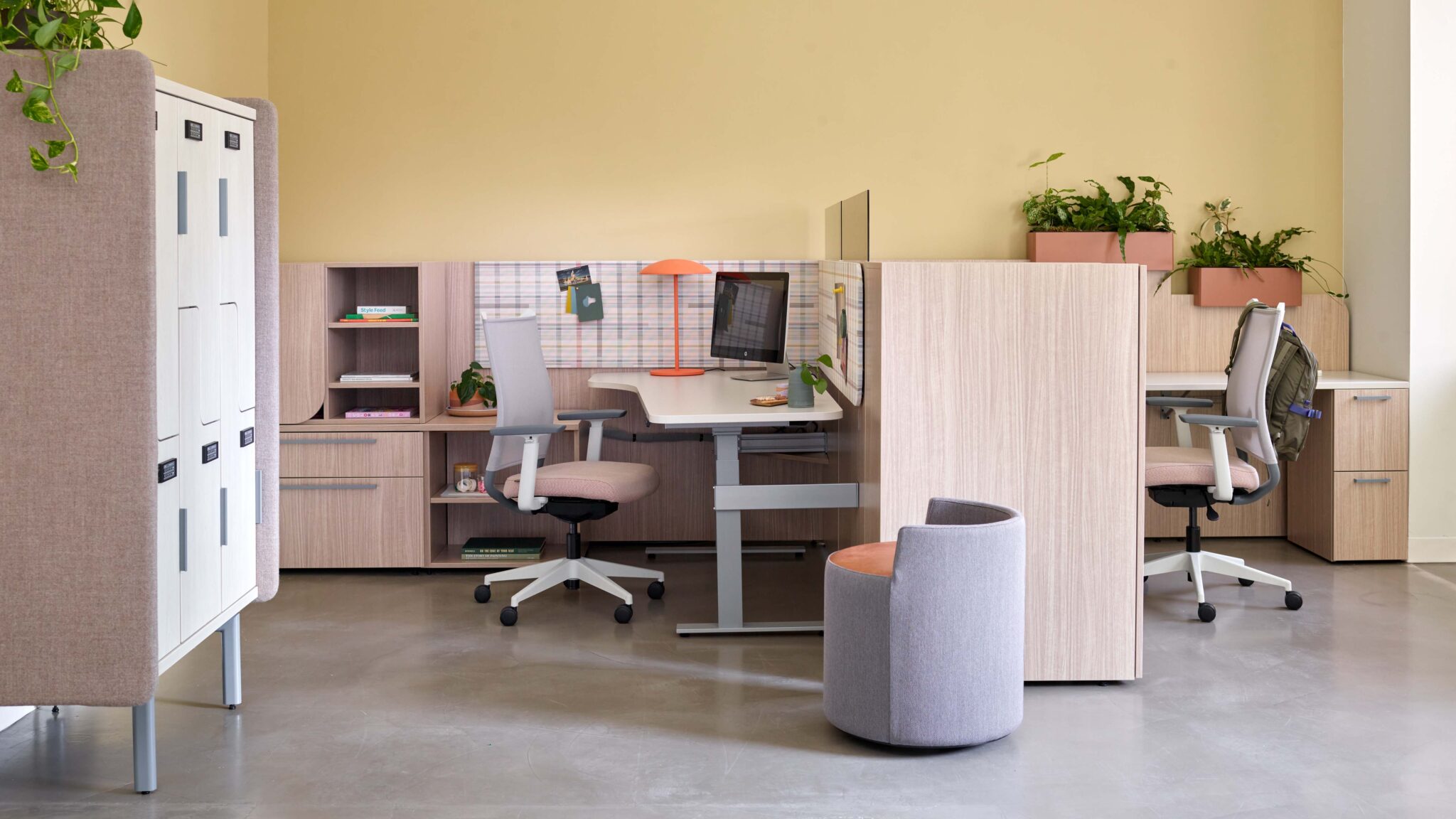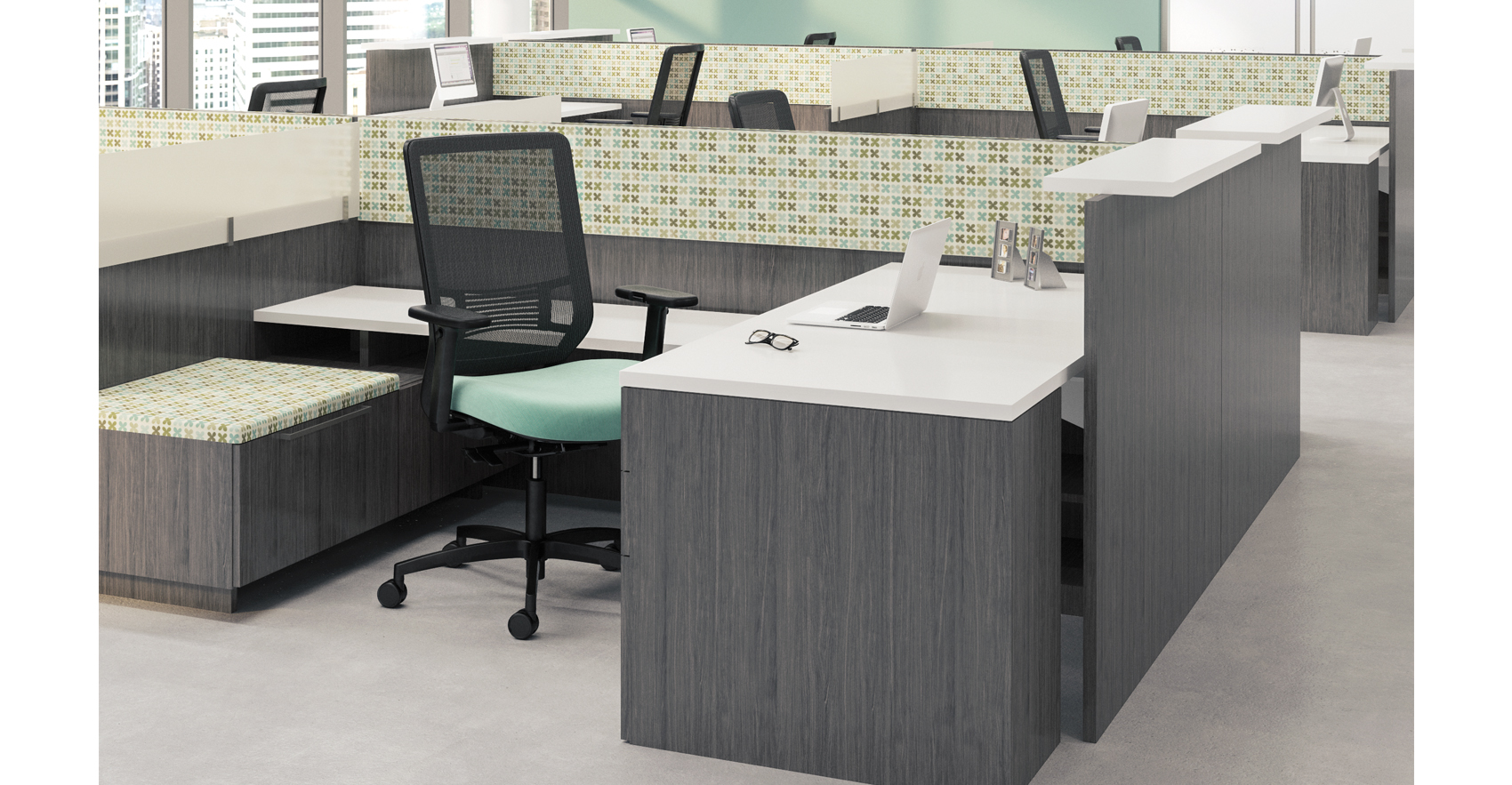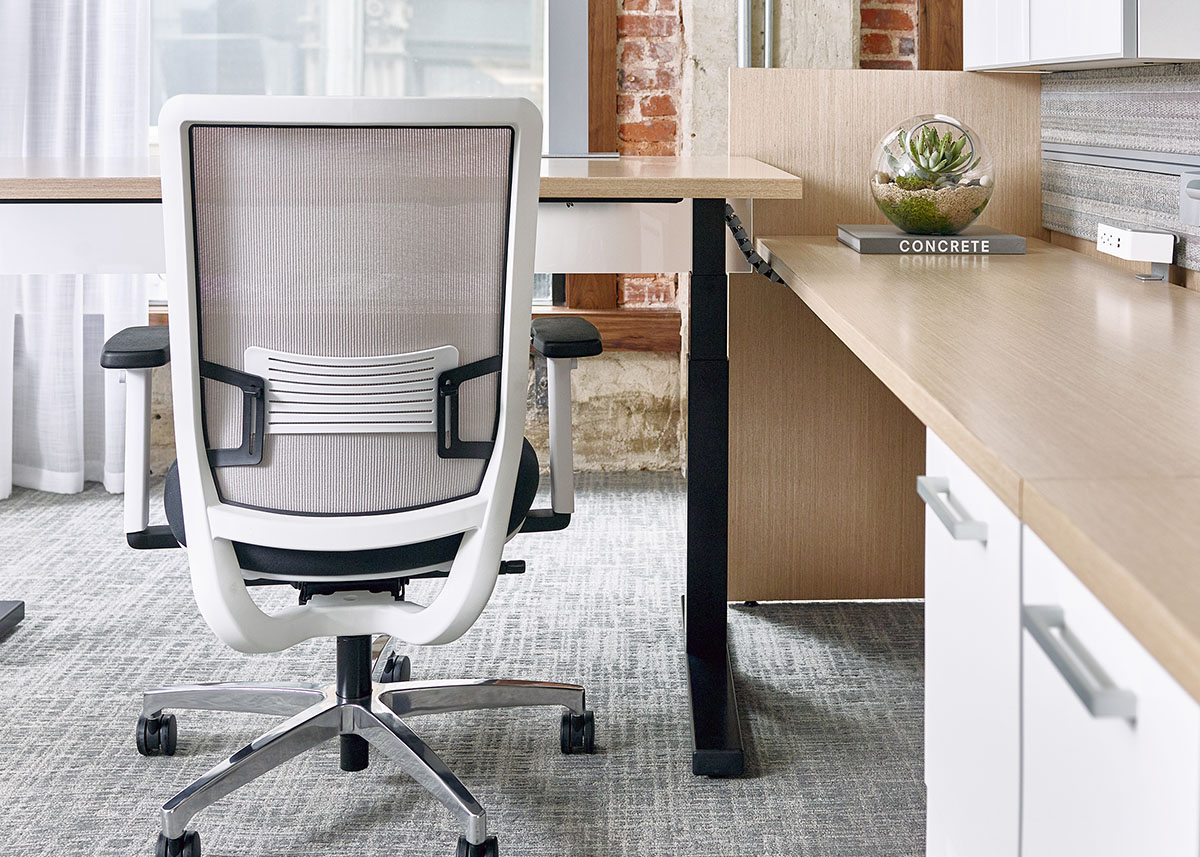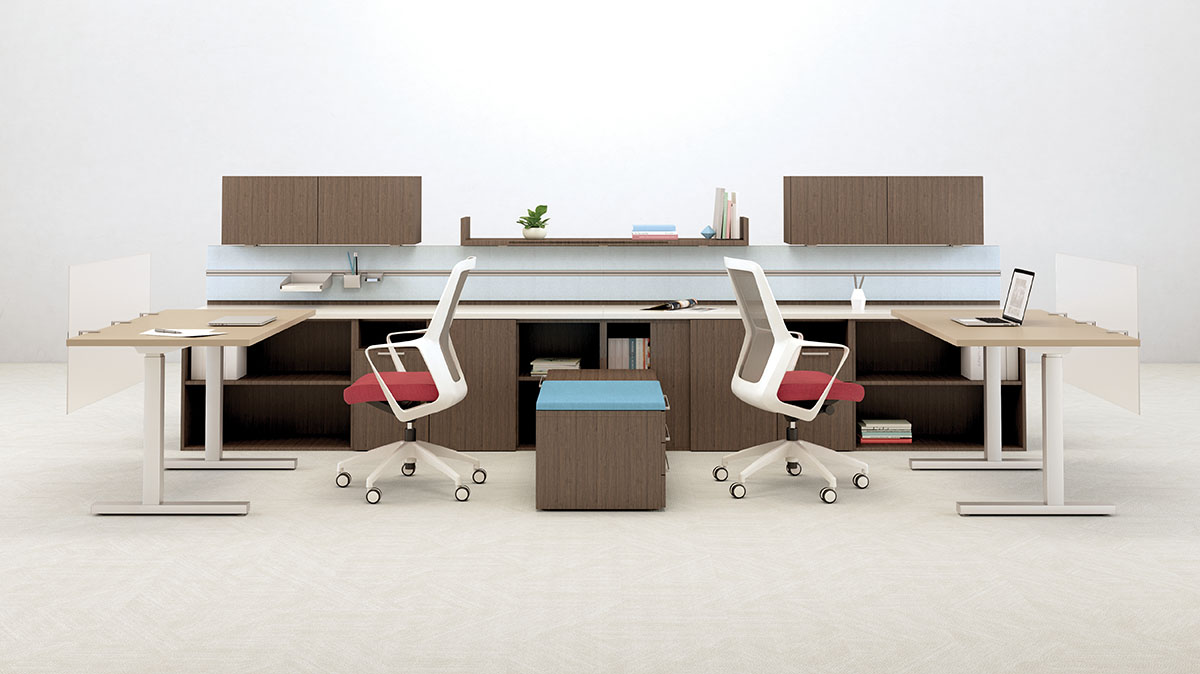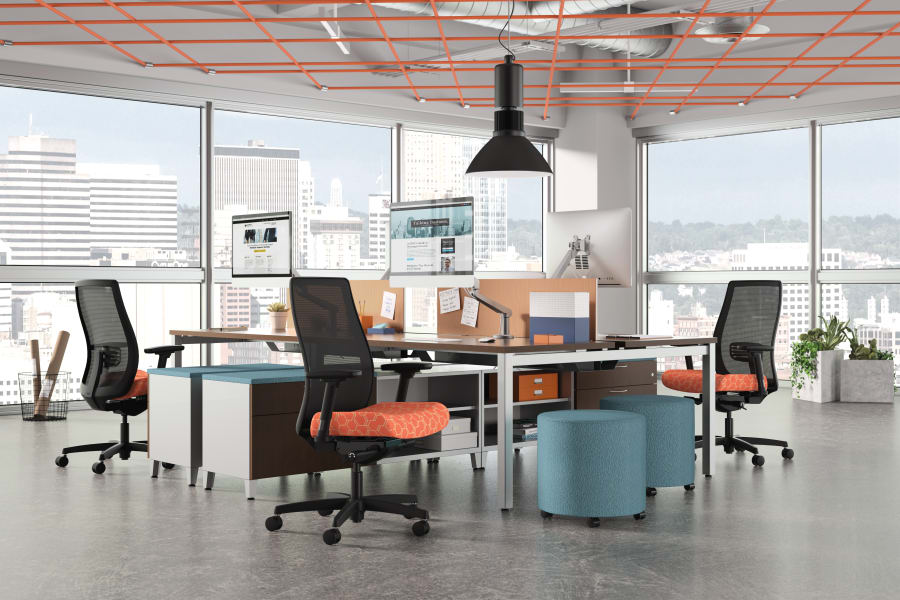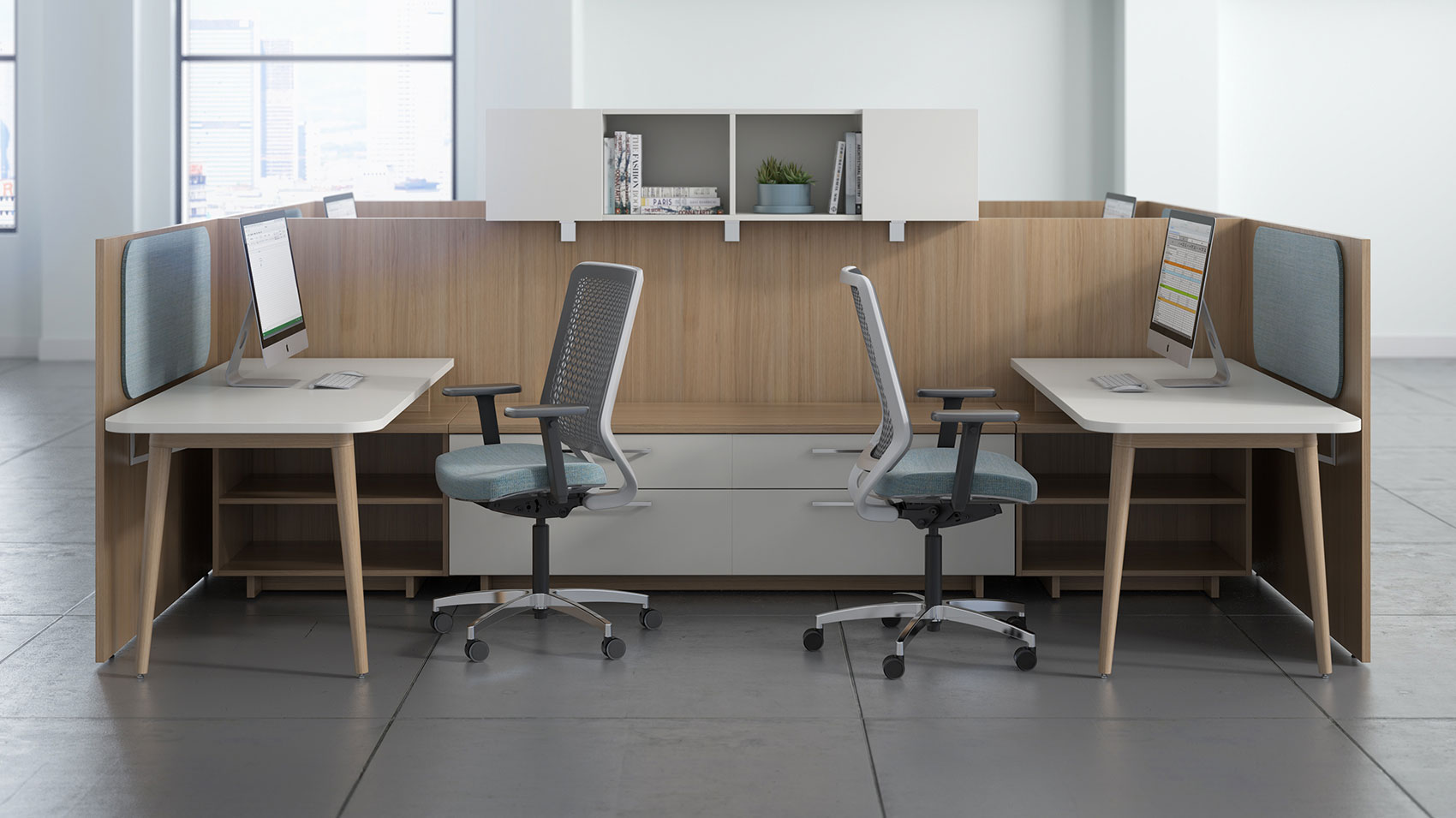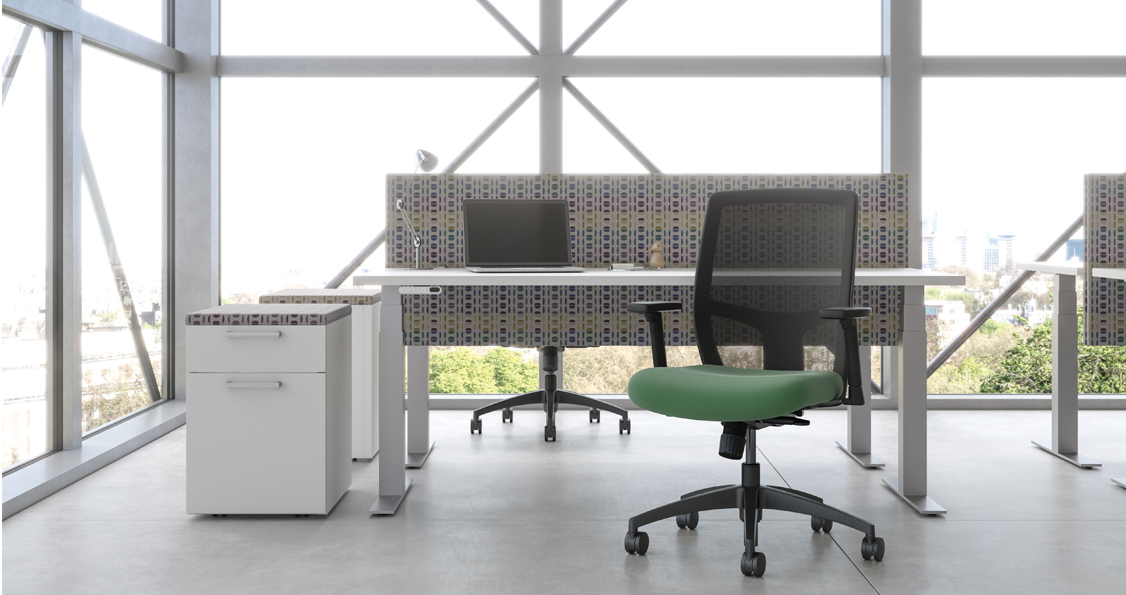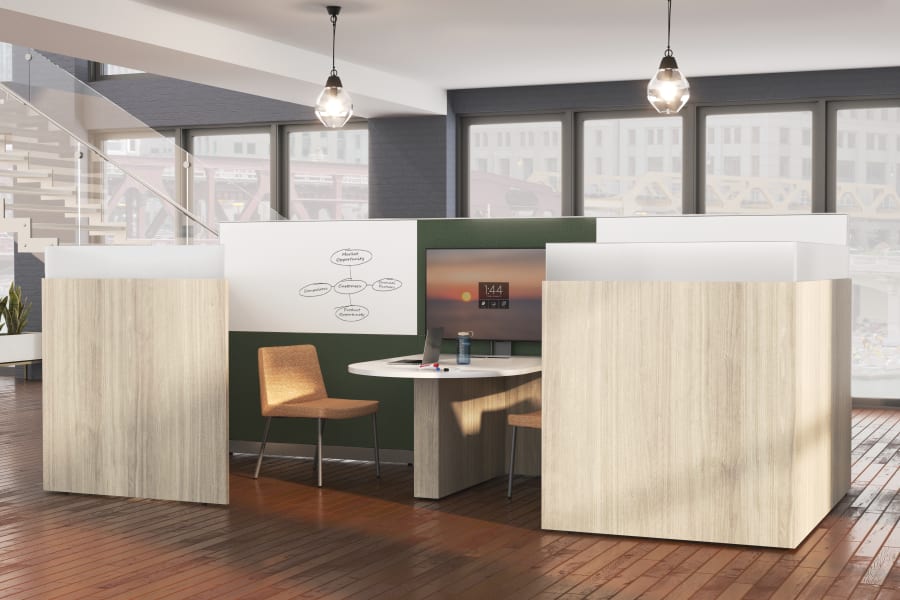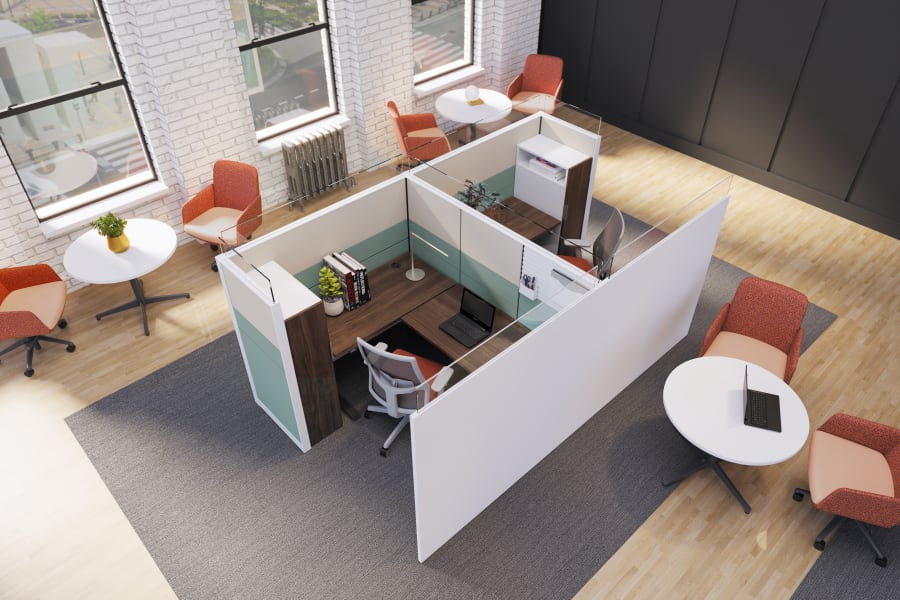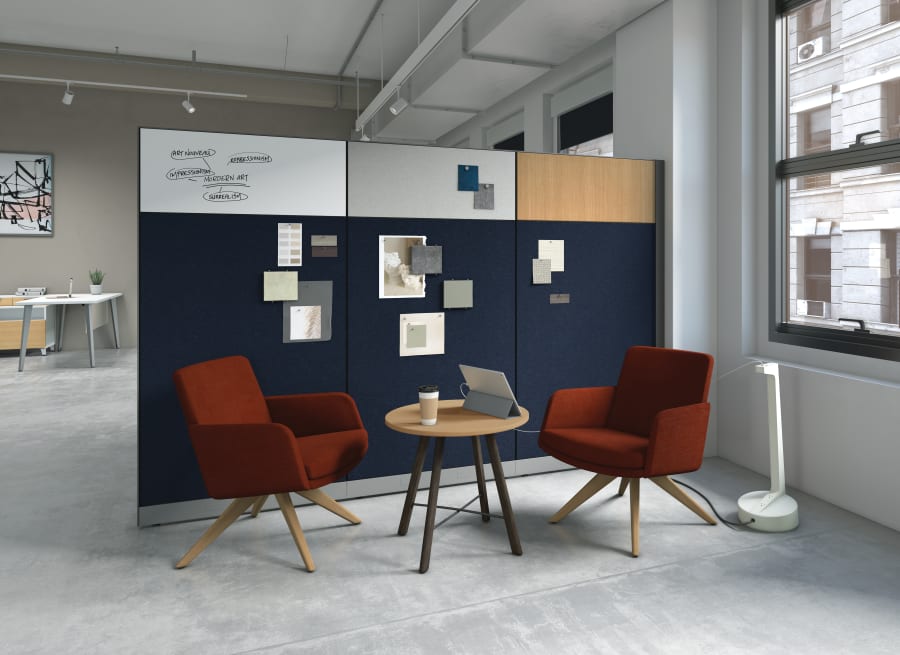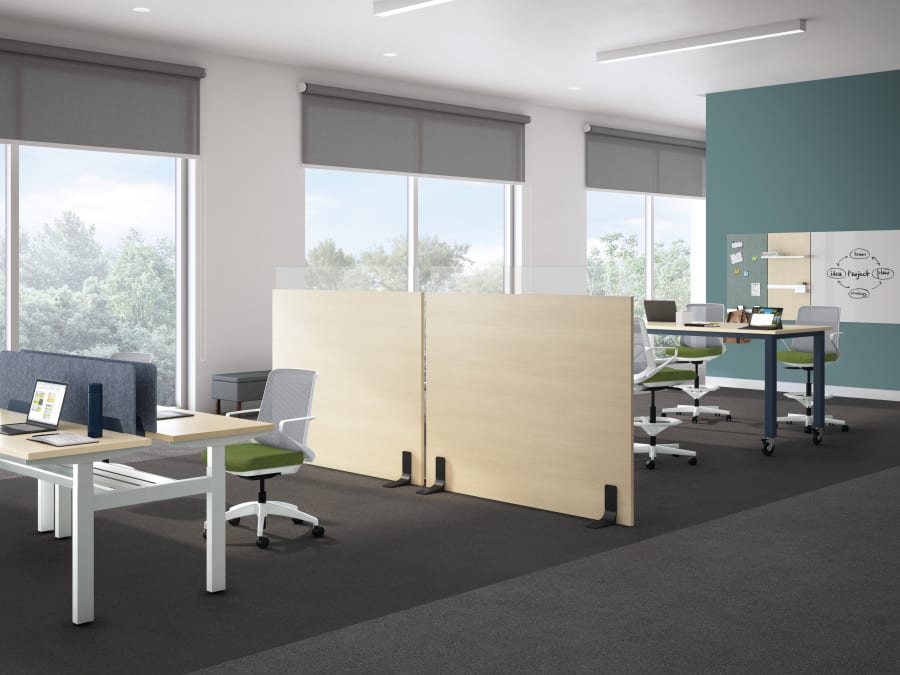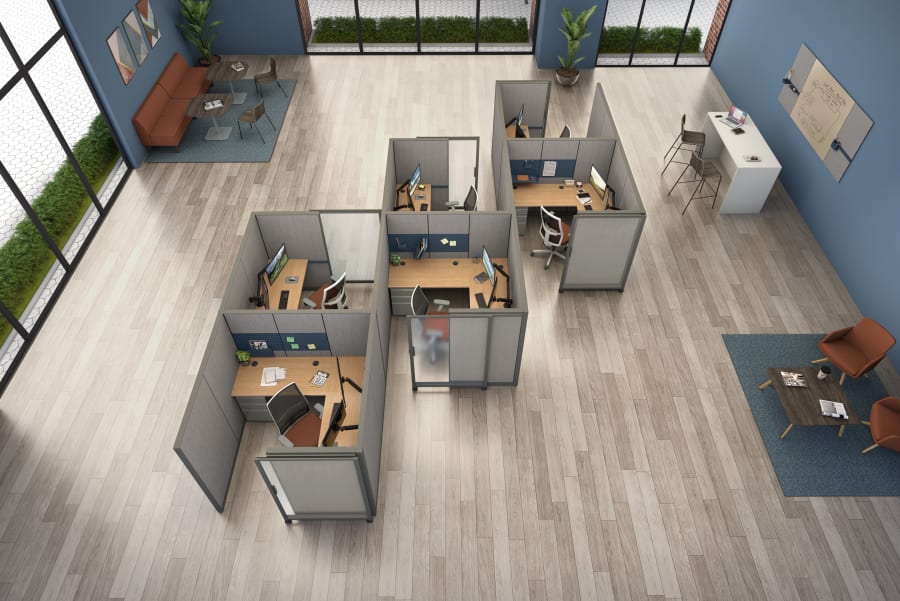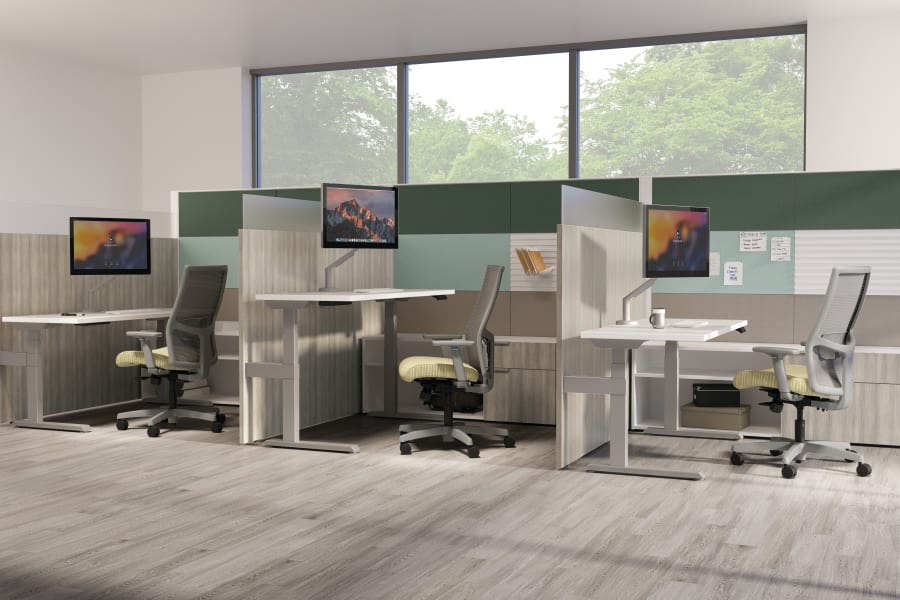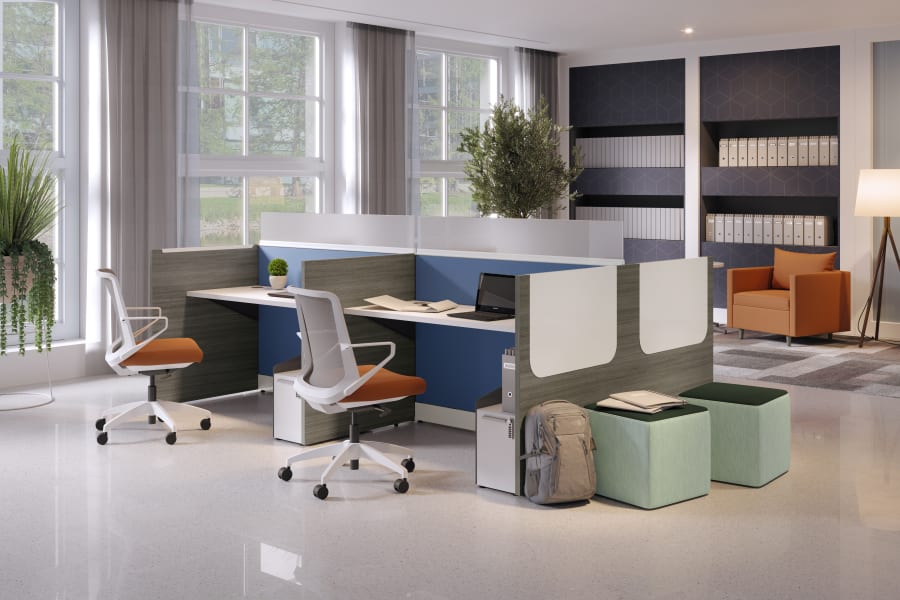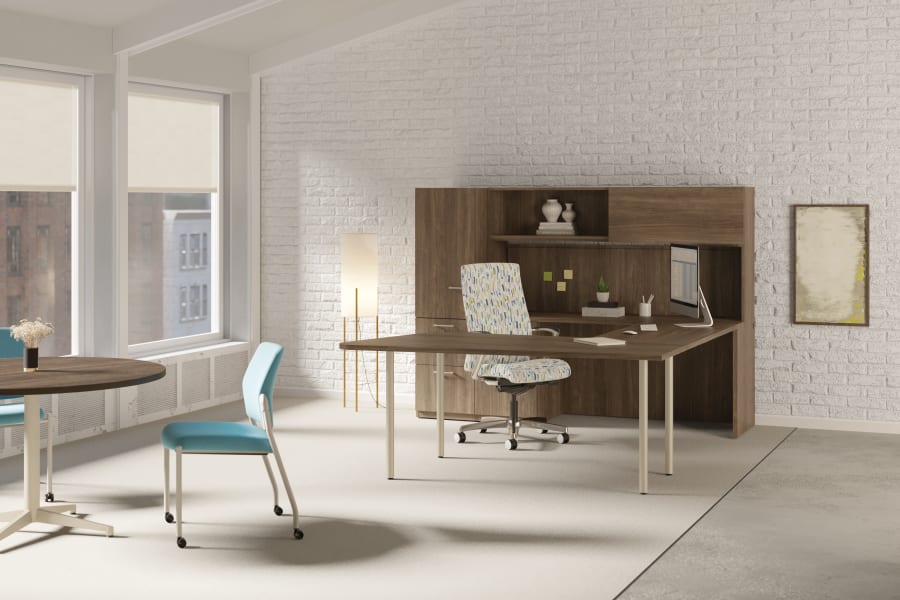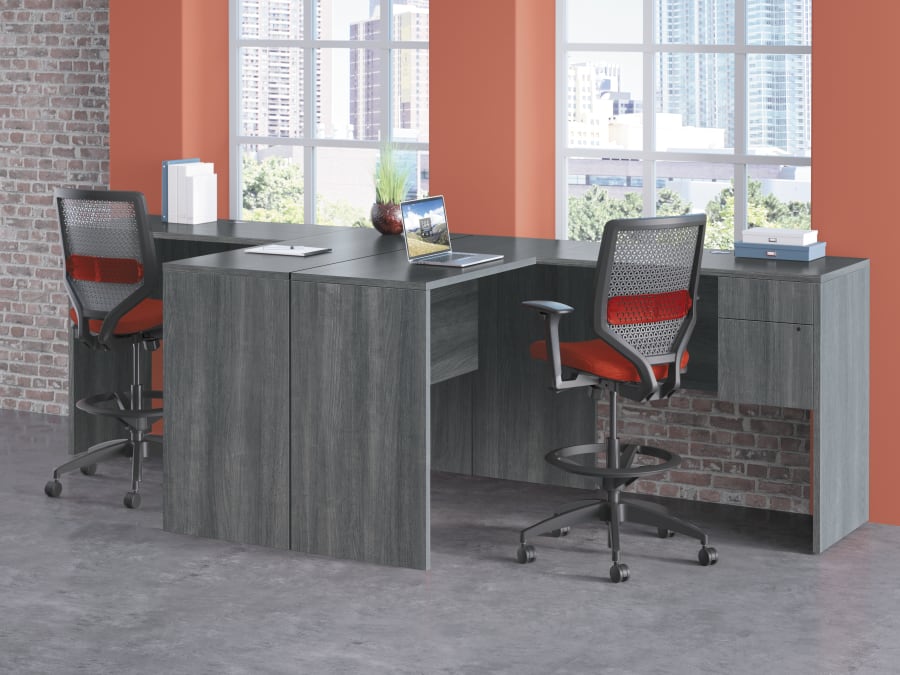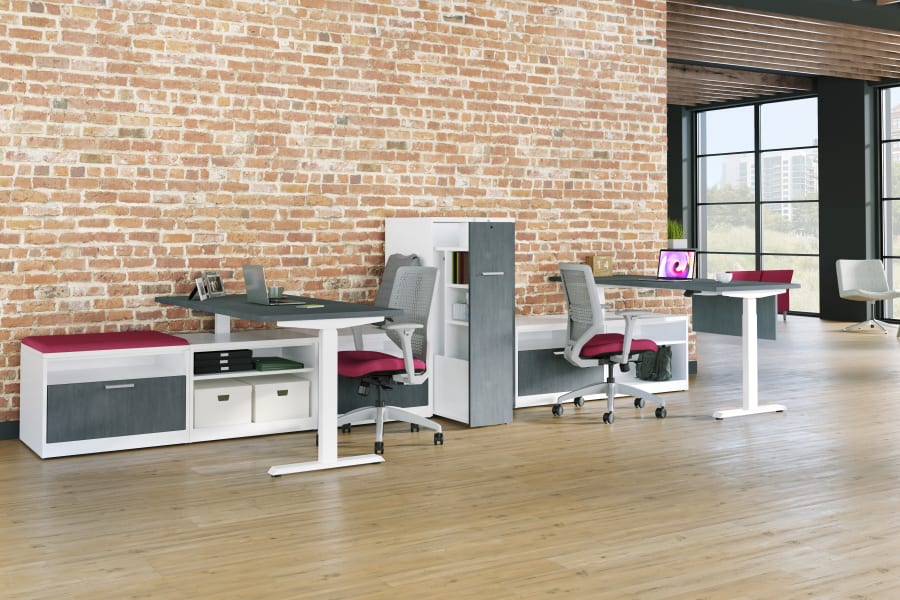
Acoustic screens and dividers that help people focus without closing off the space.

Acoustic screens and dividers that help people focus

without closing off the space.

Sometimes the sound problem starts right where people work.

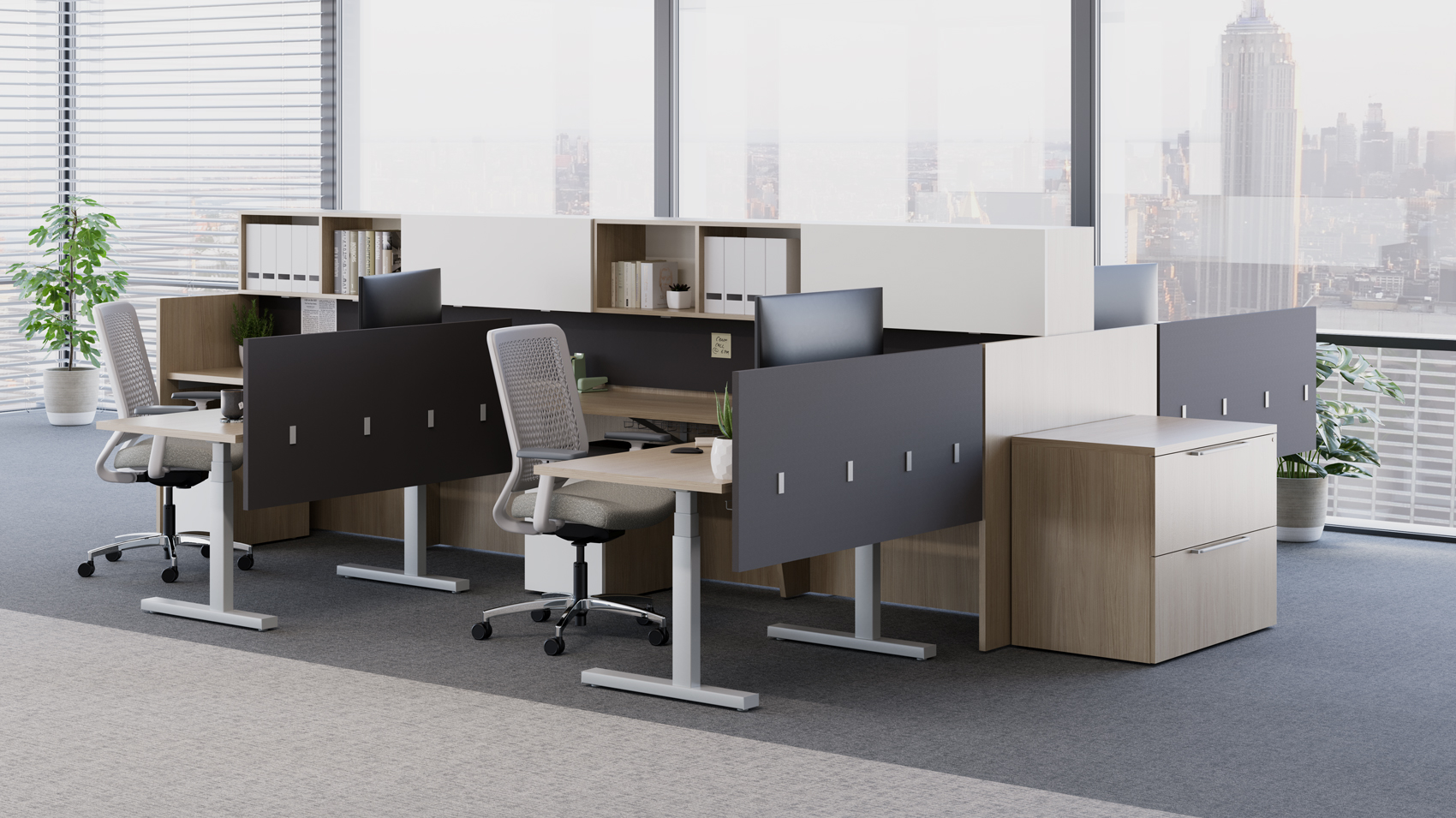
Not every acoustic issue needs a room, wall, or ceiling treatment. In many spaces, the right starting point is closer to the user: a screen between workstations, a divider near a shared table, a mobile acoustic panel, or a desk-level product that creates a better sense of focus and control.

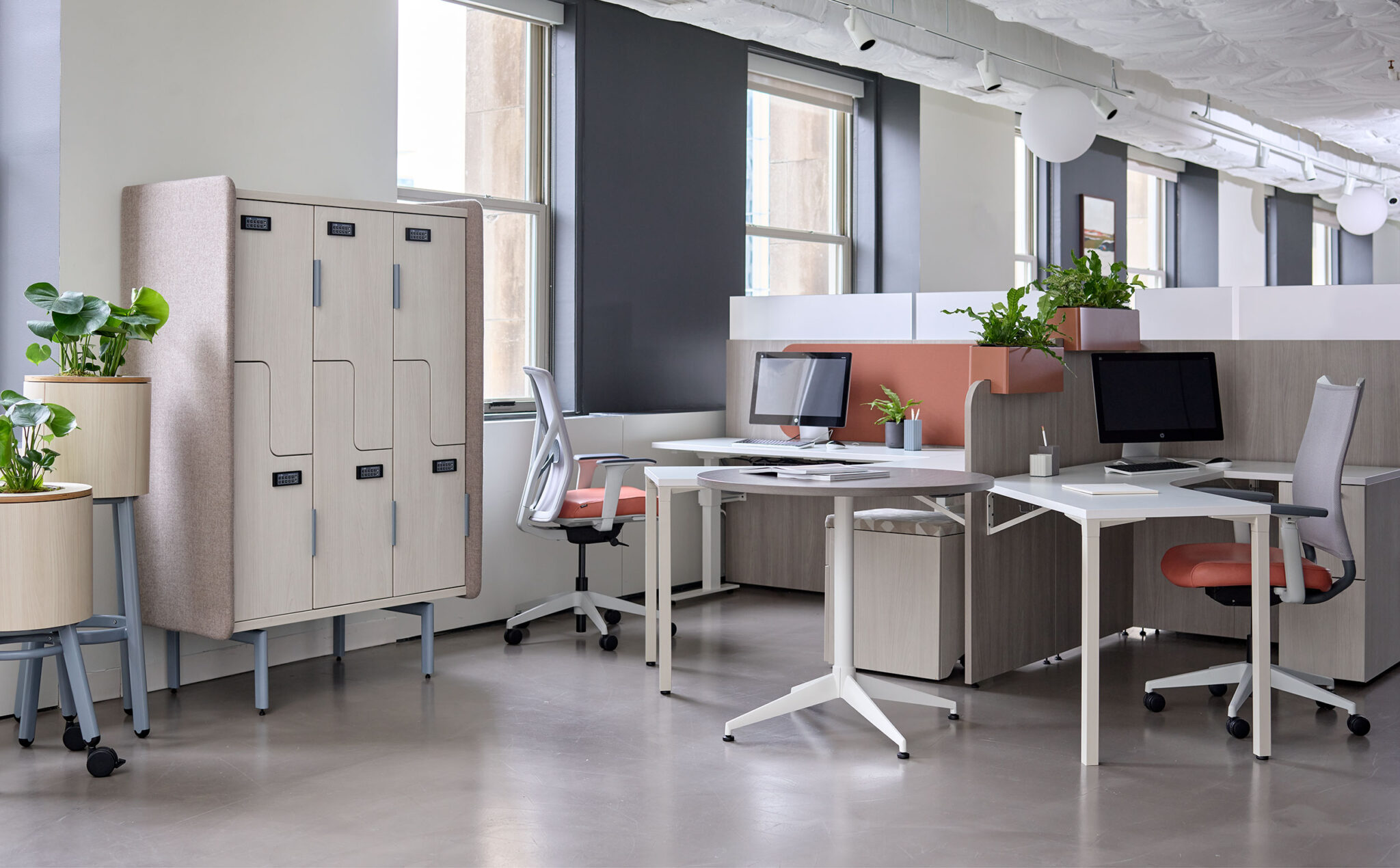
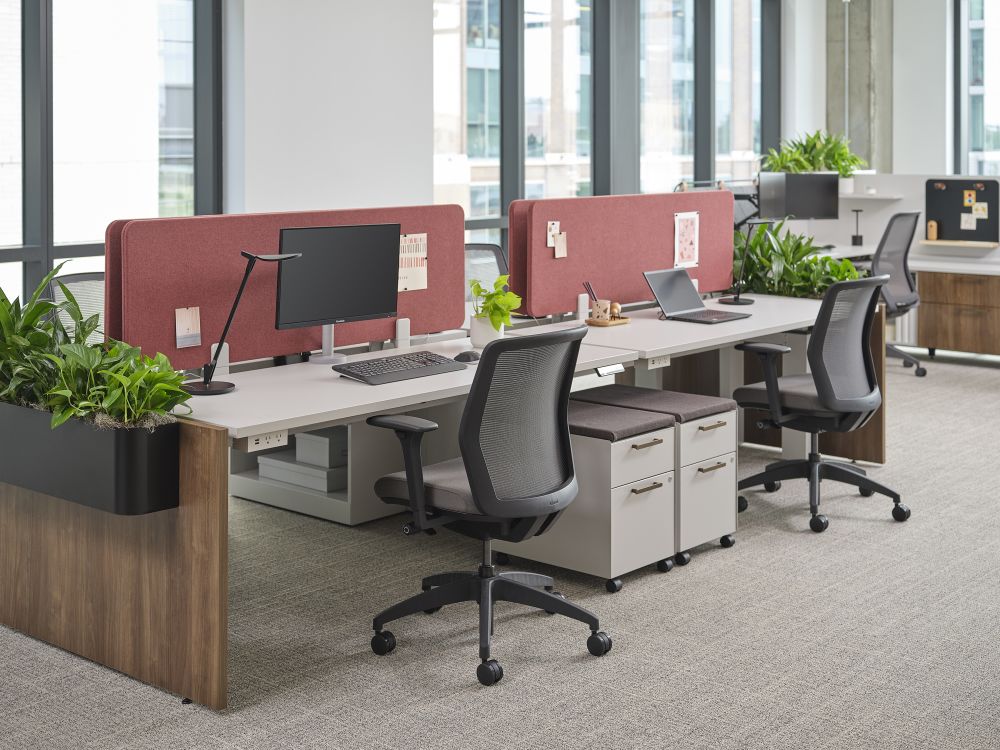
Allsteel Fulton Market showroom workstations with red privacy panels and plants in Chicago, IL

01 Your open work areas feel too exposed

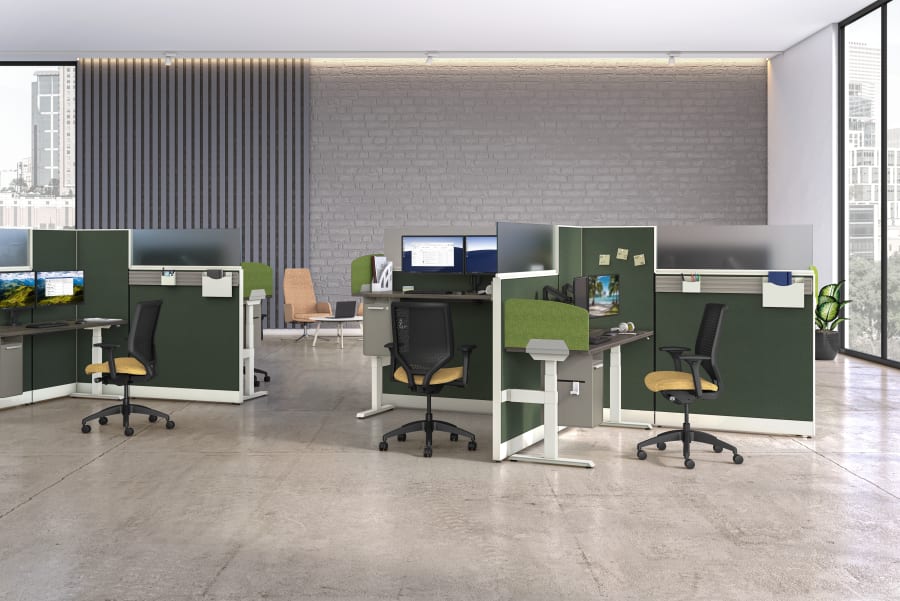
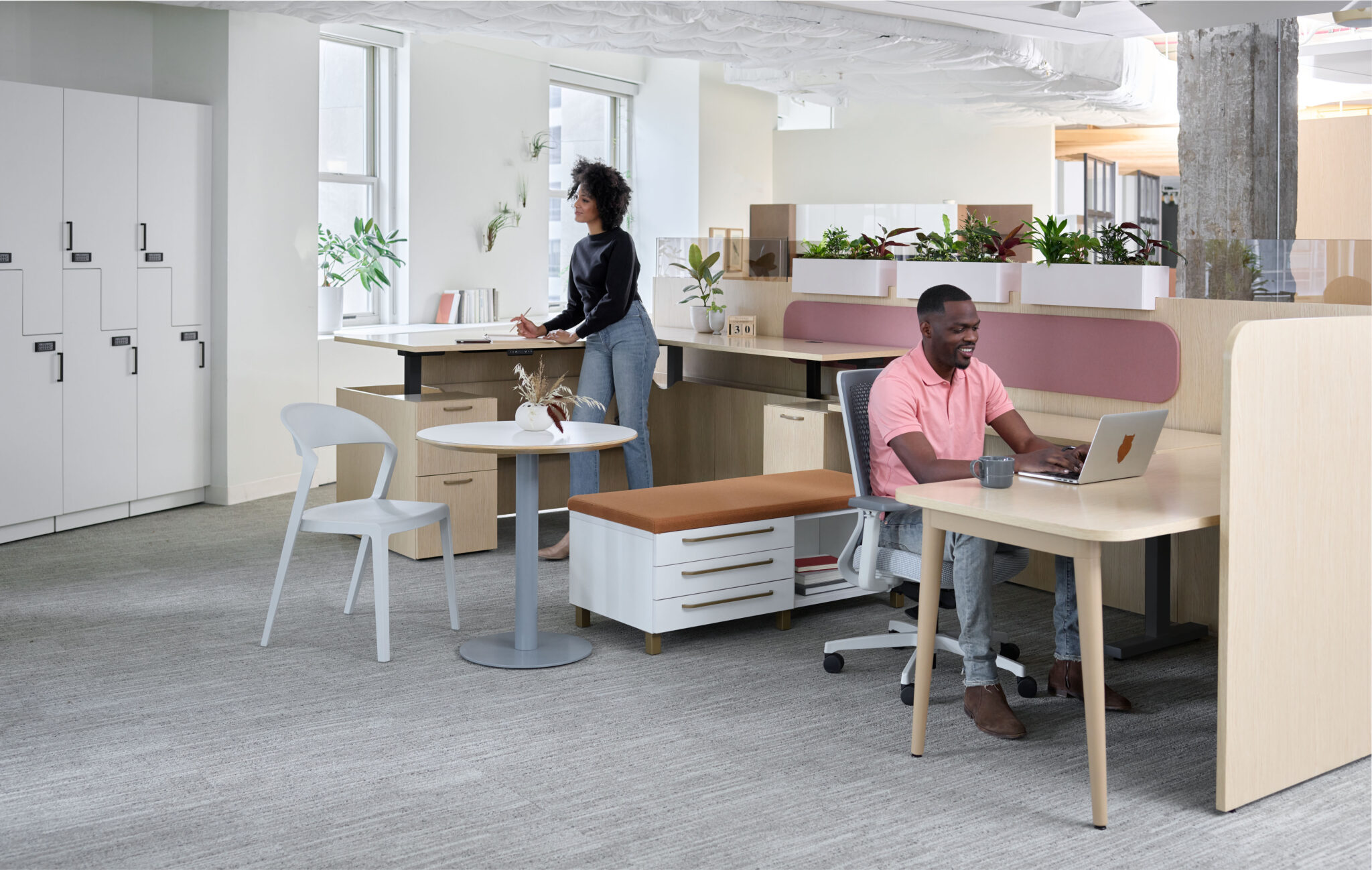
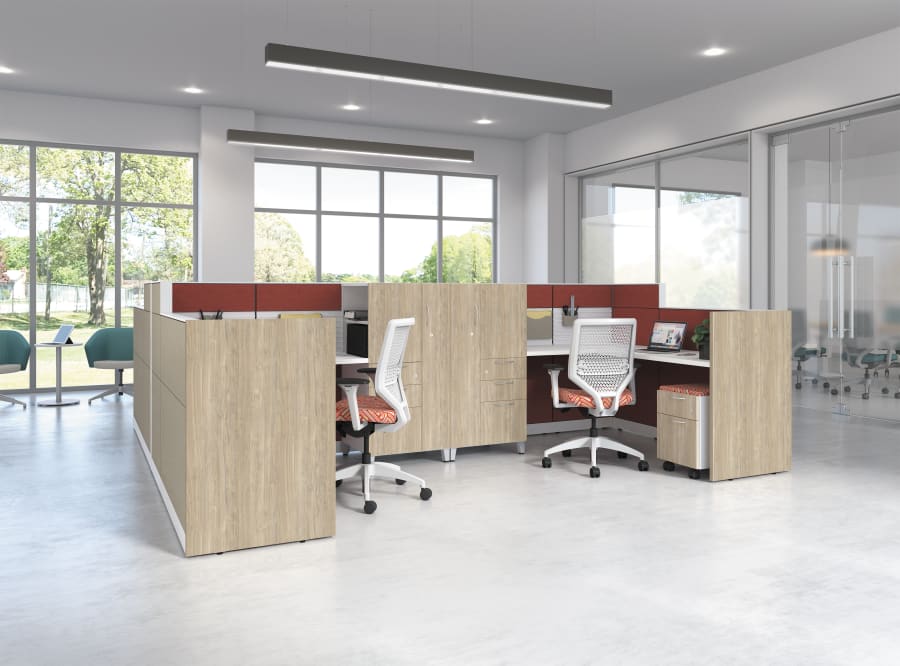
People often need some boundary around their work area, even in an open environment. Screens and dividers can help reduce visual distraction and create a more comfortable sense of personal space.

02 Conversations travel too easily between workstations

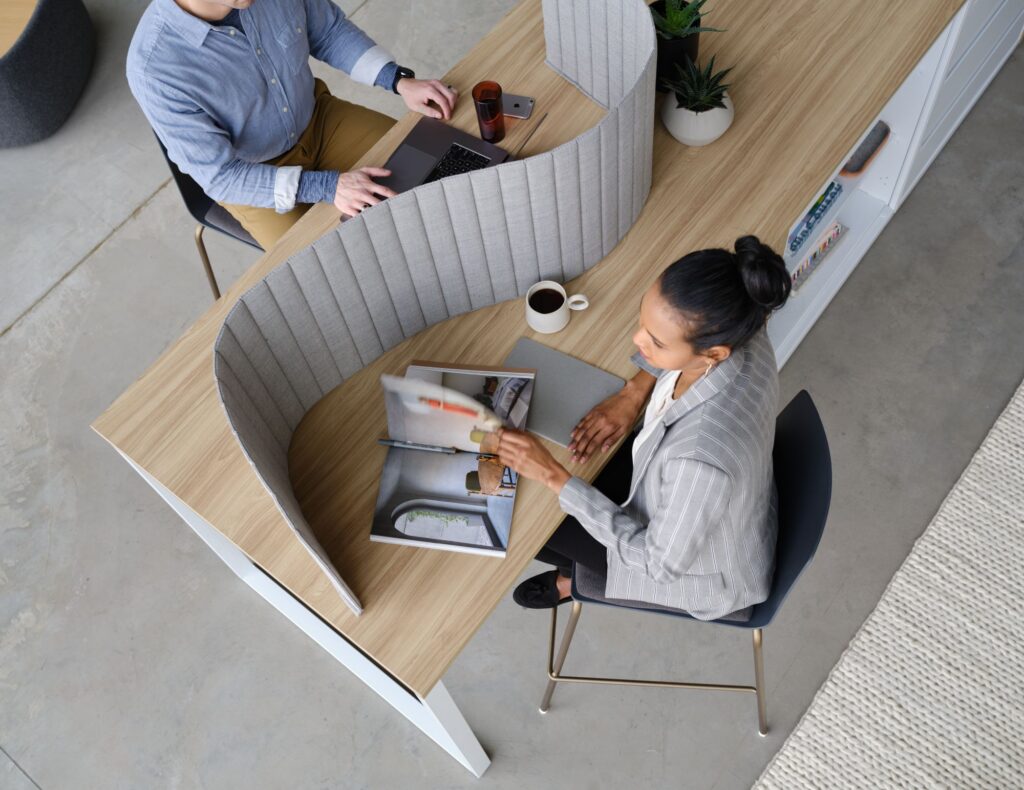
Desk-level acoustic products can help absorb some sound near the user and reduce distraction as part of a broader acoustic strategy. Zilenzio’s table screens are positioned to reduce visual distractions and support focused work, with some options designed for strong sound absorption.

03 Shared workstations need to support different users

Hybrid work, hoteling, and shared stations often need simple, intuitive boundaries. Screens and dividers can help make shared work points feel more intentional without permanently assigning the space to one person.

04 Training rooms, libraries, or study areas need flexible privacy

Some spaces need temporary or movable separation for different activities. Screens and mobile dividers can support group work, quiet study, testing, workshops, or flexible learning setups.

05 Your team needs privacy without more construction

Screens, dividers, and desk-level acoustics can often be added with less disruption than wall systems or major layout changes. They are useful when the space needs improvement but not a full rebuild.

06 The space needs color, texture, or softness

Acoustic screens can also improve the visual feel of a room. Allsteel describes Zilenzio screens and dividers as product solutions that control visual privacy, absorb sound, and add color and energy to the workspace.

Different privacy needs call for different levels of separation.

A desk divider, floor screen, mobile room divider, workstation screen, and acoustic partition all solve different problems. We work with clients to compare options based on focus needs, sound concerns, visual privacy, flexibility, finish direction, durability, budget, and how the product fits with the furniture already in place.

01

Desk Dividers & Table Screens

Create a calmer personal zone at the work surface.

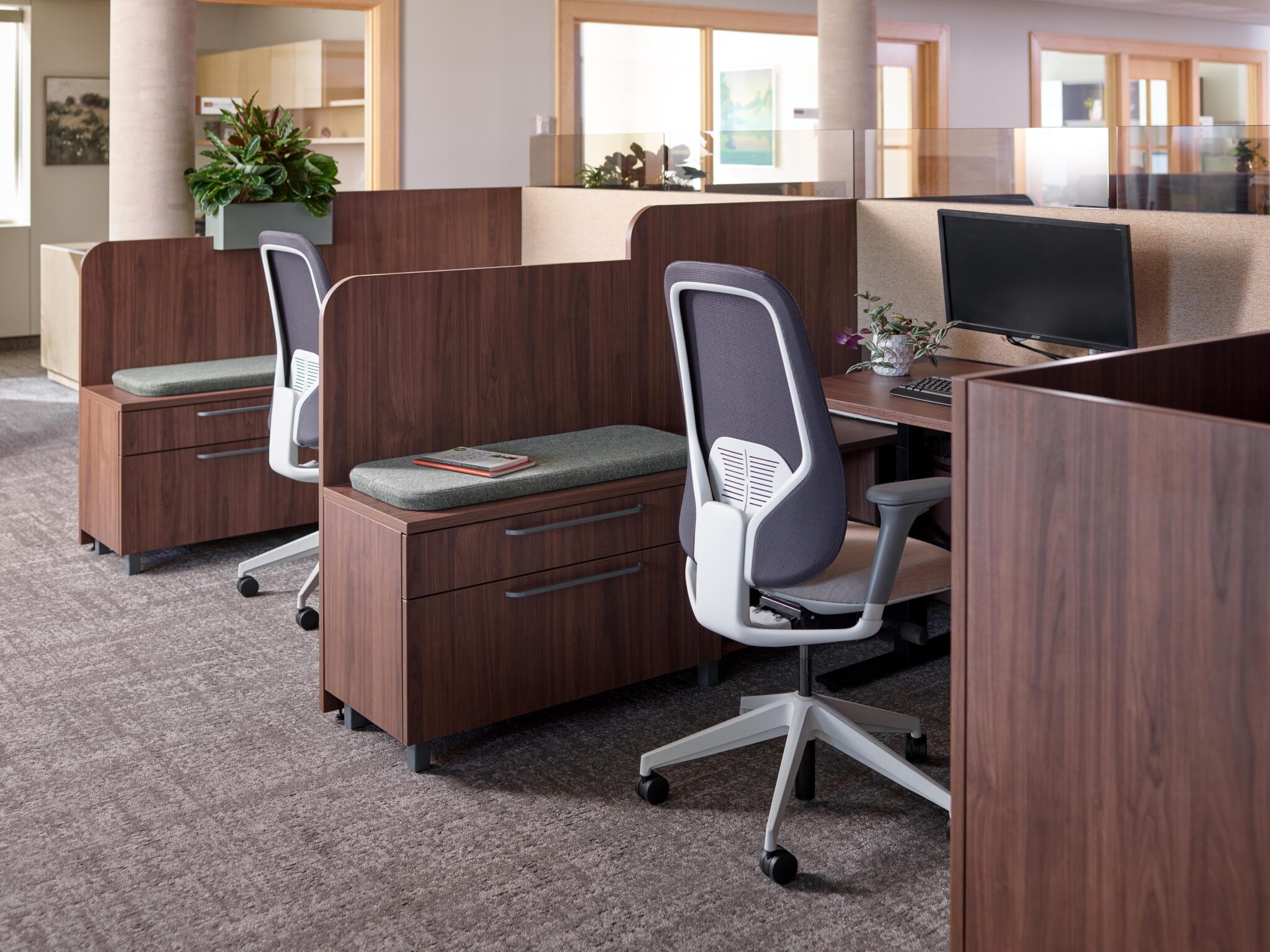
Desk dividers and table screens can help reduce visual distraction and give users a stronger sense of focus at individual or shared workstations. They are especially useful where people work close together, use shared benches, or need more personal boundary without fully enclosing the workstation.

MBI helps clients evaluate screen height, width, mounting method, fabric, cleanability, color, acoustic value, and how the divider works with the workstation, power, monitor arms, and seating.

02

Floor Screens & Freestanding Acoustic Dividers

Add separation where the space needs a softer boundary.

Floor screens and freestanding acoustic dividers can help define work zones, separate nearby activities, and create more comfortable areas without building walls. They are useful in open offices, waiting areas, libraries, training rooms, administrative spaces, and flexible environments.

We help determine whether the screen should be stationary, movable, tackable, fabric-wrapped, color-forward, acoustic-focused, or visually subtle.

03

Workstation Screens & System Add-Ons

Improve focus within existing workstation neighborhoods.

Some workstation areas do not need to be replaced. They need better boundaries. Workstation screens and system add-ons can help increase visual privacy, reduce distraction, and support a more comfortable work experience within an existing furniture plan.

Our team helps evaluate what can be added to current workstations, what needs to coordinate with manufacturer systems, and whether screens should support privacy, acoustics, finish refresh, or a new workplace standard.

04

Mobile Acoustic Dividers

Give teams privacy that can move with the day.

Mobile dividers can help create temporary separation for meetings, project work, testing, training, events, or changing team needs. They are useful when the same space needs to support more than one activity.

That means evaluating mobility, stability, storage, finish durability, acoustic value, tackable or writable surfaces, and whether the divider needs to support frequent movement or occasional reconfiguration.

05

Acoustic Screens for Training, Learning & Libraries

Support focus in spaces that change throughout the day.

Training rooms, classrooms, libraries, student centers, and study areas often need a balance of openness and concentration. Screens and desk-level acoustic products can help create testing areas, study zones, group work boundaries, and quieter places to focus.

We work with clients to choose products that support the activity level, age group, room flexibility, durability needs, and storage requirements of learning environments.

06

Screens for Visual Privacy

Reduce distraction when full acoustic treatment is not the only need.

Sometimes the main issue is visual exposure. People may feel uncomfortable taking calls, reviewing documents, working near traffic paths, or sitting in highly visible areas. Screens can help create a better sense of privacy even when full enclosure is not required.

MBI helps clients evaluate sightlines, desk orientation, traffic paths, screen height, material, finish, and how visual privacy fits into the overall layout.

07

Acoustic Dividers as Design Elements

Use acoustic products to add texture, color, and structure.

Screens and dividers do not have to feel like temporary fixes. They can add softness, color, rhythm, and structure to open environments while also supporting sound absorption and privacy.

We help coordinate acoustic dividers with furniture, finishes, brand colors, lighting, planters, and other interior details so the solution feels intentional instead of patched on later.


The right screen or divider depends on privacy, sound, flexibility, and how the space needs to work.

MBI works with acoustic and furniture partners that offer desk dividers, floor screens, workstation screens, mobile dividers, and related privacy products. The goal is not to add barriers everywhere. The goal is to identify where people need more focus, separation, or comfort, then choose a product that fits the furniture, workflow, budget, and design of the space.
Zilenzio workplace acoustic furniture and sound-management products logo
Unika Vaev acoustic materials and commercial interior products logo
MPS Acoustics commercial sound-management products logo
Lencore Acoustics workplace sound-masking and acoustic solutions logo

Need more focus and privacy without adding walls?

You do not need to know the exact screen, divider, or desk-level acoustic product before starting the conversation. Tell us where people feel exposed, distracted, or too close to surrounding activity. MBI can help compare acoustic screens and divider options that fit your workstations, shared spaces, budget, and larger furniture plan.

frequently asked questions

What are desk-level acoustic products?
Desk-level acoustic products are screens, dividers, panels, or partitions used at or near the work surface to help reduce visual distraction, create personal boundaries, and absorb some sound near the user.
No. Desk dividers can help with visual privacy and sound absorption, but they do not make a workstation soundproof. If stronger speech privacy is needed, MBI may recommend a broader approach that includes layout, wall systems, pods, acoustic panels, ceiling products, or focus rooms.
A desk screen is usually attached to or placed near a worksurface. A floor screen or freestanding divider sits on the floor and can be used to divide areas, create zones, or add privacy between activities. The right choice depends on where privacy is needed.
Often, yes. Existing workstation type, worksurface thickness, mounting options, power, monitor arms, and manufacturer compatibility all matter. MBI can help evaluate what can be added and what may need a different approach.
Yes, they can be part of a broader acoustic and privacy strategy. Screens can reduce visual distraction and help absorb sound near users, but open office sound issues often require a layered approach.
Some products are movable or mobile. Others are mounted or tied to a specific workstation system. MBI can help clients understand which options support frequent change and which are better for fixed applications.
Yes. Screens and mobile dividers can help create study zones, testing areas, group boundaries, quiet work areas, and flexible learning setups. The right product depends on durability, storage, mobility, cleanability, and room use.
Yes. Many screens and dividers are available in different shapes, fabrics, colors, textures, and finishes. They can support privacy while also adding softness, rhythm, or brand character to the space.
Bring MBI in before buying standalone screens. Screens need to coordinate with the workstation, furniture system, user needs, traffic flow, power, monitors, cleaning requirements, and the broader acoustic strategy.
Start with the problem. Tell MBI whether people need more visual privacy, less distraction, better focus, movable separation, or acoustic support at the workstation. From there, we can help compare screens, dividers, pods, wall panels, and other acoustic options.