Ceiling-mounted acoustic solutions that quiet the room without crowding the space.

Ceiling-mounted acoustic solutions that quiet the room

without crowding the space.

When sound needs help from above.

Ceilings are often an overlooked opportunity in acoustic planning. In spaces with glass, concrete, hard flooring, exposed ceilings, tall volumes, or limited wall space, ceiling-mounted acoustic products can help soften the room without taking up usable space.

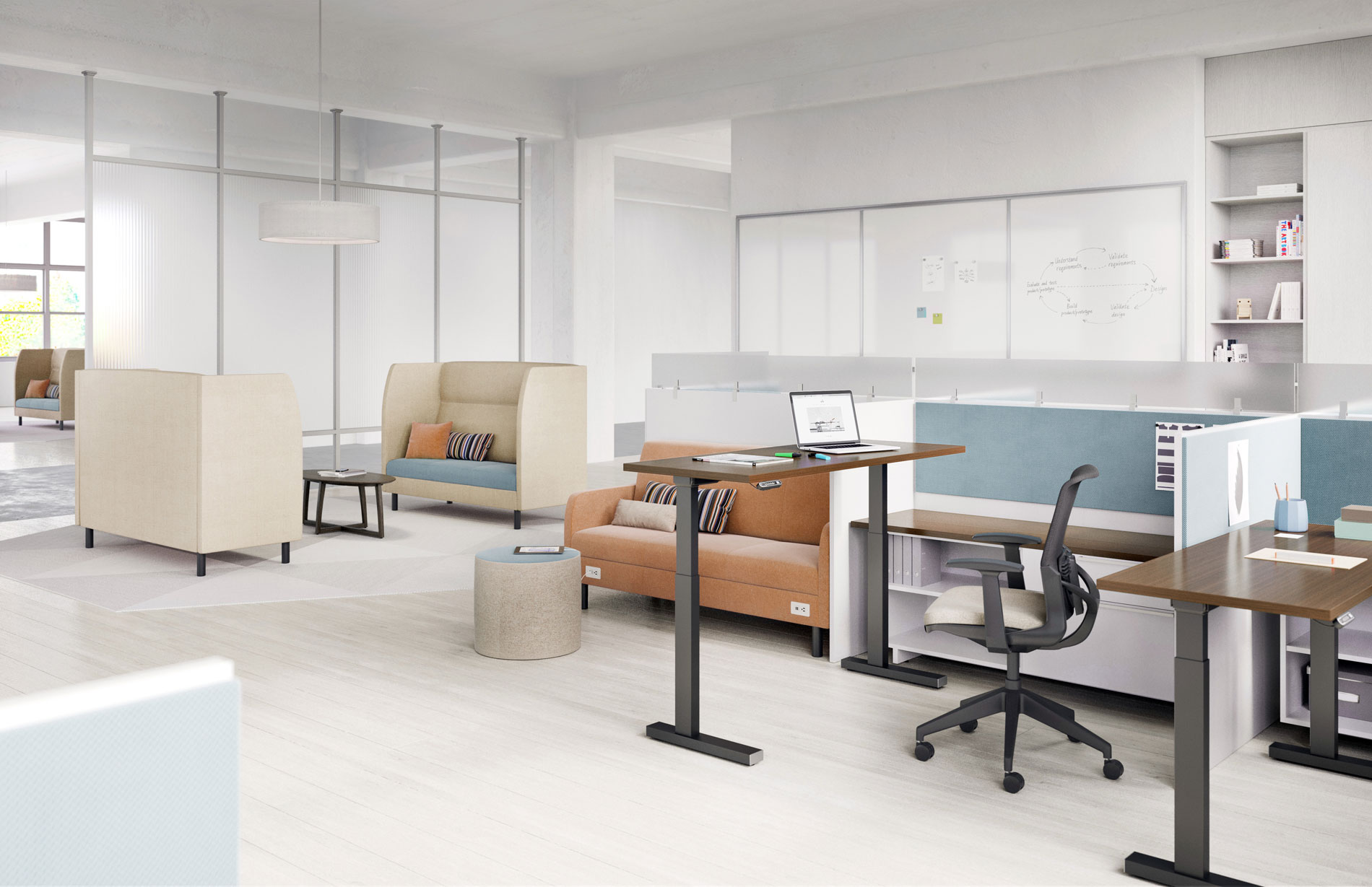
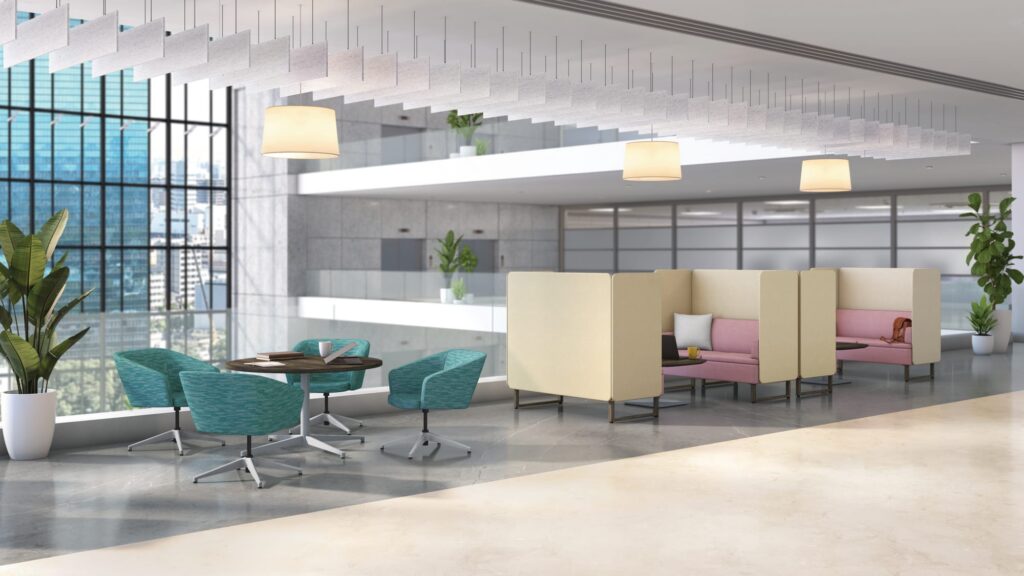
Bright office lounge with collaborative café seating, high-back privacy booths, suspended acoustic ceiling panels, and floor-to-ceiling city views.

01 Your walls are already working hard

Some rooms need wall space for glass, artwork, displays, markerboards, storage, or branding. Ceiling-mounted acoustic products can add sound absorption without competing with those surfaces.

02 Your open area feels too loud or active

Open offices, cafés, libraries, student centers, and collaboration zones can feel louder than expected when sound reflects off hard surfaces. Ceiling-mounted products can help reduce reverberation and make the space feel more controlled.

03 Your ceiling is exposed or visually important

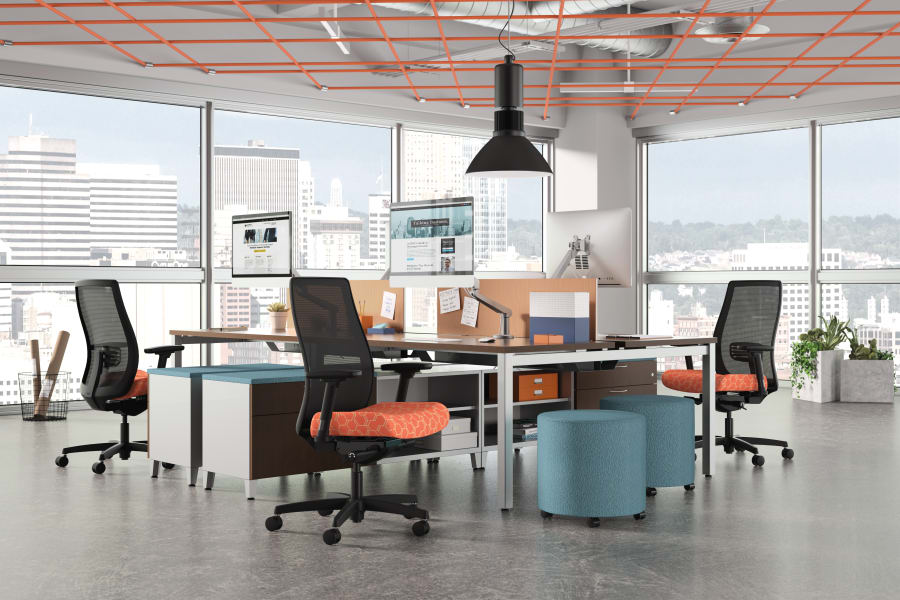
Exposed ceilings, high ceilings, and large open volumes often need acoustic planning because sound has more room to travel. Suspended baffles, clouds, or absorbers can help while also becoming part of the room’s visual rhythm.

04 Your room needs acoustic support without adding furniture

Sometimes the furniture plan is already set, and adding screens or dividers would interrupt the layout. Ceiling-mounted products can provide another way to support sound comfort without changing the way people move through the space.

05 Your shared spaces need to feel more comfortable

Lobbies, waiting areas, cafés, training rooms, and public-facing spaces can feel harsh when sound bounces around. Ceiling-mounted acoustic products can help soften the experience while keeping the room open.

06 Your design needs sound absorption that still looks intentional

Modern ceiling acoustic products can be shaped, arranged, suspended, lit, or patterned in a way that supports the design instead of feeling like a technical fix. Unika Vaev’s acoustic product offering includes acoustic ceiling products, ceiling baffles, and acoustic lighting, which shows how ceilings can be used as both a functional and visual acoustic layer.

Different ceiling conditions call for different acoustic strategies.

A ceiling treatment in a café, open office, classroom, lobby, and meeting area may all use similar products, but they do not solve the same problem. Our team helps compare options based on room size, ceiling height, sound issue, visual intent, installation method, budget, and long-term use.

01

Acoustic Clouds

Soften sound while adding shape and movement overhead.

Acoustic clouds can help absorb sound in open areas while adding a visual layer to the ceiling plane. They work well when the room needs acoustic support but the design should still feel light, open, and intentional.

That means evaluating cloud size, shape, spacing, finish, suspension height, ceiling conditions, lighting, sprinklers, mechanical systems, and how the product should relate to the furniture layout below.

02

Ceiling Baffles

Add sound absorption and visual rhythm in active spaces.

Ceiling baffles can be useful in larger or more active spaces where sound needs to be softened across an open area. They can help create a sense of movement, direction, or zone definition while supporting acoustic comfort.

These products can be especially relevant in cafés, corridors, libraries, student centers, open offices, lobbies, and multipurpose spaces. Unika Vaev’s product listings include acoustic baffles such as Ecoustic Apex Baffle, Ecoustic Arbor Alto, Ecoustic Arbor Bass, and Ecoustic Banner Baffle, showing the range of ceiling-mounted baffle approaches available in the market.

03

Suspended Acoustic Panels

Use the ceiling when wall space is limited.

Suspended panels can help improve acoustic comfort in rooms where wall space is not available or where floor-level products would interrupt the layout. These products can be placed above work areas, meeting zones, circulation paths, cafés, libraries, and shared spaces.

We work with clients to think through where suspended panels will have the most practical impact and how they should coordinate with lighting, furniture, technology, ceiling systems, and the visual design of the room.

04

Acoustic Ceiling Products for Meeting & Training Rooms

Make rooms easier to listen, speak, and participate in.

Meeting and training rooms need sound comfort because people are speaking, presenting, listening, and often joining remotely. Ceiling-mounted acoustics can help reduce echo and support a more comfortable room experience when paired with the right furniture, technology, and wall treatments.

MBI helps clients evaluate ceiling-mounted acoustic options alongside table layouts, seating, screens, lighting, microphones, cameras, and wall surfaces so the room functions as a complete meeting or learning environment.

05

Acoustic Lighting

Combine acoustic comfort with a useful design element.

In some spaces, acoustic lighting can help add sound absorption while also contributing to the lighting and visual character of the room. This can be useful in lounges, cafés, meeting-adjacent spaces, reception areas, corridors, and collaborative settings where ceiling products should feel integrated, not added later.

Unika Vaev describes acoustic lighting as a way to absorb ambient noise while working with the design offices, conference rooms, lobbies, and hallways.

06

High-Ceiling & Open-Volume Spaces

Bring sound control into spaces where noise has room to travel.

High ceilings and open volumes can make spaces feel impressive, but they can also make sound harder to control. Acoustic clouds, baffles, and suspended absorbers can help soften these spaces without closing them in.

We help evaluate ceiling height, open volume, activity level, hard surfaces, furniture layout, and where acoustic products can be placed without disrupting the function or appearance of the room.

07

Existing Space Acoustic Improvements

Improve sound comfort without reworking the whole room.

Ceiling-mounted acoustic products may be useful when an existing space is already occupied or when the furniture and walls are largely staying in place. They can provide another layer of acoustic support without requiring a full redesign.

Our team helps evaluate existing ceiling conditions, mounting needs, lighting, sprinkler coordination, building rules, installation timing, and product options that fit the space as it is.


The right ceiling acoustic solution depends on the room, the ceiling, and the sound issue.

MBI works with acoustic product partners that support a range of ceiling-mounted applications, including acoustic clouds, baffles, suspended absorbers, ceiling panels, and acoustic lighting. The goal is not to fill the ceiling with product. The goal is to place the right solution where it can improve how the space feels and functions.
Zilenzio workplace acoustic furniture and sound-management products logo
Unika Vaev acoustic materials and commercial interior products logo
MPS Acoustics commercial sound-management products logo
Lencore Acoustics workplace sound-masking and acoustic solutions logo

Need acoustic support without crowding the room?

You do not need to know the exact cloud, baffle, panel, or ceiling product before starting the conversation. Tell us what feels too loud, echo-heavy, or uncomfortable in the space. MBI can help compare ceiling-mounted acoustic solutions that fit your room, design intent, budget, installation needs, and broader furniture or interiors plan.

frequently asked questions

What are ceiling-mounted acoustic solutions?
Ceiling-mounted acoustic solutions are products installed or suspended overhead to help absorb sound and reduce echo or reverberation within a room. They may include acoustic clouds, baffles, ceiling panels, suspended absorbers, or acoustic lighting.
Usually, no. Ceiling-mounted acoustic products typically help absorb sound within a room and reduce reverberation. Soundproofing is different and usually involves controlling sound transfer between spaces through walls, doors, ceilings, seals, and other building conditions.
Ceiling-mounted products may be a good option when wall space is limited, the room has high ceilings, the floor needs to stay open, or the design calls for acoustic support overhead. In many cases, ceiling and wall treatments can work together.
They can be useful in open offices, cafés, lobbies, libraries, classrooms, training rooms, conference rooms, corridors, waiting areas, and other shared spaces where echo, activity, or hard surfaces make the room feel loud.
Acoustic clouds are usually suspended horizontal or shaped absorbers. Baffles are often suspended vertically or in repeated arrangements. The right choice depends on the room, ceiling height, design intent, acoustic need, and installation conditions.
Often, yes. Existing ceiling conditions, lighting, sprinklers, mechanical systems, mounting requirements, and building rules need to be reviewed before selecting a product. MBI can help evaluate the practical options.
Yes. Many ceiling-mounted acoustic products are designed to add shape, texture, color, pattern, or visual rhythm while also supporting sound absorption. The best solutions should feel intentional within the room design.
Some acoustic lighting products are designed to combine illumination with sound absorption. They may be useful when a space needs both lighting and acoustic comfort, but product selection should be based on the room’s actual needs.
The right amount depends on the room size, ceiling height, surfaces, activity level, existing finishes, furniture, and the sound issue being addressed. MBI can help compare product options and determine where ceiling treatments may have the most practical impact.
Start with the room experience. Tell MBI whether the space feels echo-heavy, loud, harsh, distracting, or uncomfortable. From there, we can help compare ceiling-mounted acoustic solutions and determine whether ceiling treatment, wall treatment, screens, furniture, or a combination is the right path.