Soft seating that makes spaces feel more comfortable, useful, and complete.

Soft seating that makes spaces feel more comfortable,

useful, and complete.

A lounge area should feel intentional, not leftover.

Soft seating is often where people wait, gather, pause, work informally, or experience the personality of a space. When it is planned well, it adds comfort and purpose. When it is treated as an afterthought, it can become a nice-looking area that nobody uses.

Two professionals working on laptops in a modern office lounge with modular seating, ottomans, plants, and floor-to-ceiling windows.

01 Your shared spaces feel underused

A lounge area may look attractive but still sit empty if it lacks the right comfort, scale, tables, privacy, power access, or reason to be there. MBI helps plan these settings around real behavior.

02 Your space feels too rigid or transactional

Workplaces, healthcare settings, education spaces, and public environments can feel cold when every setting is task-based or formal. Soft seating adds warmth, flexibility, and a more human layer to the environment.

03 Your lobby or waiting area needs a better first impression

Reception and waiting spaces should feel welcoming without sacrificing durability or function. We help balance comfort, cleanability, scale, traffic flow, and the impression the space needs to make.

04 Your teams need informal places to connect

Not every conversation needs a conference room. Soft seating can support quick check-ins, casual collaboration, mentoring, visitor meetings, and more natural moments of connection.

05 Your staff, students, residents, or guests need places to reset

Healthcare staff areas, student lounges, senior living communities, employee cafés, and public spaces benefit from softer settings where people can pause, gather, or recharge.

06 Your design needs warmth and texture

Soft seating can bring color, material, texture, and hospitality-inspired character into commercial interiors while still supporting the practical demands of daily use.

Different lounge settings need different seating strategies.

A lobby, student lounge, employee café, staff respite area, senior living community room, and collaboration setting may all use soft seating, but they do not need the same approach. Our team helps compare options based on comfort, durability, cleanability, scale, flexibility, acoustic needs, brand expression, and long-term use.

01

Lobby & Reception Lounge Seating

Create an arrival experience that feels comfortable and considered.

Lobby and reception seating shapes the first impression of an organization. It should feel welcoming, but it also needs to support traffic, accessibility, durability, cleanability, side tables, circulation, and the amount of time people are likely to wait.

That means evaluating lounge chairs, guest seating, sofas, benches, tables, fabrics, finishes, and layouts that make public-facing spaces feel polished and easy to use.

02

Workplace Lounge Settings

Give employees better places to pause, meet, and work informally.

Workplace lounges can support casual meetings, short-term laptop work, employee breaks, mentoring, touchdown use, and everyday connection. They help a workplace feel less rigid and give people more choice in how they use the office.

We work with clients to select soft seating that fits the culture, layout, durability needs, power access, acoustic expectations, and surrounding furniture plan.

03

Modular Soft Seating

Build lounge areas that can shift as the space changes.

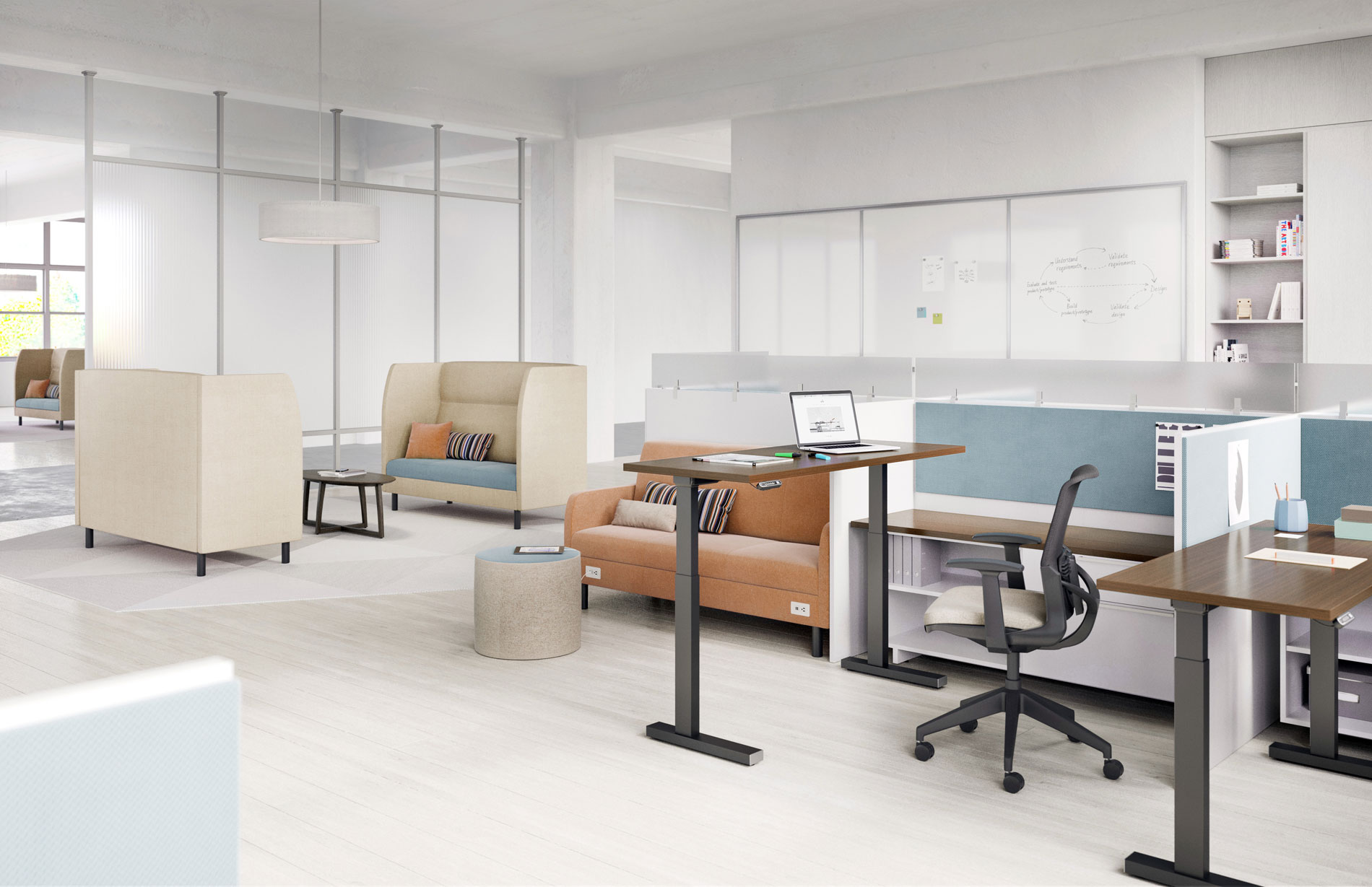
Modular soft seating can help spaces adapt to different group sizes, activities, and room layouts. It works well in lounges, student centers, amenity areas, cafés, collaborative zones, and public spaces where flexibility matters.

MBI helps clients evaluate configuration options, scale, upholstery, mobility, cleanability, storage, replacement needs, and how modular pieces should support the flow of the room.

04

Staff Respite & Quiet Lounge Areas

Support the moments when people need a place to reset.

areas, senior living staff spaces, wellness rooms, and quiet workplace lounges can give people a better place to pause between high-demand tasks.

We help consider comfort, privacy, cleanability, lighting, acoustics, durability, and the emotional tone of the space so these settings feel genuinely useful.

05

Student, Library & Community Lounge Seating

Make shared learning and community spaces easier to use.

Education and community spaces need lounge seating that can support gathering, studying, waiting, informal collaboration, and downtime. These areas often need to feel comfortable while standing up to heavy daily use.

Our team helps compare products for durability, flexibility, cleanability, layout, power access, supervision, storage, and long-term maintenance.

06

Senior Living Lounge Seating

Create shared spaces that feel warm, comfortable, and dignified.

Senior living lounge areas should feel less institutional and more welcoming while still supporting daily use by residents, families, staff, and visitors. Comfort, stability, scale, cleanability, arms, upholstery, and traffic flow all matter.

Together, we select seating that supports conversation, relaxation, activities, waiting, family visits, and shared daily life.

07

Acoustic Lounge Seating

Use soft seating to create calmer places inside active environments.

Some lounge settings need to support focus, privacy, or a quieter experience. High-back lounge seating, booth-style seating, acoustic lounge pods, and upholstered privacy elements can help create softer boundaries without fully enclosing the space.

This type of solution can be useful in open offices, libraries, student centers, waiting areas, and shared work environments.

08

Lounge Tables & Supporting Pieces

Make soft seating more usable with the right supporting pieces.

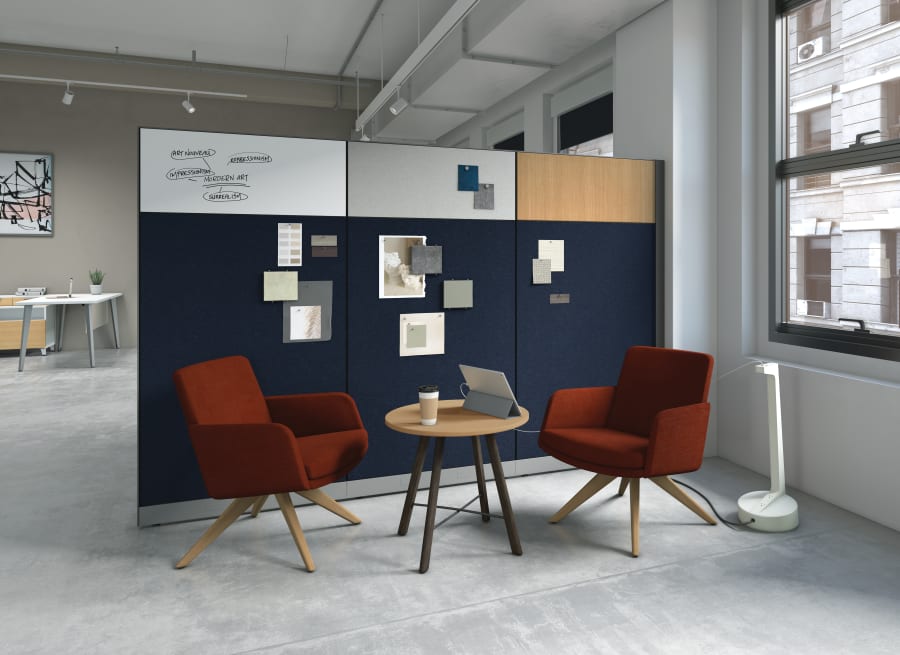
A lounge setting usually needs more than seats. Occasional tables, laptop-height tables, side tables, lighting, planters, rugs, accessories, and nearby storage can determine whether people actually use the space.

We work with clients to coordinate the full setting so people have places for drinks, laptops, bags, devices, materials, and everyday use.

The right soft seating depends on comfort, durability, scale, and the experience the space needs to create.

MBI works with partner brands that support a wide range of lounge and soft seating needs, from refined reception spaces to flexible student lounges, workplace cafés, staff respite areas, and senior living environments. The goal is not to simply select a sofa. The goal is to build a setting people will actually use.
Allsteel commercial office furniture logo in black
Gunlocke office furniture logo in black on a transparent background
HON commercial office furniture logo in bright green

Ready to create lounge spaces people actually use?

You do not need to know the exact sofa, lounge chair, sectional, or fabric before starting the conversation. Tell us what kind of experience the space needs to create, who will use it, and what feels missing today. MBI can help compare lounge and soft seating options that fit your space, budget, durability needs, and broader furniture plan.

faqs

What is lounge and soft seating?
Lounge and soft seating includes sofas, lounge chairs, sectionals, benches, poufs, modular seating, booth-style seating, and related pieces used in waiting areas, lounges, cafés, collaboration spaces, student areas, staff spaces, and public environments.
Task and conference seating are usually designed around focused work or formal meetings. Lounge seating supports a softer experience: waiting, informal work, casual meetings, gathering, respite, or relaxed collaboration.
Yes. Commercial lounge seating can be specified with durable frames, appropriate upholstery, cleanable materials, replaceable components, and construction suited for high-use environments. Product selection should match the space and the people using it.
Lounge areas often go unused when they are poorly located, uncomfortable, too exposed, missing tables or power, too formal, too casual, or disconnected from how people actually use the building. MBI helps plan these spaces around behavior, not just appearance.
Yes, when it is planned correctly. Lounge areas can support laptop work, informal meetings, short calls, mentoring, waiting, and collaboration if the seating, table height, power access, privacy, and acoustics are considered.
It should be discussed early enough to coordinate with layout, circulation, power, lighting, finishes, acoustics, budget, and lead times. If soft seating is treated as a final add-on, the space may feel incomplete or disconnected.
Yes. Sofas, modular seating, banquettes, high-back seating, planters, screens, rugs, and tables can help shape zones without building walls.
Yes. These settings often need soft seating that balances comfort, durability, cleanability, accessibility, traffic flow, and long-term maintenance.
Yes. A lounge setting usually needs supporting pieces to work well. MBI can help coordinate side tables, occasional tables, laptop-friendly tables, lighting, planters, rugs, accessories, and nearby storage where appropriate.
Start with how the space should feel and function. Tell MBI whether the area needs to support waiting, gathering, informal work, staff respite, student use, senior living, or visitor experience. From there, we can help compare lounge and soft seating options.