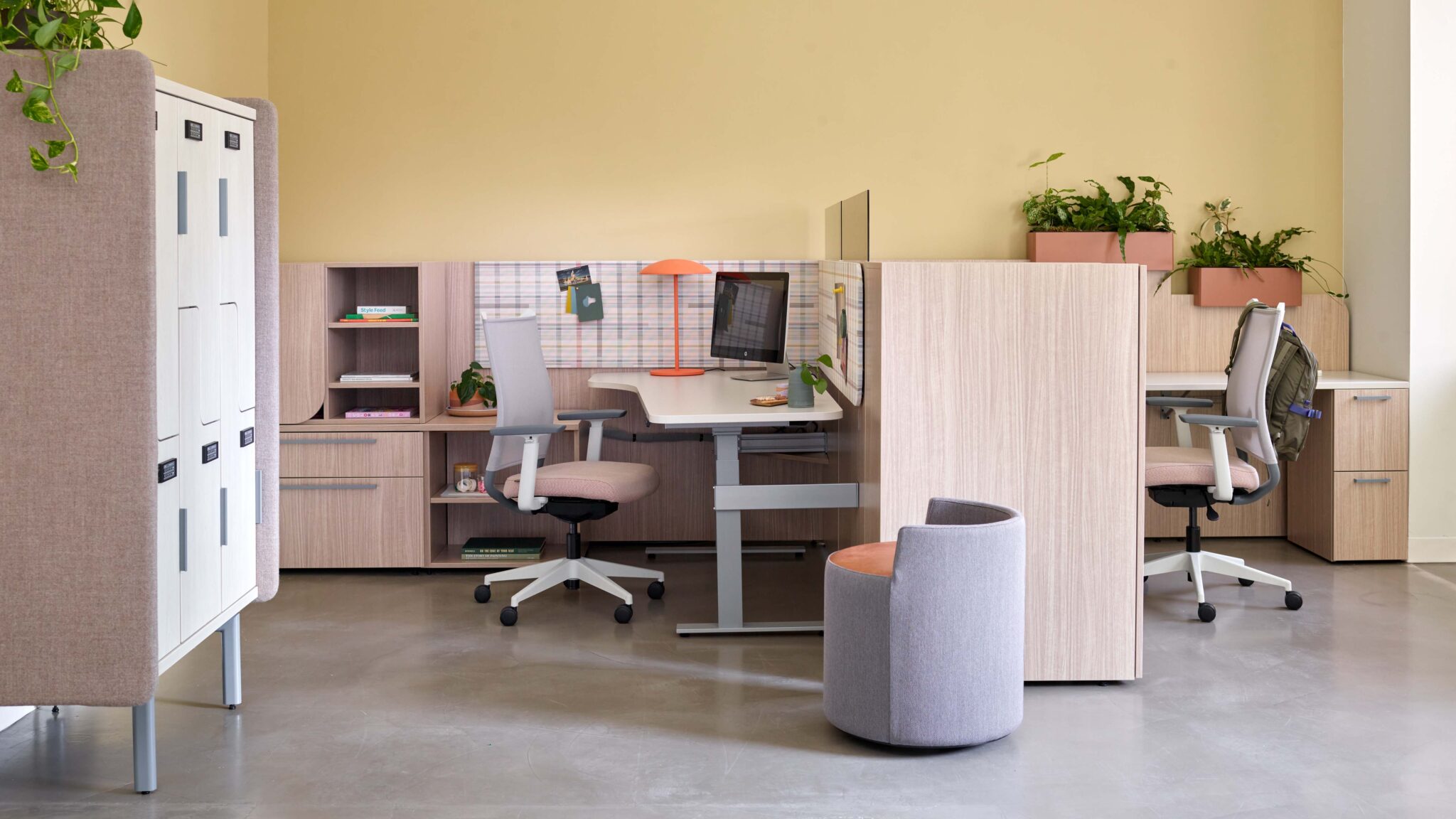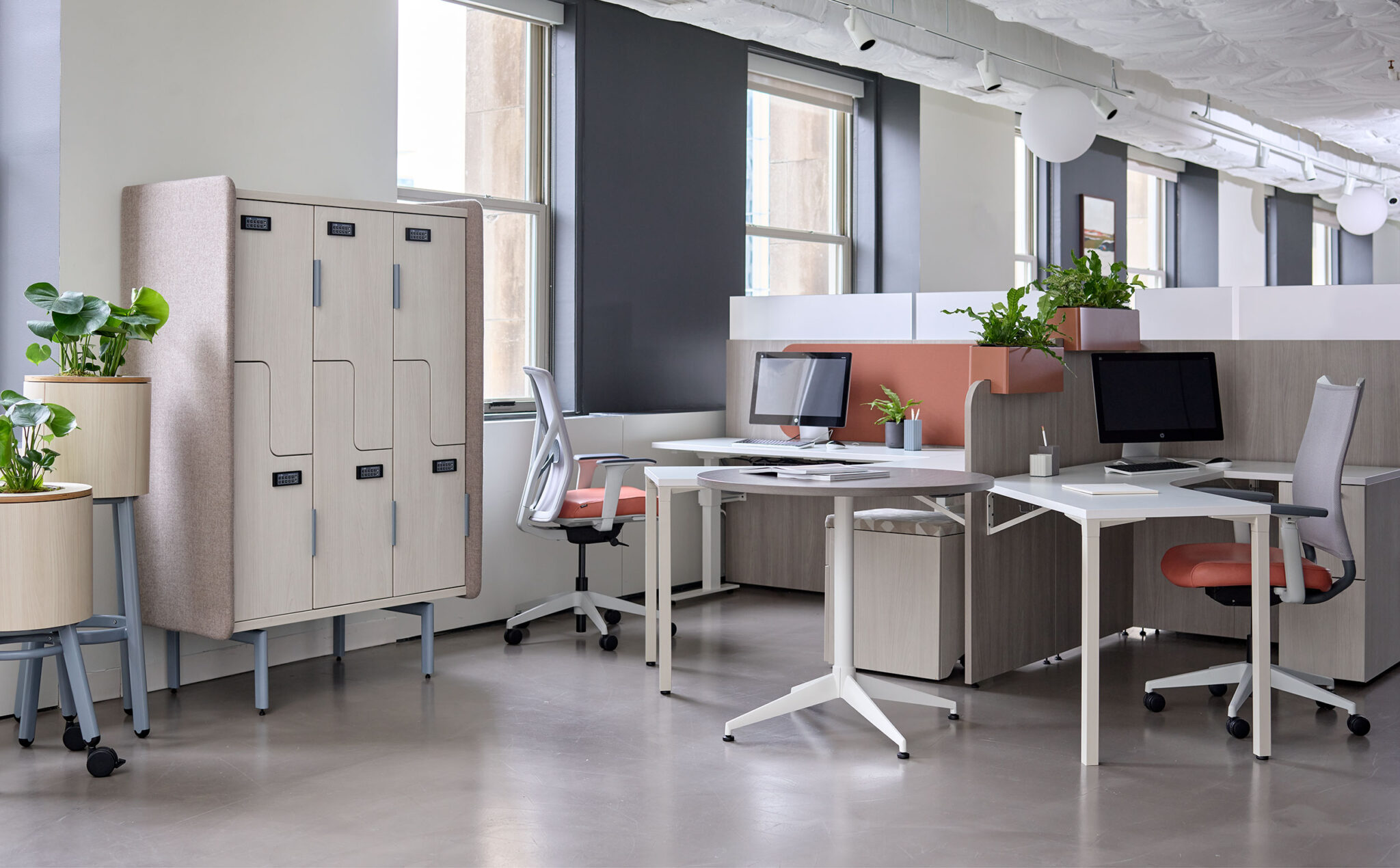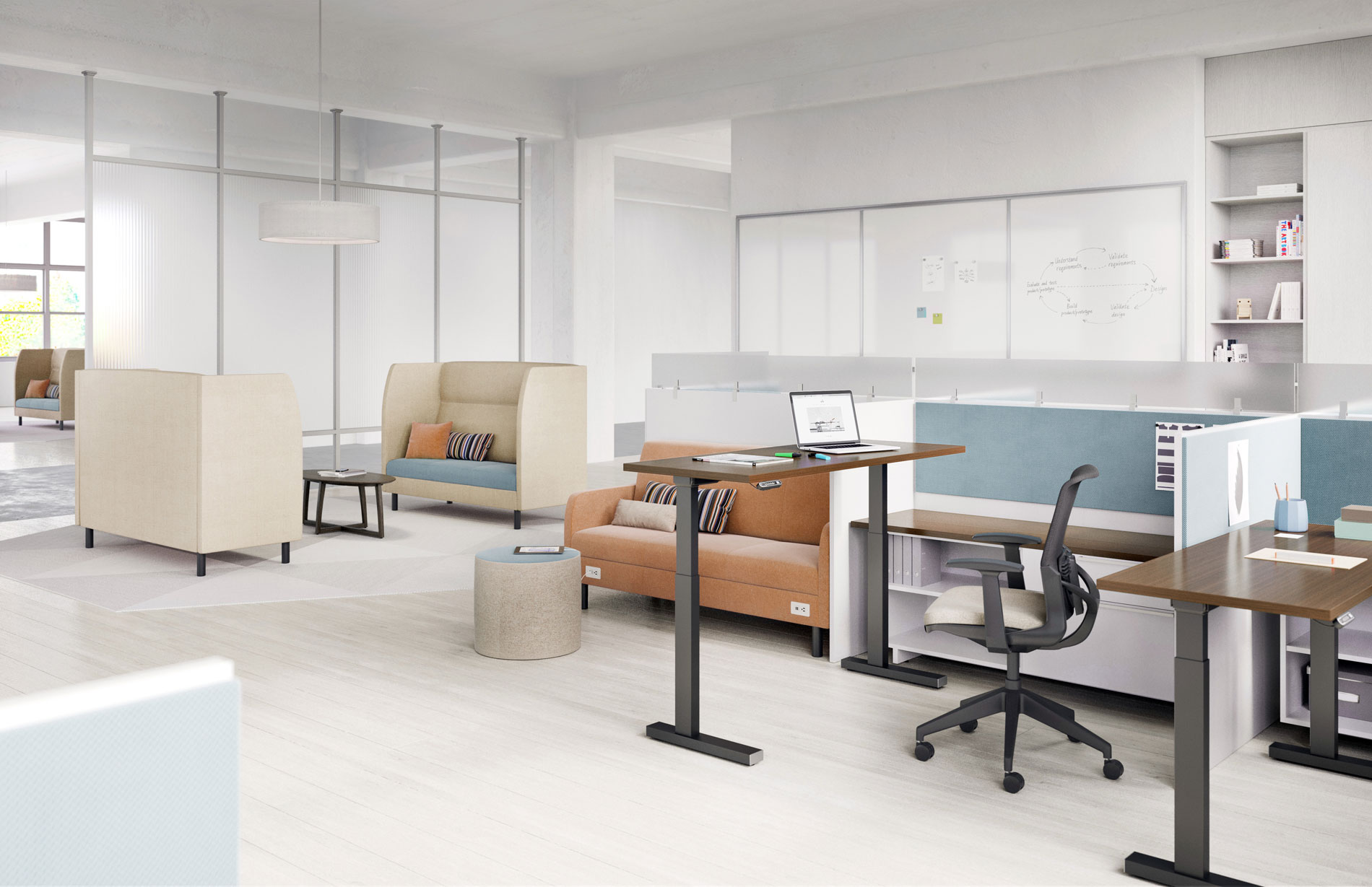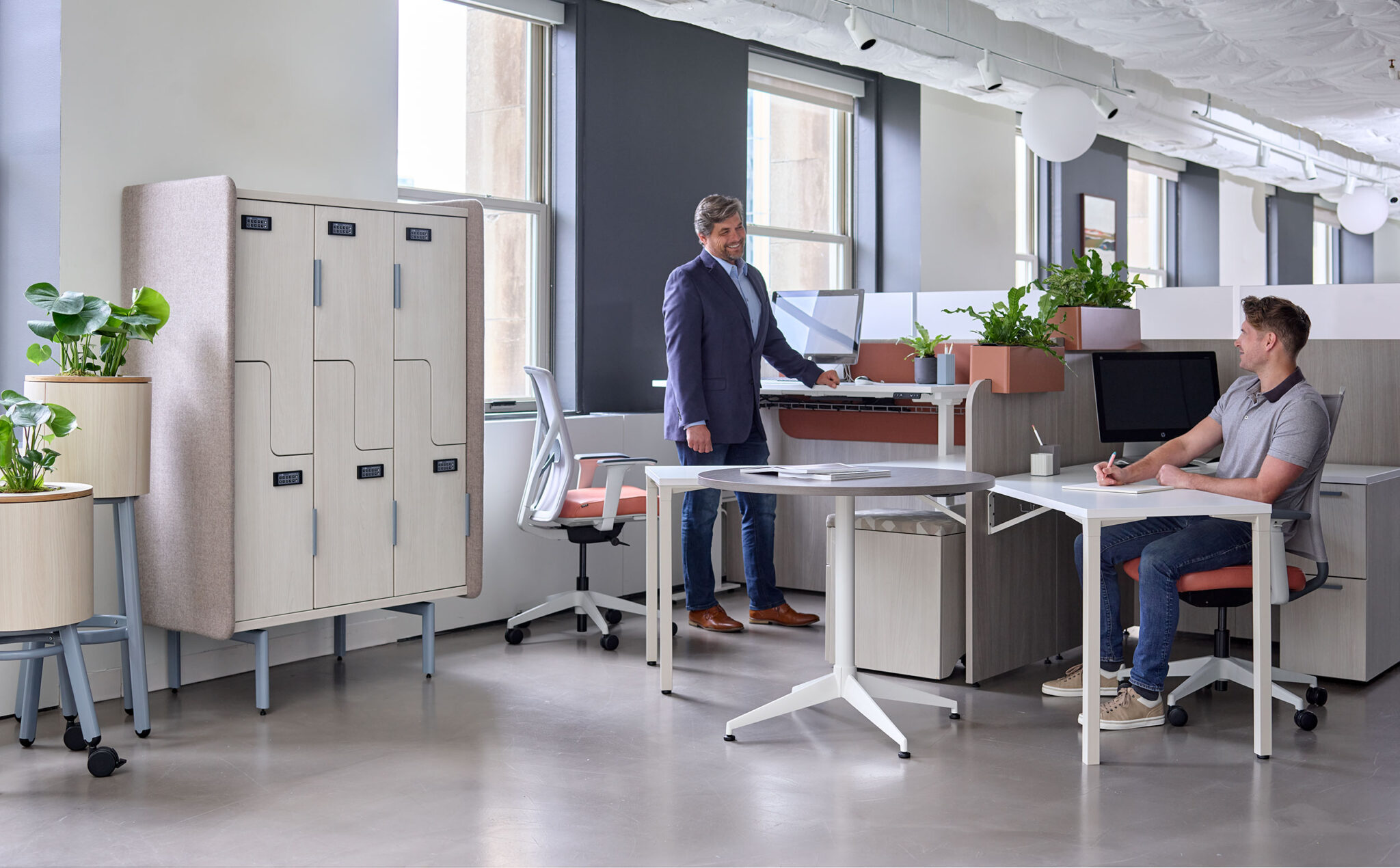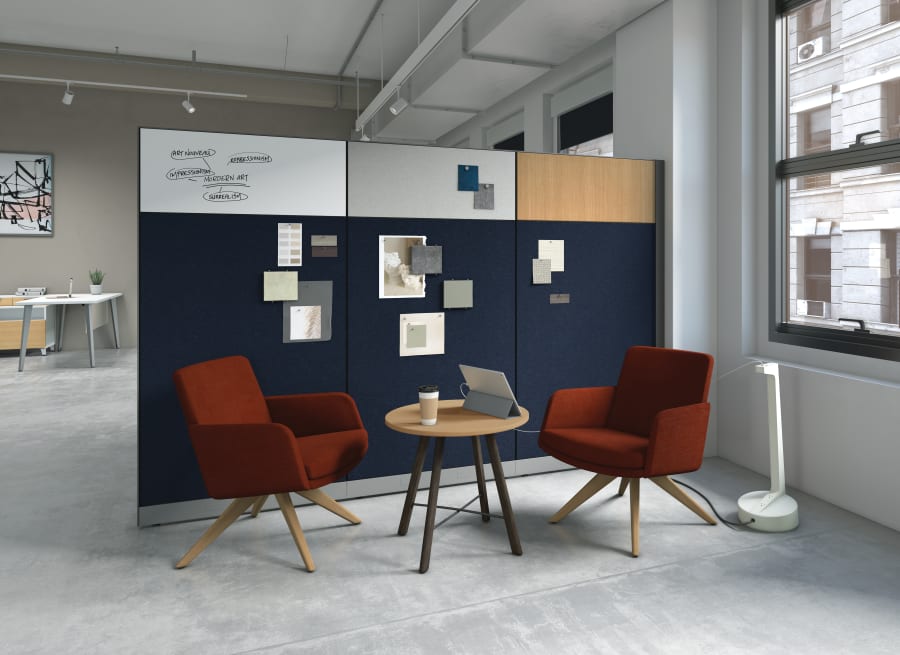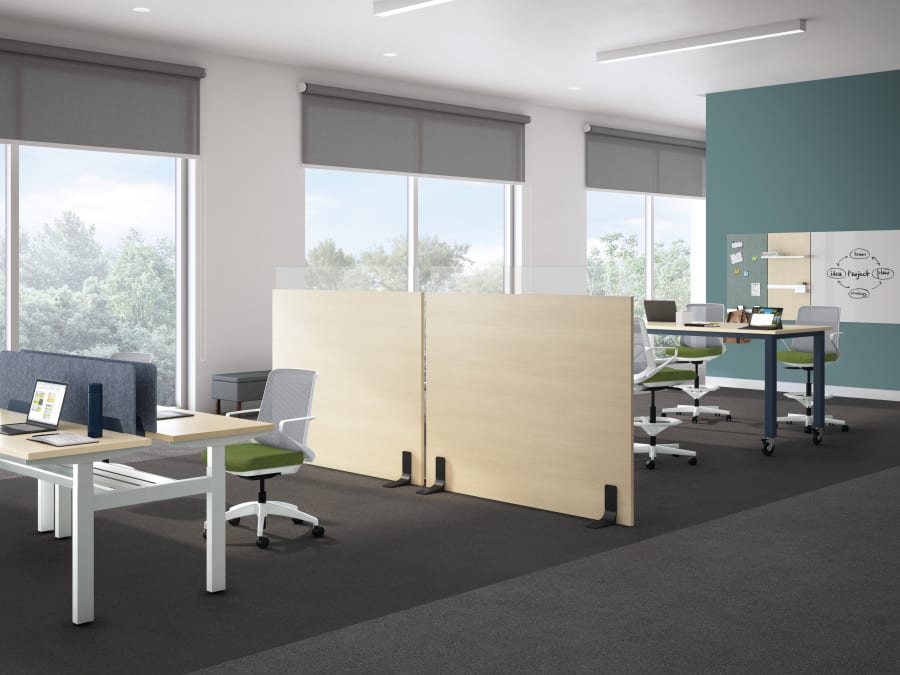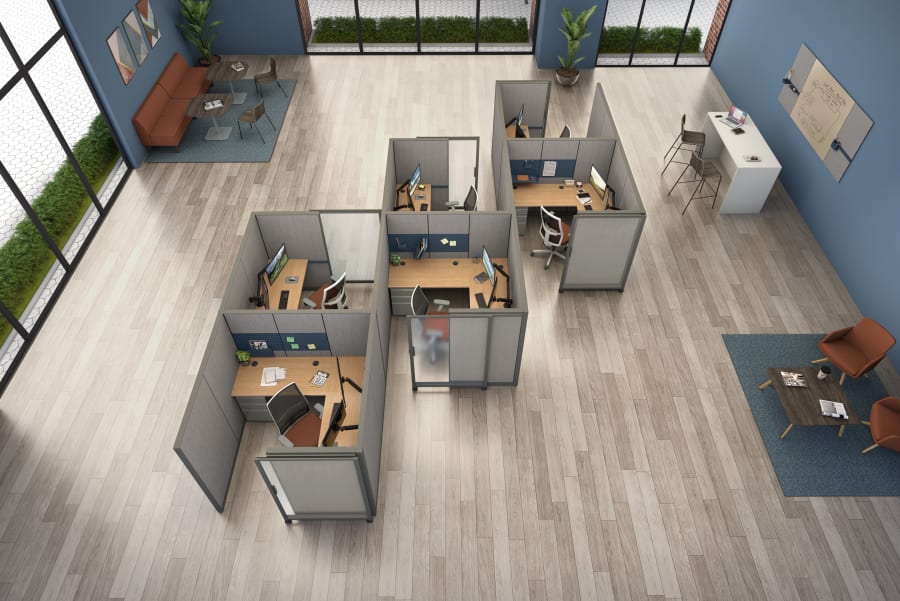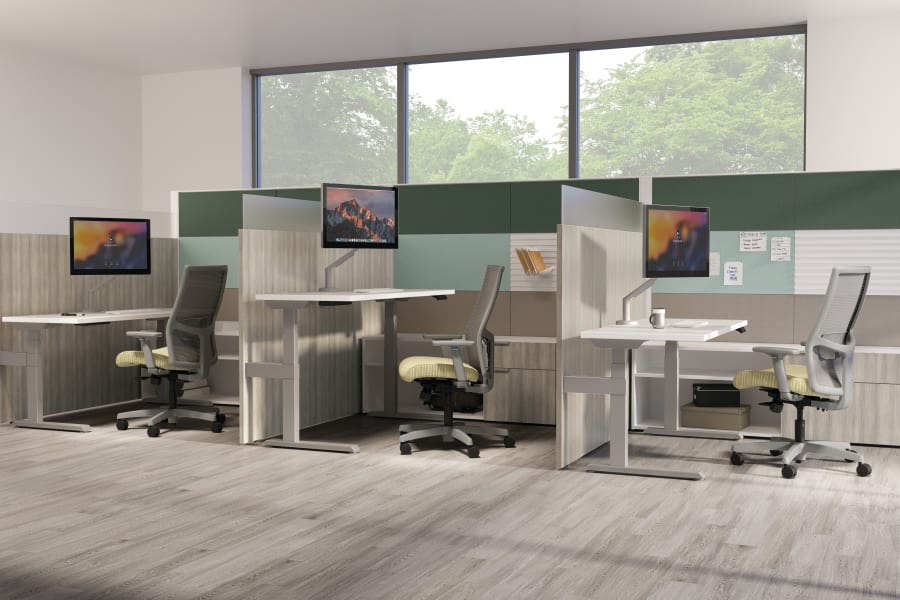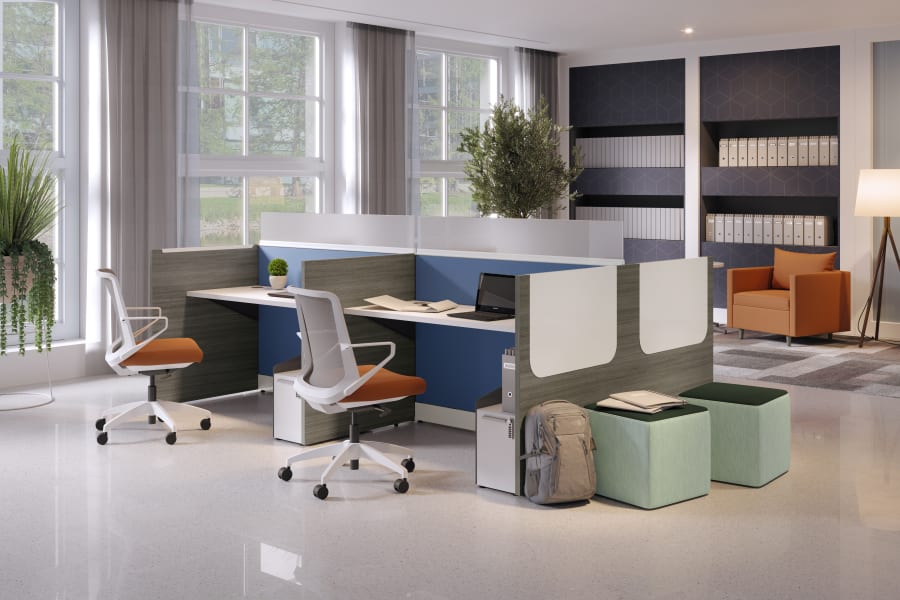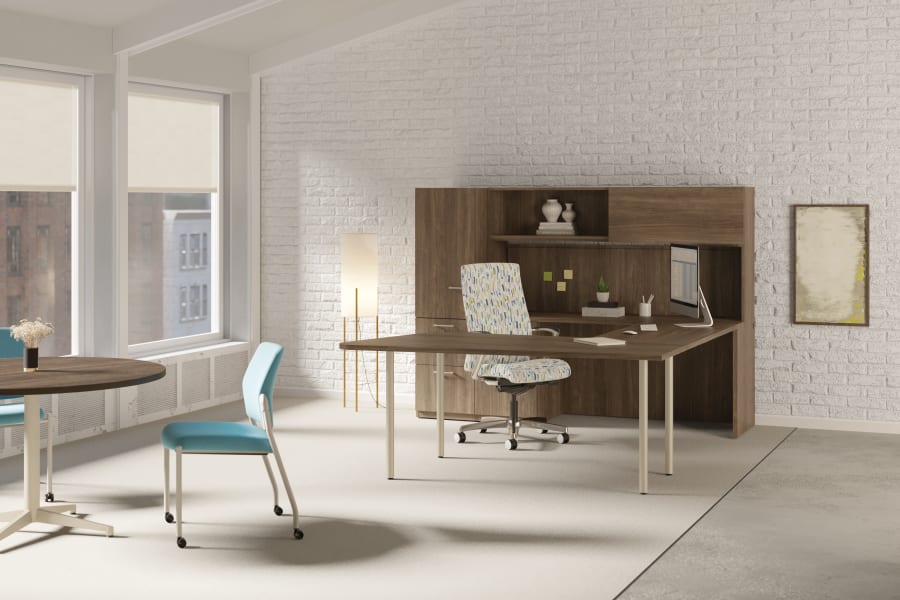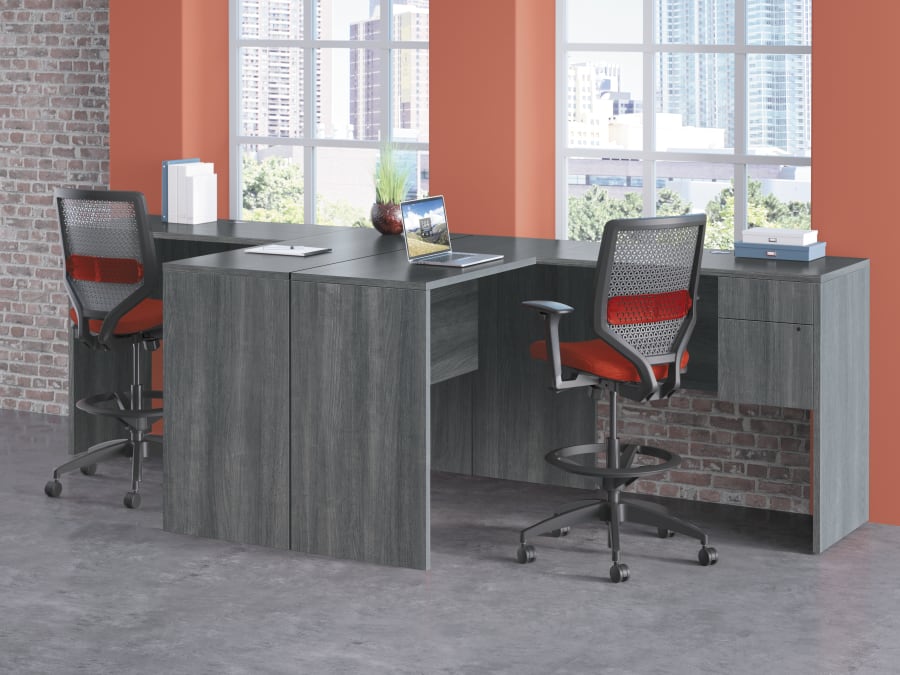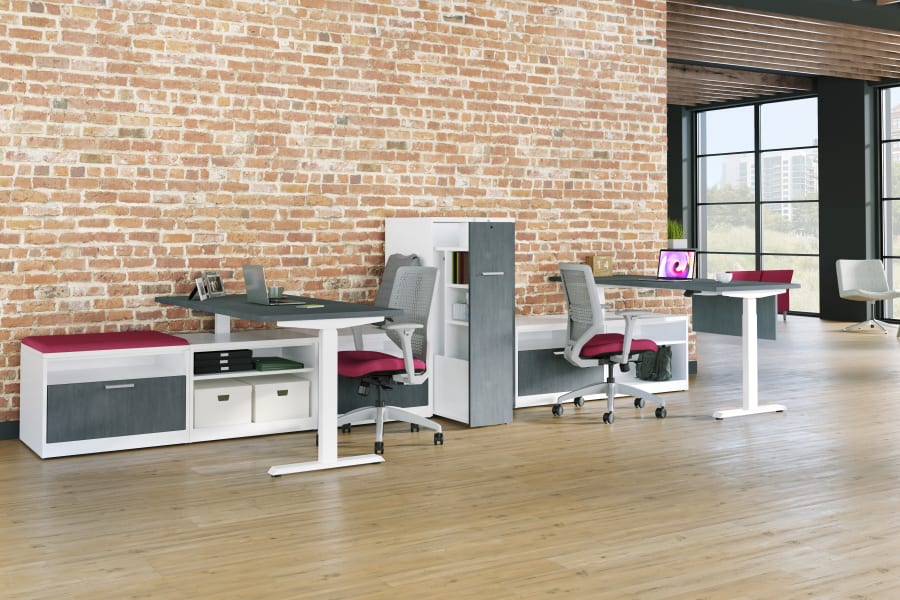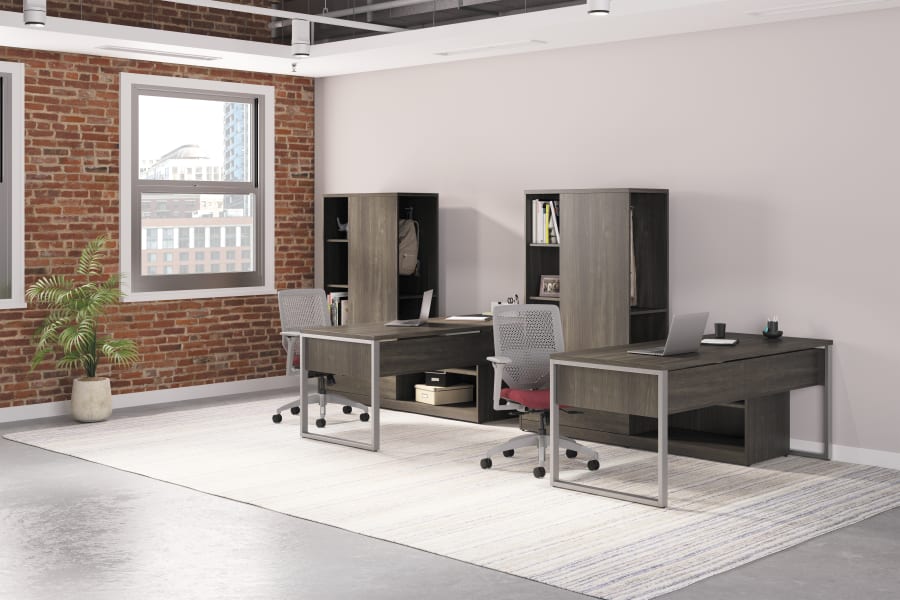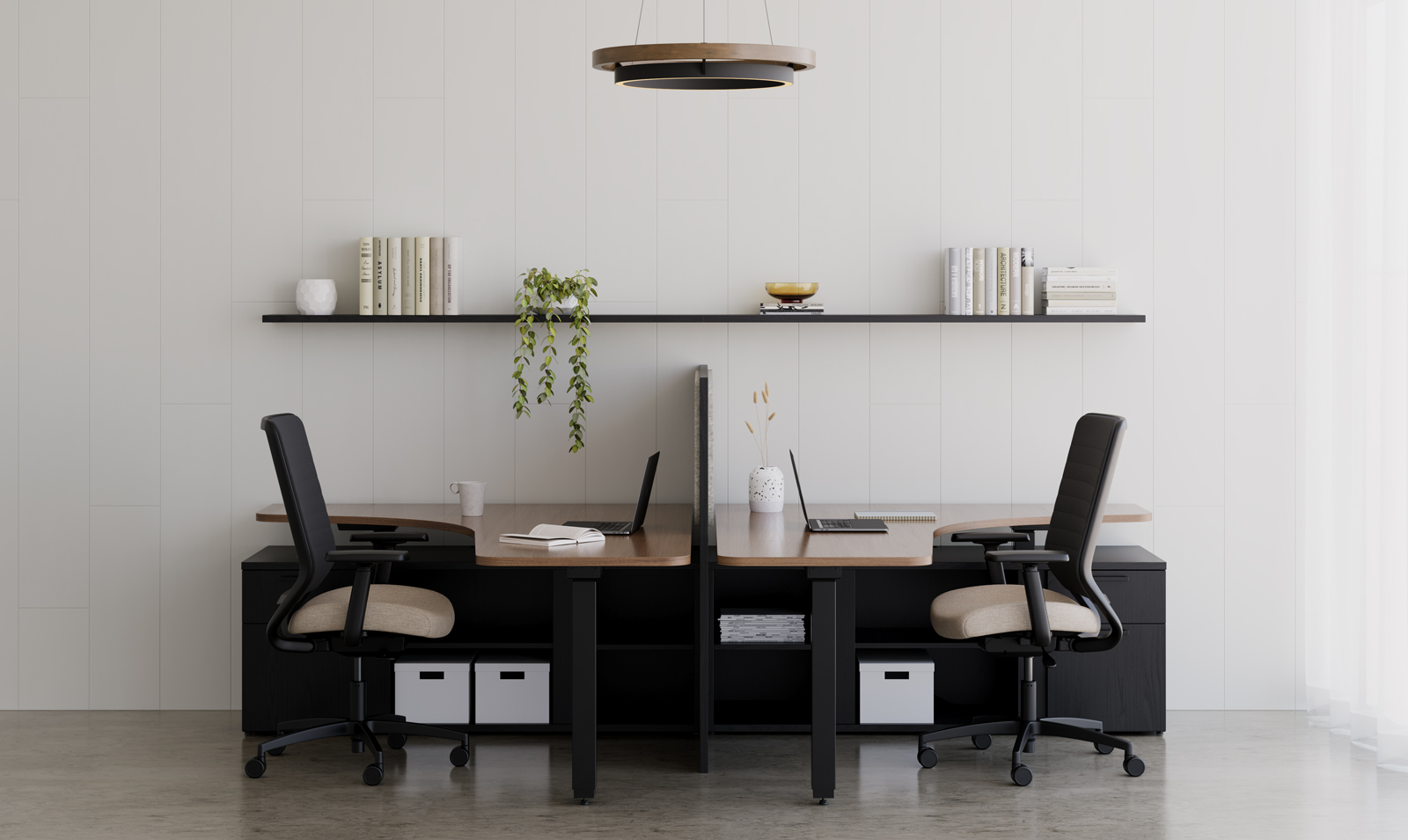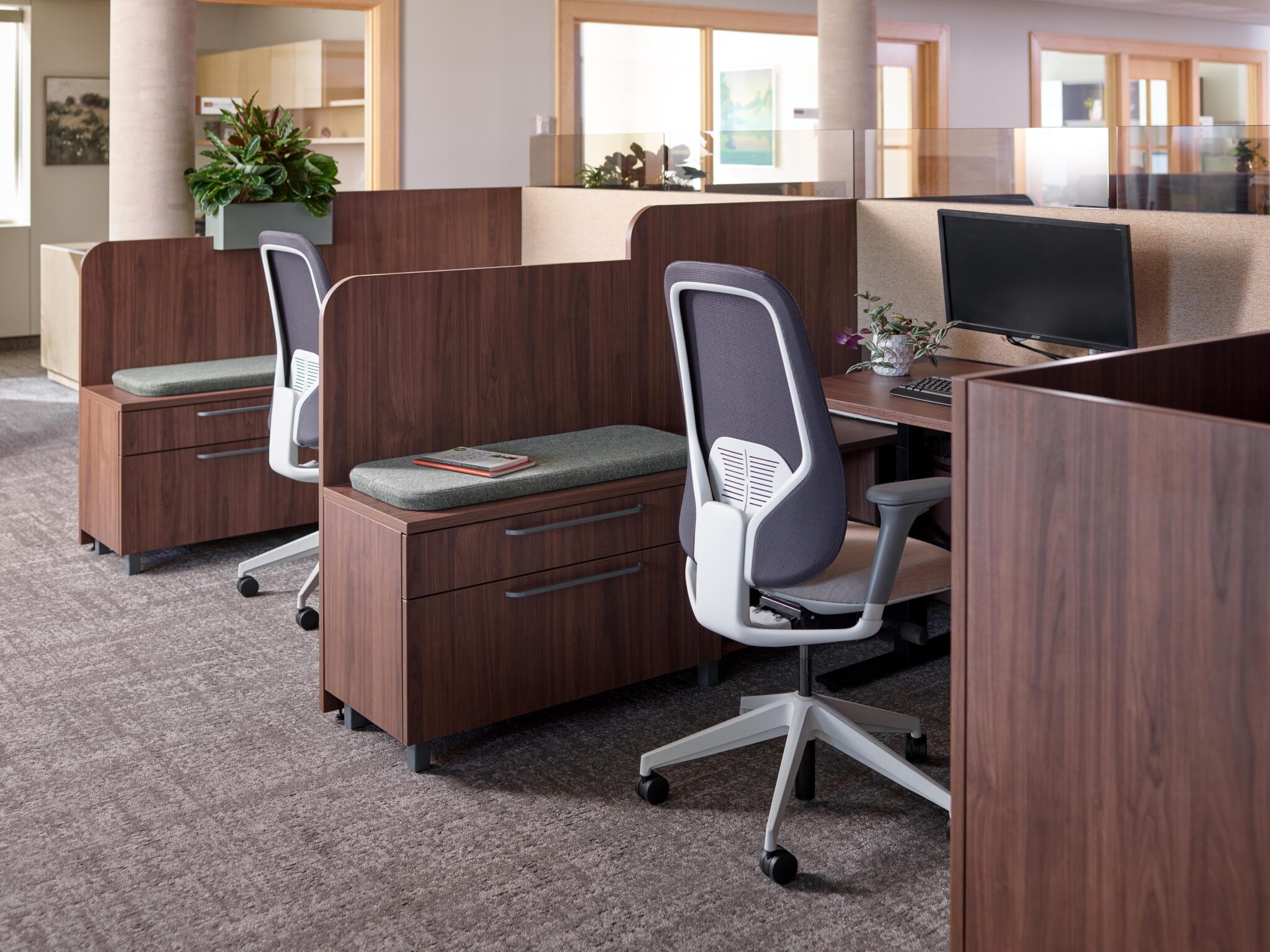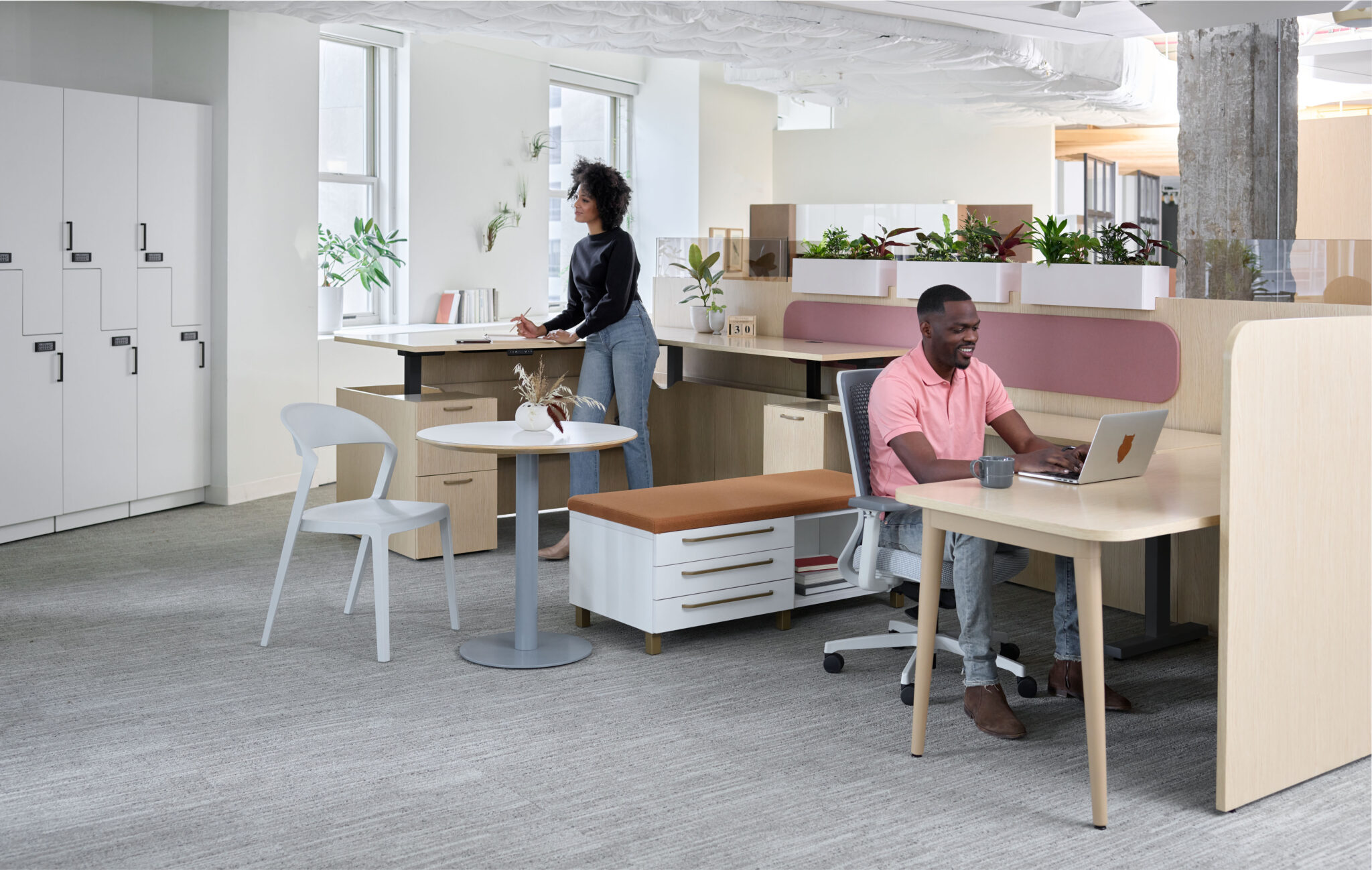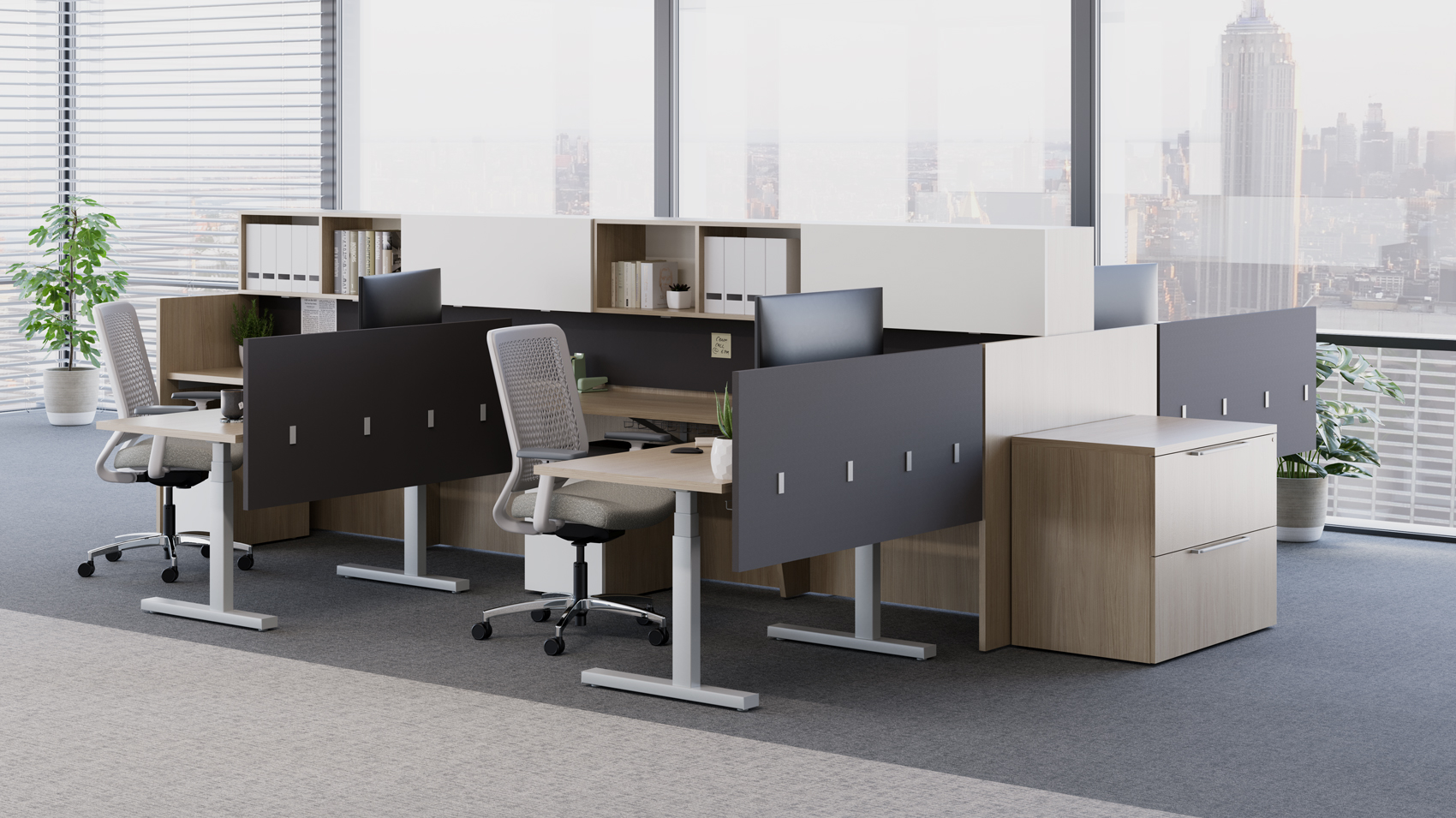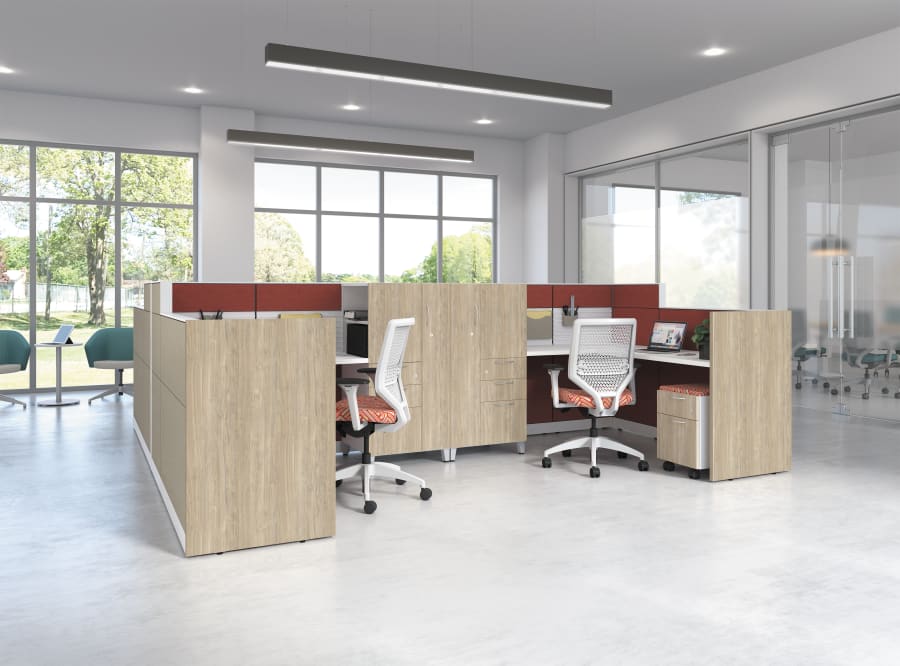
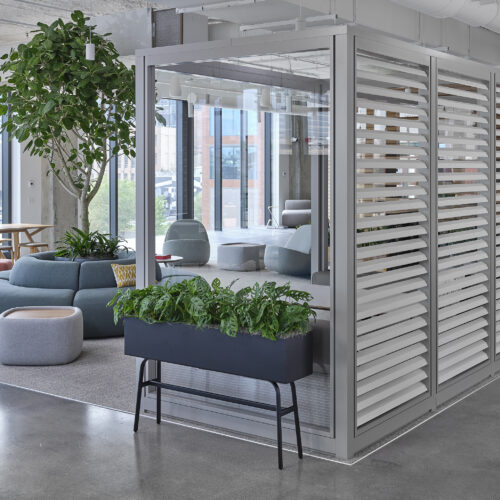
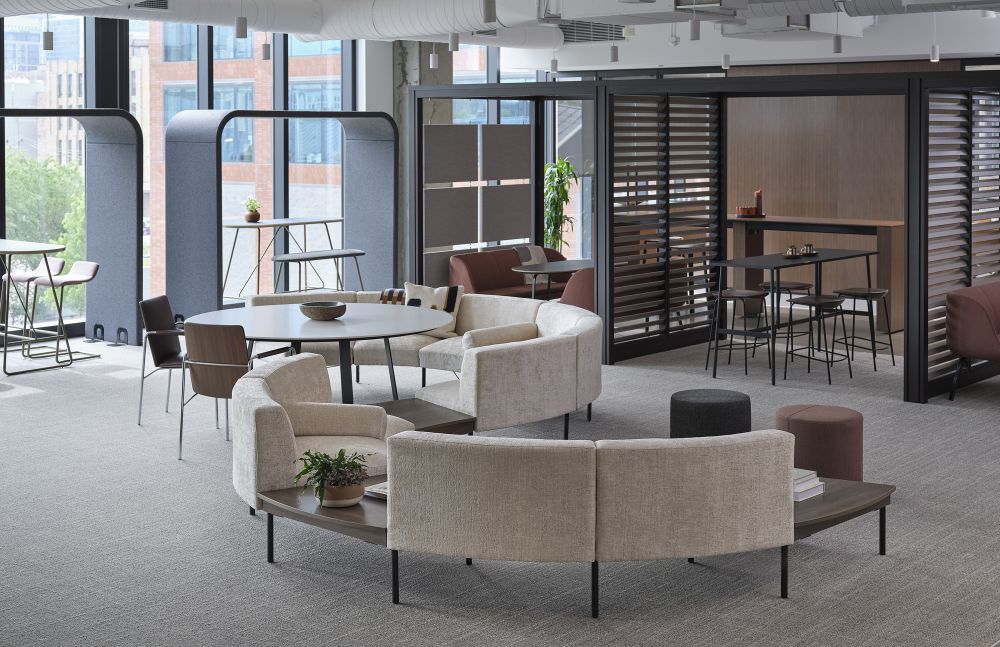
When furniture sits in a large open area without structure, people may not know how to use the space. We add boundaries that make the setting feel purposeful without making it rigid.
Lounges, cafés, and break areas often work better when they have soft edges. Planters, screens, banquettes, shelving, and furniture groupings can help define the area while keeping it open and approachable.
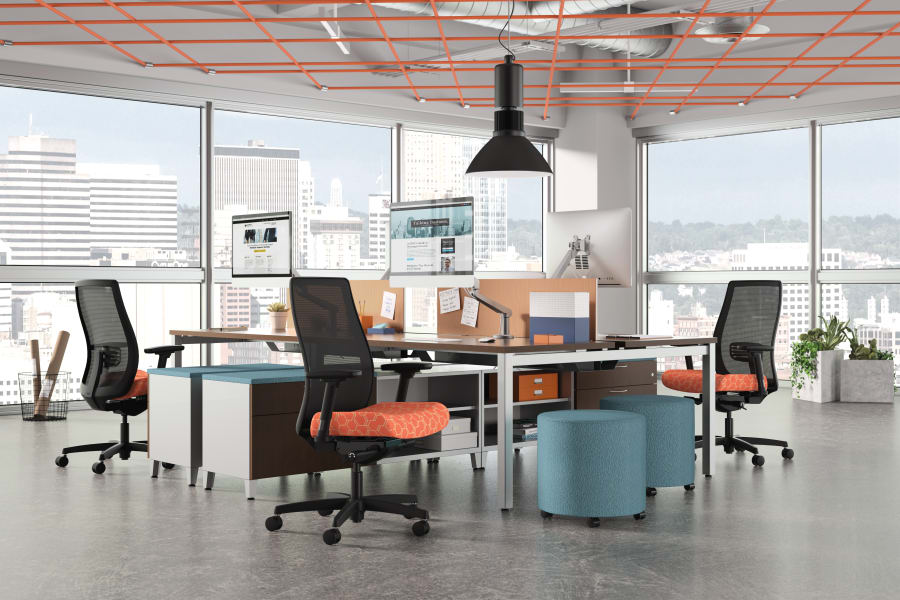
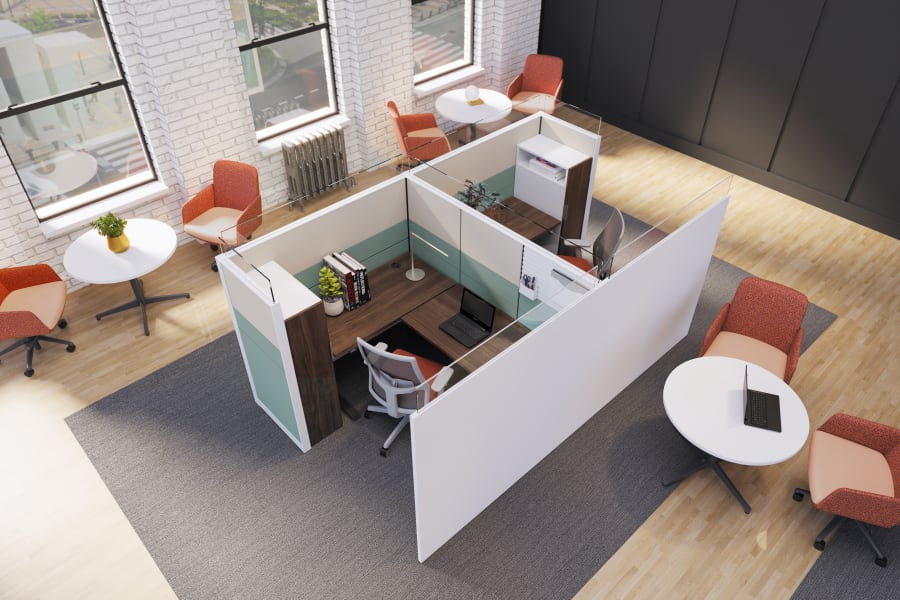
In open office environments, flexible boundaries can help identify team zones, touchdown areas, collaboration settings, and quiet spaces without fully separating people from one another.
Lobbies, waiting areas, student spaces, and amenity spaces can feel cold when they are too open or too hard-surfaced. Planters, shelving, soft seating, and accessory pieces can add warmth and scale.
A flexible boundary can be easier to adjust than a permanent wall. Space-defining products are “nimble-by-nature” and designed for evolving workplaces, which fits the way many modern interiors need to change over time.
Planters and space definers can add a natural layer, create separation, and support the room’s rhythm without overfilling the space.
Planters can do more than add a decorative touch. They can help define zones, guide movement, soften open areas, create visual comfort, and make commercial interiors feel more human. They work especially well in lounges, cafés, lobbies, amenity spaces, open offices, student commons, and collaboration areas.
We help evaluate planter size, placement, finish, maintenance expectations, traffic flow, and whether the planter should act as decoration, space division, or both.
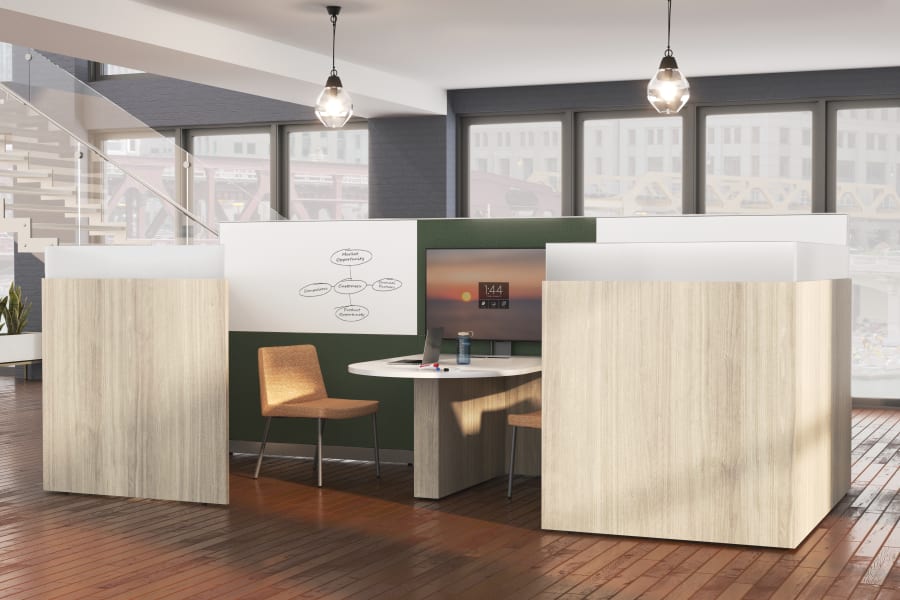
Screens and flexible dividers can help reduce visual exposure, separate activities, and create more comfortable places to work, wait, or gather. They are useful when the space needs a boundary but not a full room.
Our team helps compare fixed, movable, fabric, acoustic, decorative, and furniture-based divider options based on the level of privacy, flexibility, durability, and visual presence needed.
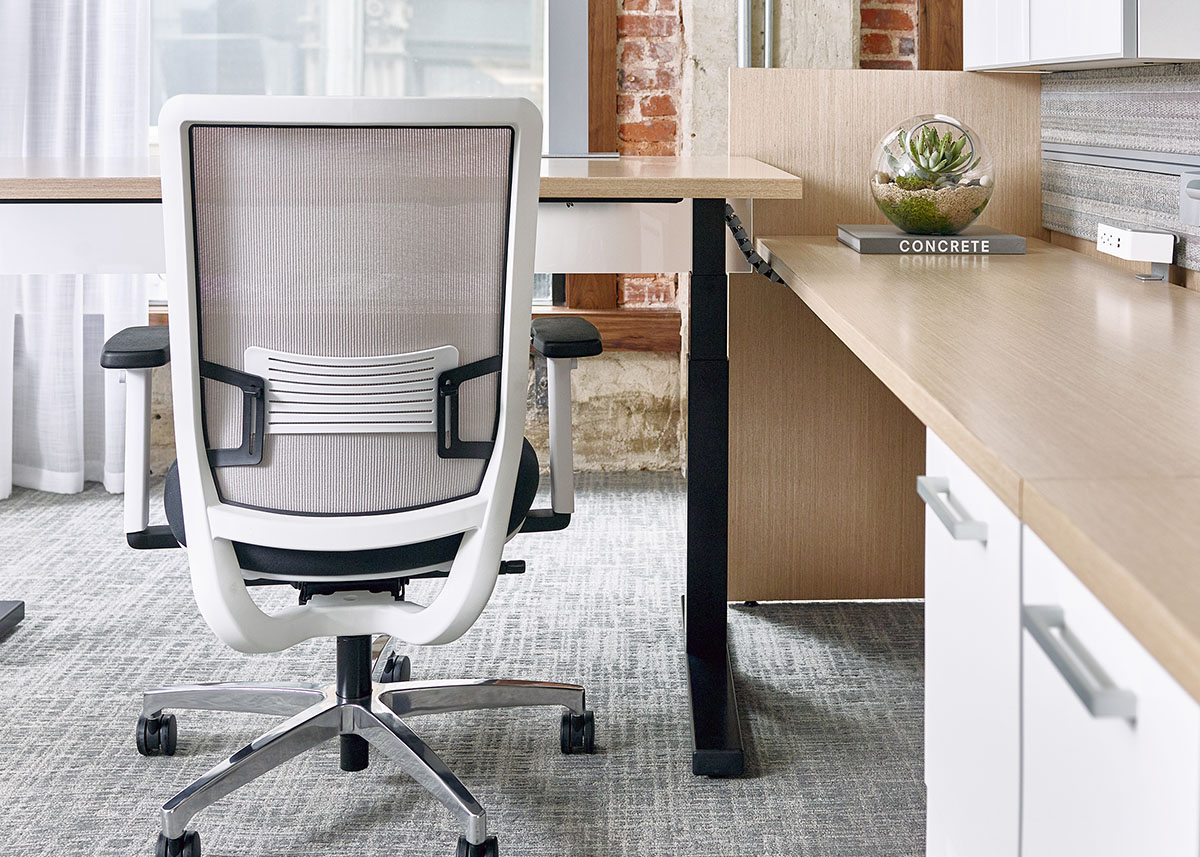
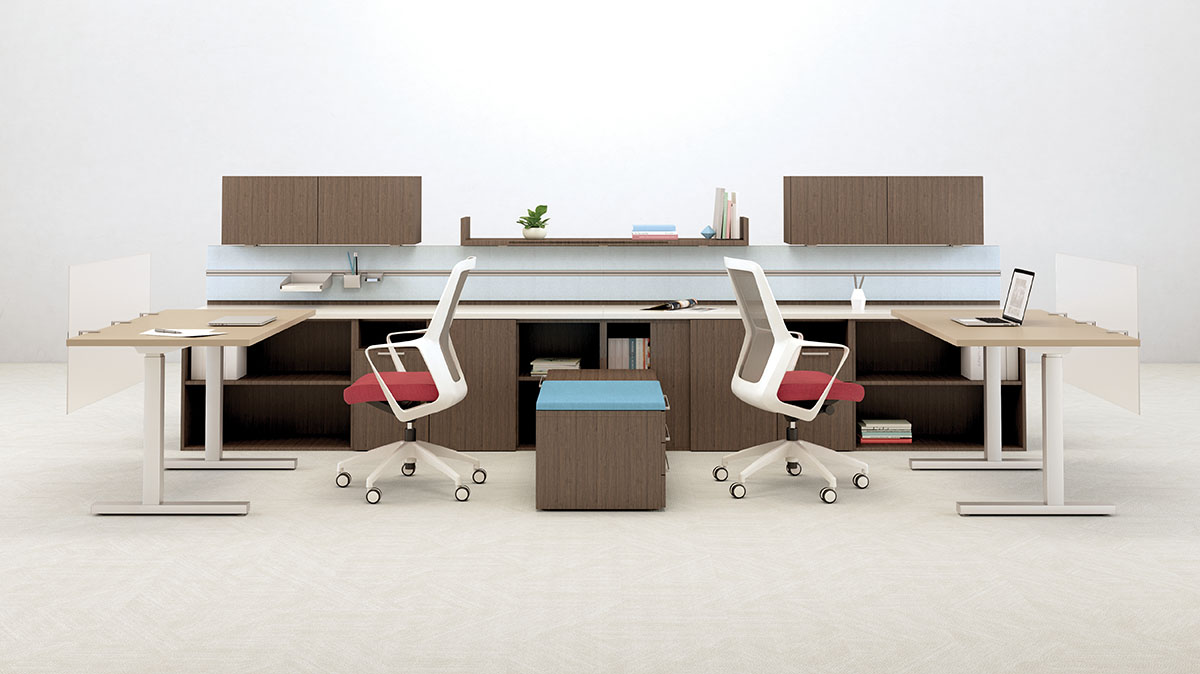
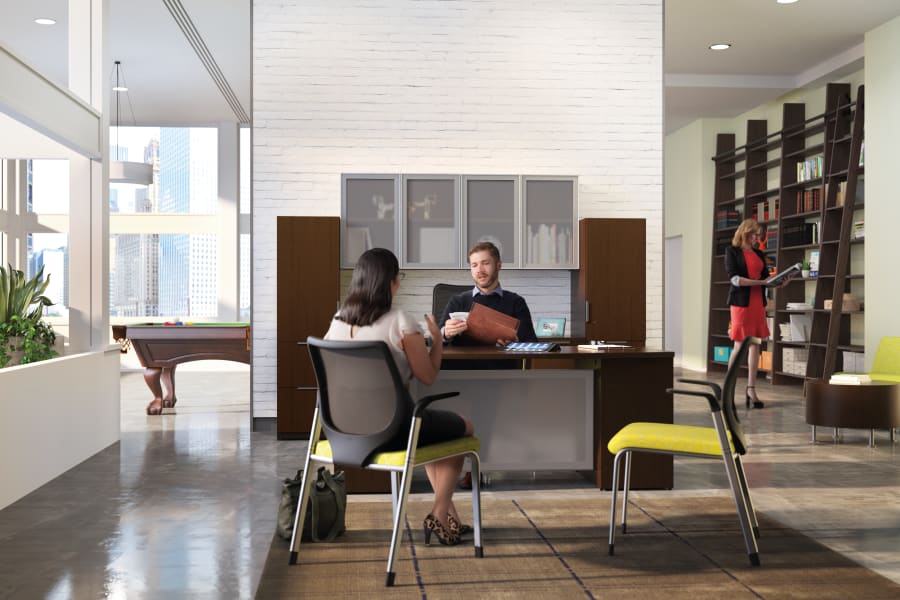
Shelving can help create boundaries while also supporting display, storage, accessories, books, materials, or decorative elements. This can be especially useful in lounges, libraries, reception areas, student spaces, workplace cafés, and amenity settings.
The goal is to determine when shelving should be open and airy, when it should provide more separation, and how it should coordinate with the furniture, accessories, and finish palette around it.
Sofas, banquettes, high-back seating, modular soft seating, and lounge groupings can help create boundaries while also giving people a place to sit, meet, wait, or work informally. In some spaces, the furniture itself can define the zone better than a screen or wall.
We work with clients to use soft seating to create edges, conversation areas, quiet corners, and collaboration settings that feel comfortable and intentional.
Some spaces need to shift between learning, collaboration, events, waiting, dining, or focused work. Mobile dividers, movable planters, lightweight tables, rolling markerboards, and flexible furniture can help create boundaries that change as the room changes.
MBI helps clients compare mobility, stability, storage, durability, and ease of reset so flexible products do not become difficult to manage.
Cafés, lounges, tenant amenities, student commons, and shared gathering areas often benefit from defined zones. The right boundary helps people understand where to sit, where to gather, where to move, and where one activity ends and another begins.
We help use planters, screens, lounge furniture, rugs, shelving, tables, and lighting to create social spaces that feel active without becoming cluttered.
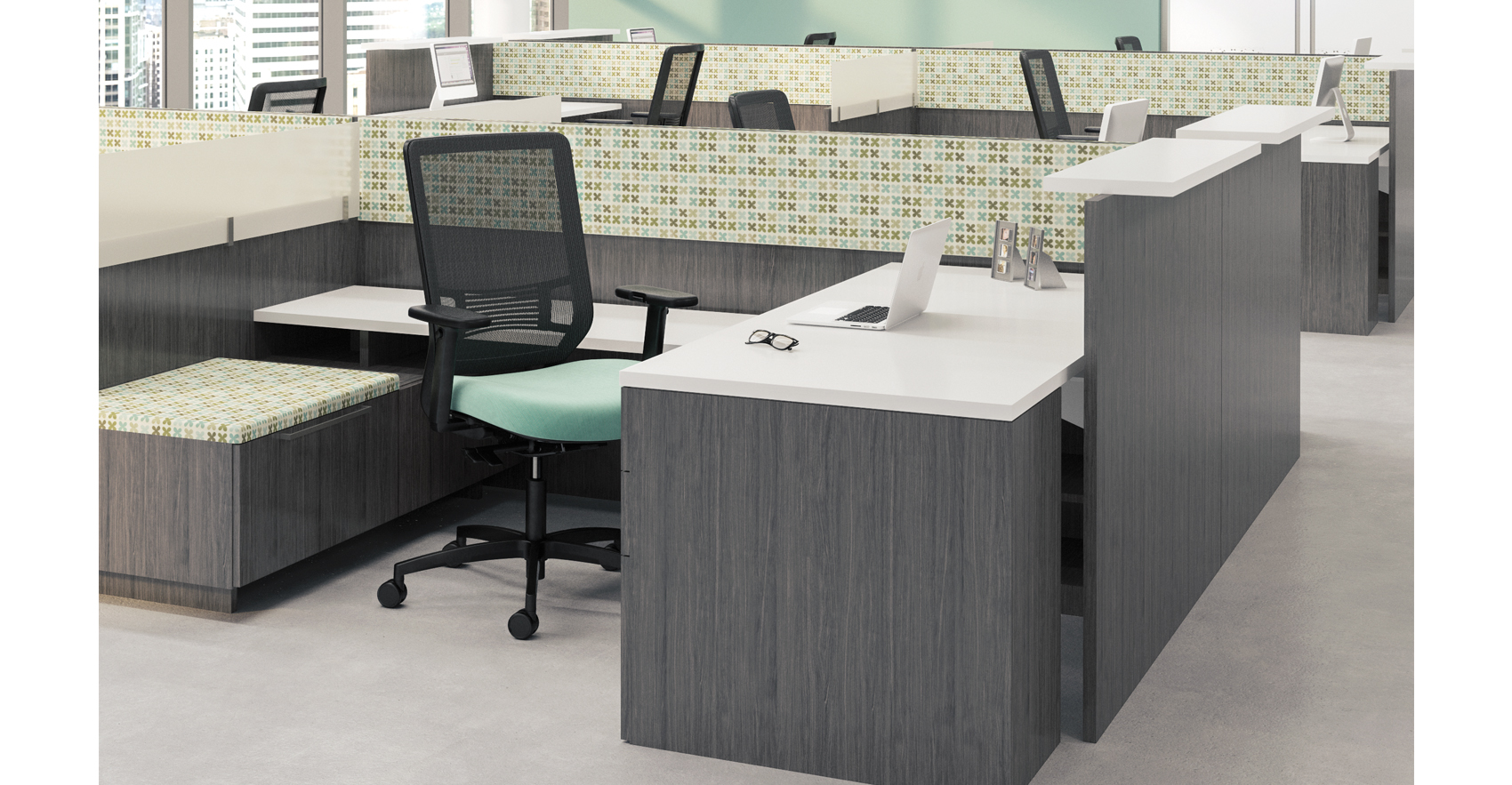
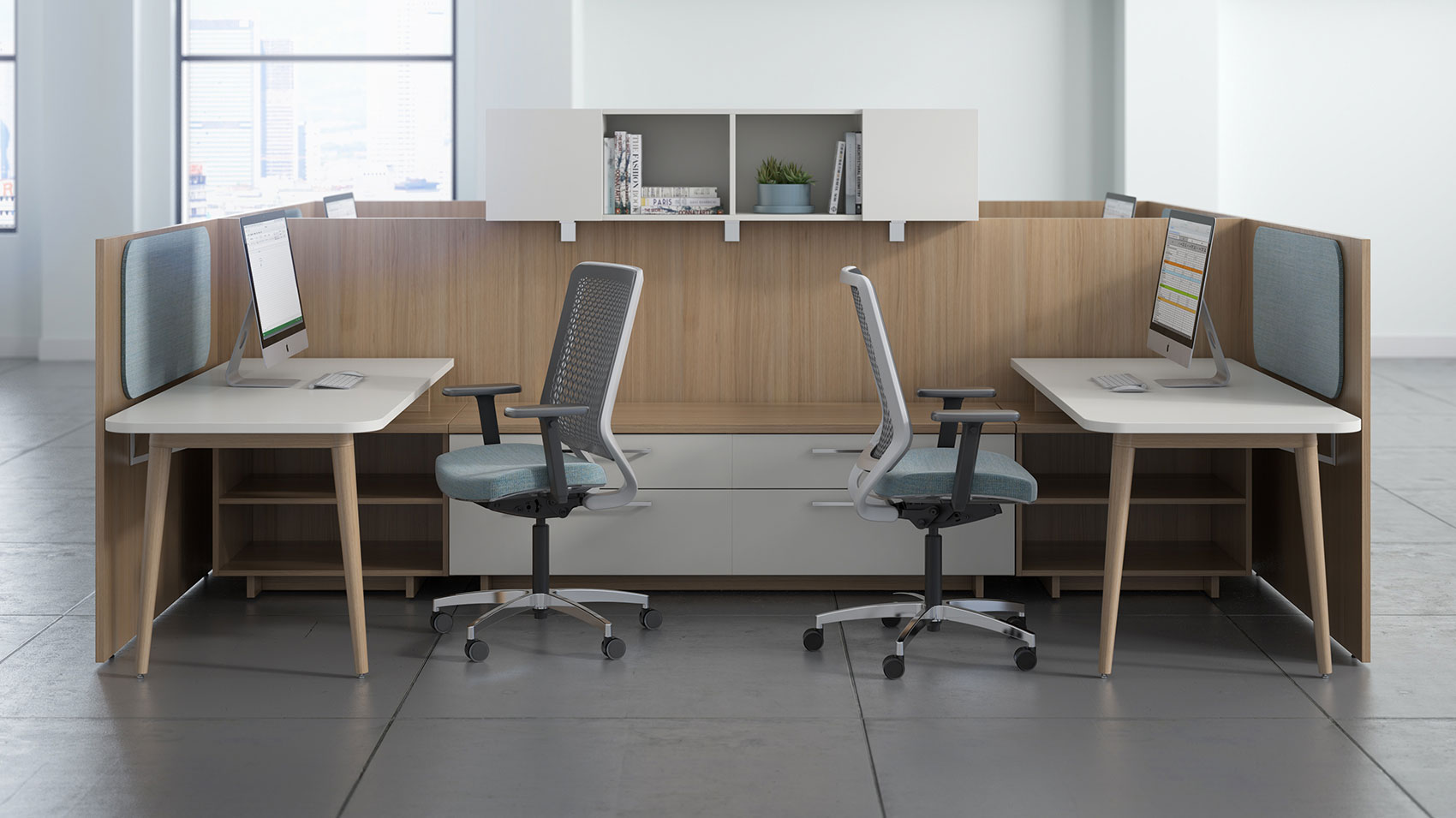
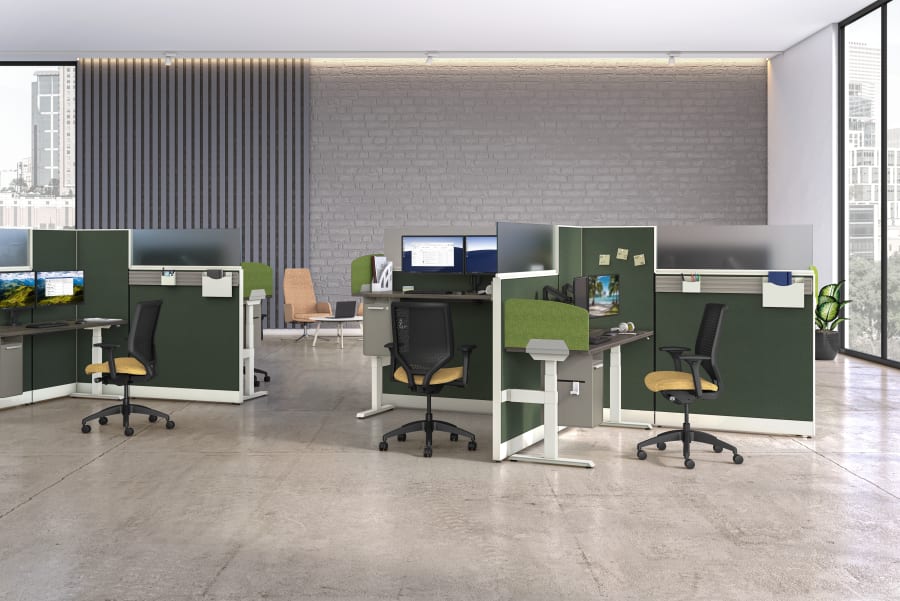
Open offices can feel more organized when teams have identifiable neighborhoods. Flexible boundaries can help define team areas, reduce visual distraction, and make shared work environments feel less exposed.
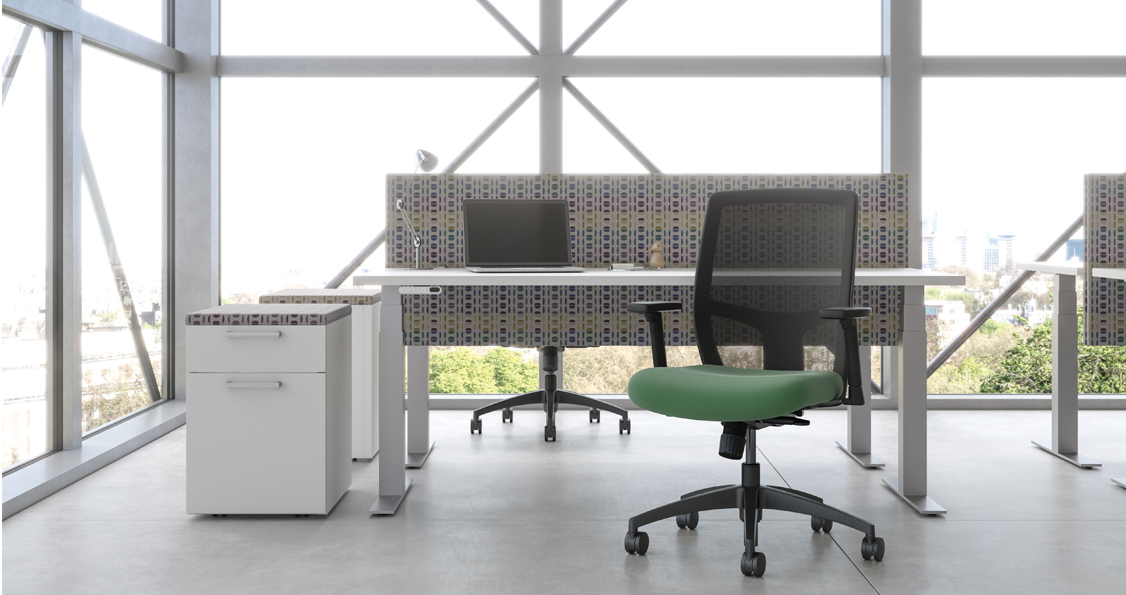
Our team helps evaluate screens, planters, storage, freestanding elements, workstation panels, and furniture groupings that create structure while preserving visibility and connection.
Space-defining pieces can add color, texture, material, craft, greenery, and brand personality. They should feel intentional within the room rather than like barriers added after the fact.
That coordination means space definers with finishes, upholstery, lighting, flooring, wall colors, accessories, and the overall tone of the environment.





Space definers are products that help create boundaries, zones, or softer separation without building permanent walls. They can include planters, screens, shelving, storage, modular seating, freestanding dividers, rugs, tables, or other furniture-based boundary elements.
No. Planters can add greenery and warmth, but they can also help define zones, guide movement, create softer boundaries, and make open spaces feel more organized.
Use a space definer when the space needs visual separation, softness, flexibility, or a clearer sense of purpose without full enclosure. If the space needs stronger privacy, sound control, or confidentiality, a wall system or pod may be a better fit.
Sometimes. Some screens, dividers, and upholstered products can help absorb sound or reduce distraction, but they should not be treated as soundproofing. If sound is a major issue, MBI may recommend acoustic products as part of the broader solution.
Some can be moved or reconfigured more easily than others. Mobility depends on the product, size, weight, power needs, planter contents, installation method, and how often the space needs to change.
They can work well in lounges, cafés, open offices, student commons, libraries, waiting areas, senior living spaces, commercial real estate amenities, and collaboration zones.
Yes. Color, material, plants, lighting, accessories, shelving, and furniture shapes can help reinforce the tone of the organization without relying only on signage or graphics.
Yes. We work with clients to compare options based on the purpose of the boundary, the amount of privacy needed, the room layout, maintenance expectations, budget, and how flexible the space needs to be.